标签归档 西安桑拿论坛

The earliest tea unearthed in the world has promoted the tea affair in China for 300 years, and tea culture is exquisite.

Original literature and history Jun Haoran literature and history
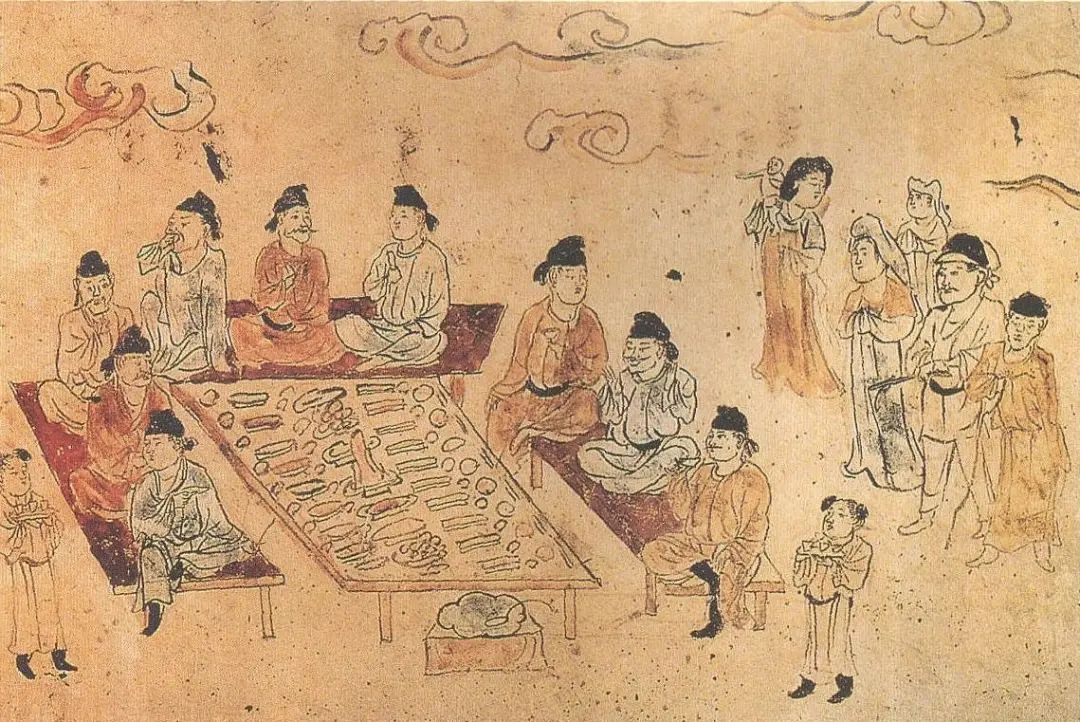
There are two boys serving tea in the front of (part of) Yan Yin Tu in Tang Dynasty.

An archaeological report published by the archaeological team of Shandong University officially announced the discovery of the world’s earliest tea in the ruins of the ancient city of Guo in Zoucheng, Jining, Shandong. Prior to this, the earliest tea in the world was found in the burial pit of Yangling, Emperor Liu Qi of the Han Dynasty. This discovery of Shandong University directly pushed the historical upper limit of tea drinking in China for more than 300 years. Tea, as a kind of drink, has entered the daily life of China people for a long time. With the development of history, not only tea itself and its related material forms have been developed, but also tea has entered the spiritual world of China people and become a sustenance of the elegant people. When the tea inscription meets the ancient paintings, those long-gone tea events are vividly presented in front of us. Let’s follow these ancient paintings to see the tea events in China!
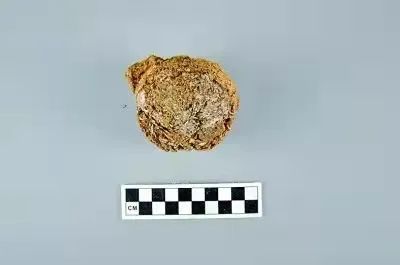
Tea found in the ruins of the ancient city of Guo in Zoucheng, Jining, Shandong Province

I. Tea Affairs in Tang and Song Dynasties

China people’s acceptance of tea is a gradual process. Legend has it that tea originated from Emperor Yan Shennong, but at this time it was used as a medicinal drink. In the Warring States period, people in China had drunk tea. In the Han Dynasty, tea was still used as a medicine or food to participate in people’s lives.

The earliest and most reliable record of tea can be found in "Tong Yue" written by Wang Bao of Sichuan in the Western Han Dynasty. It records what a servant should do every day, and one of them is "brew tea does everything … Wuyang buys tea". Later, tea pots engraved with the word "tea" in the Eastern Han Dynasty were unearthed in Zhejiang and other places. This shows that tea has been quite popular in the Han Dynasty.

Although there were sporadic records about tea in Wei and Jin Dynasties, the tea culture at this time was still in a hazy period. Tea culture gradually surfaced, not only in ancient paintings, but also in systematic records, starting from the Tang Dynasty. The Classic of Tea by Lu Yu, a native of Tang Dynasty, is the first monograph on tea culture in the history of China, while The Orchid Pavilion of Xiao Yi is the first ancient painting with brew tea in the history of our country.
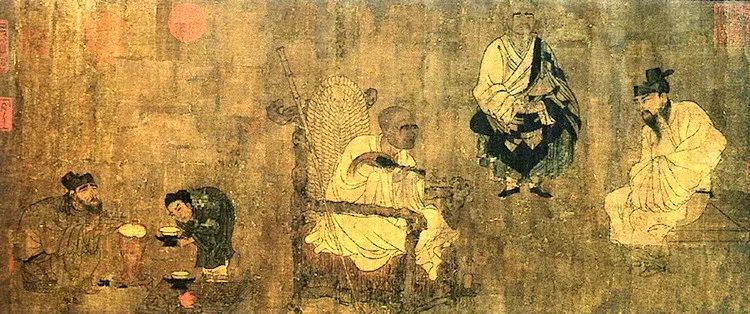
The Song Dynasty’s Copy of Xiao Yi Earning Lan Ting Tu, which was anonymous in Tang Dynasty.

The popularity of tea in the Tang dynasty was recorded in detail in the sealed "Feng’s Experience". It is said that during the Kaiyuan period, a monk in Lingyan Temple in Taishan forgot to eat and sleep in order to study Zen, and he relied on drinking tea to eliminate his fatigue and hunger. After the news spread, it became a custom to follow suit. From Shandong to Chang ‘an, the then capital city, and Chasiying Street, the world could beg for a cup of tea as long as it invested money.

After the publication of Lu Yu’s Tea Classics in Tang Suzong, tea culture gradually became an art, which was favored by ministers and nobles. "When the tea ceremony is popular, all princes and courtiers will drink.".
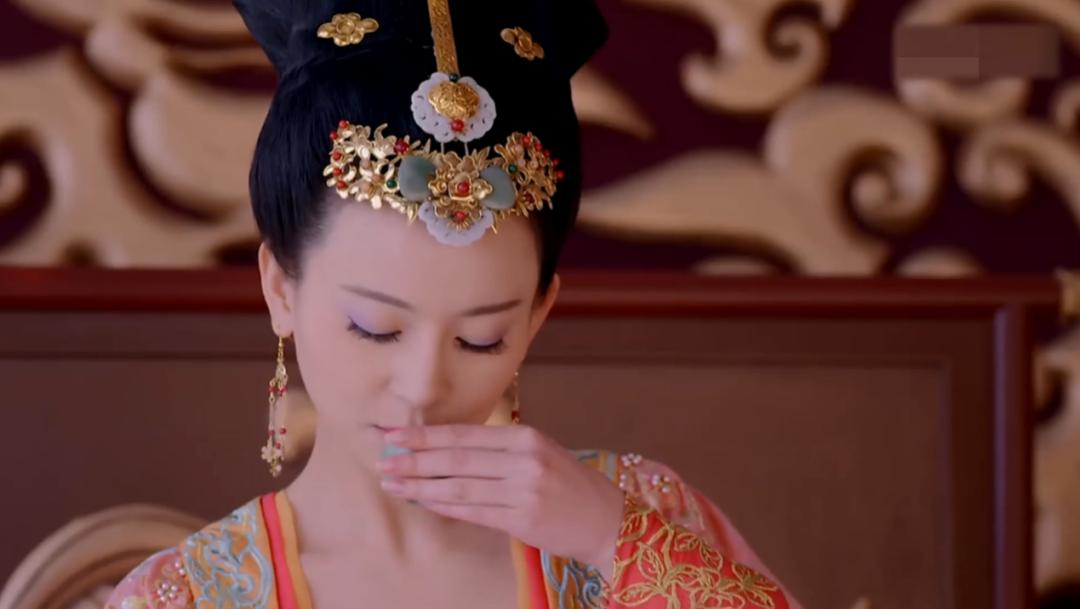
"Wu Mei Niang Legend" Tea tasting in upper class

A picture of Gong Le Tu in the Tang Dynasty depicts twelve beautiful women playing music around the table. They are holding pipa, guzheng, sheng and other musical instruments. There is a big tea basin on the table, and a maid-in-waiting is taking tea from the tea basin and giving it to everyone. A beautiful woman is making a drink, which shows that tea has become an essential thing for these princes and nobles to have fun every day.
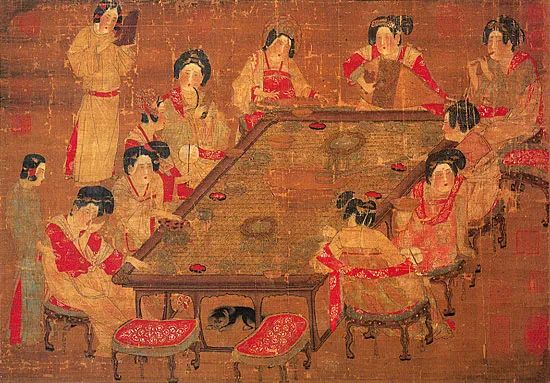
Gong le tu in Tang dynasty

According to Lu Yu’s Book of Tea, people in the Tang Dynasty can be divided into boiled tea, nunnery tea and tea. In the Tang dynasty, people also called boiling tea fried tea. Although their names are different, their methods are generally the same. Use a "tea pot" or "tea kettle" for "boiling tea". After the tea is cooked, you need to use a tea spoon to take it to other places. The "fried tea" uses "tea pan", and after the tea is cooked, it can flow directly from the spout to the container.

Temple tea is now brewed directly with boiling water, while tea is special. In the Tang Dynasty, people mixed tea and porridge into a kind of tea porridge, and this drinking method was called "porridge".
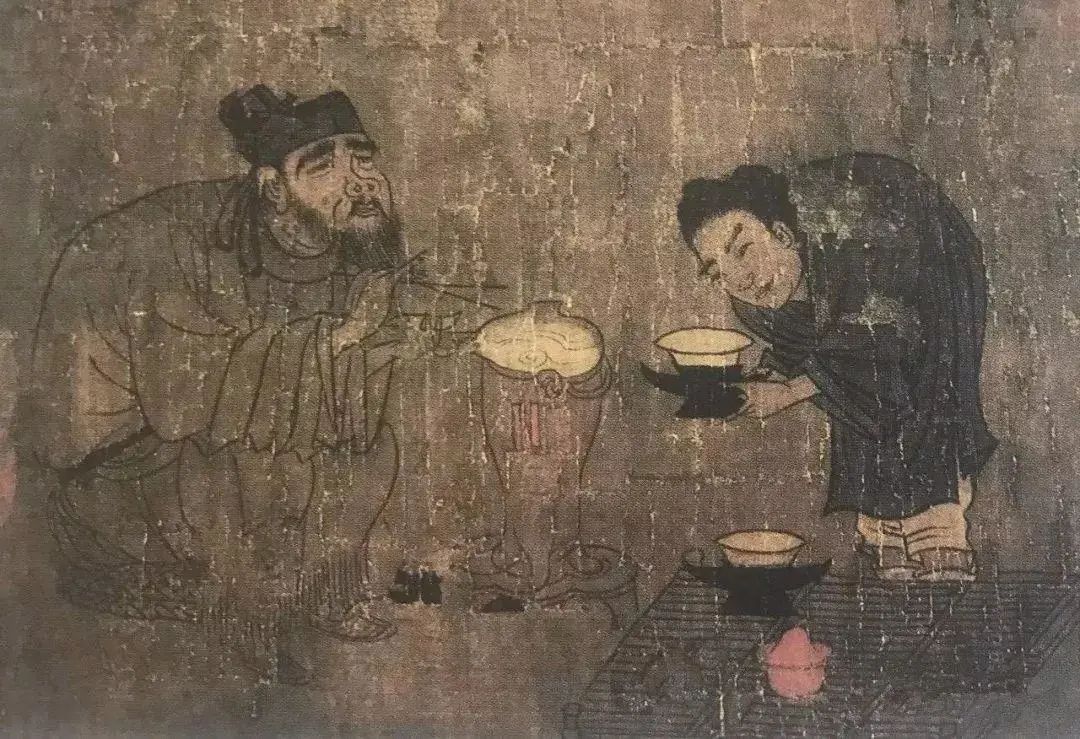
"Xiao Yi Earns Lanting Map" Part

The painting "Xiao Yi Earns Lanting Map" tells the story of Xiao Yi defrauding Lanting Preface from the debating machine for Emperor Taizong. In the lower left corner of the painting, there is a stove boiling tea, and an old man is squatting on the ground, holding a bamboo pod and stirring the tea powder in the tea pot. The old man is on his back, his nostrils are enlarged, and he seems to appreciate the rich tea fragrance. While another teenager is holding a black lacquer lamp holder and a white porcelain bowl, leaning over and waiting to pick up the tea that is about to be fried. The instrument used by the old people to cook tea is a tea jar. After the tea is cooked, it can be poured directly into the tea cup offered by the young people. This way of frying tea was a common way in the Tang Dynasty. Besides, we can also see tea-making tools such as saucer, tea mill and tea combination in this painting.

The image expressed in "Xiao Yi Earns Lanting Map" itself is that guests come to cook tea, which inadvertently reflects the skills and related tools of tea cooking in Tang Dynasty, and shows that the method of tea cooking in Tang Dynasty has reached maturity and entered people’s daily life. It is in line with Lu Yu’s sentence: "When you are immersed in the customs, it is prosperous in the country, and the two capitals are between Jing and Yu, thinking that it is better than drinking in the house."
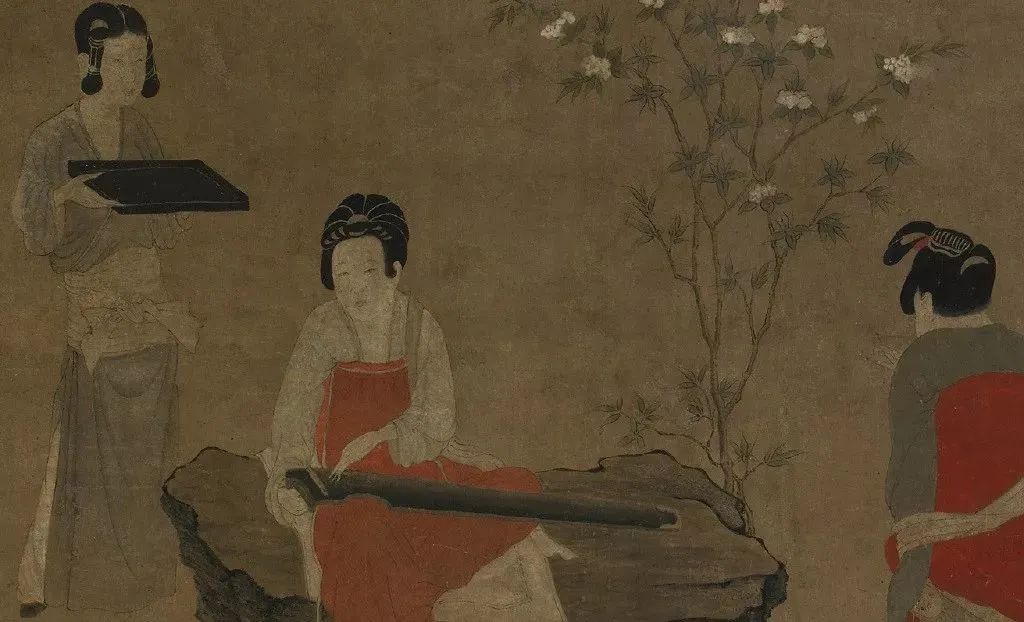
The maid on the left side of Tang Zhou Fang’s "Tune the piano and compose the tea" serves tea.

Song people are better at tea than Tang people, but they have the habits of Song people. Tea was divided into "piece tea" and "loose tea" by Song people. "Piece tea" is a cake that has been squeezed into cakes, while "loose tea" is tea that has not been squeezed. However, Song people like tea powder, that is, grinding tea into powder, so whether it is "piece tea" or "loose tea", it is actually tea powder.

Because of the different forms of tea, the way of drinking tea in Song Dynasty was different from that in Tang Dynasty. Tang people like to "make tea", while Song people like to "order tea". The so-called "tea-ordering" means putting the tea powder in a tea cup, adding soup to it with a tea bottle, and finally stirring the tea powder. "Ordering" also means drip. This process seems simple, but it is actually very learned. The appearance of ordering tea, a way of drinking tea, also led to the emergence of a competition about tea cooking in Song Dynasty-fighting tea.
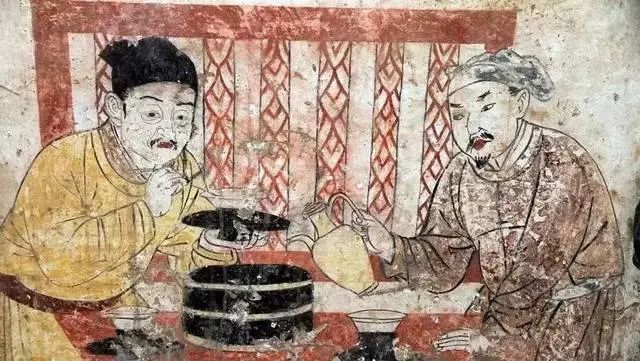
Prepare tea map

Tea fighting, also known as "tea fighting", has several processes. At first, it is necessary to iron the tea cup, and then "paste mixing", that is, pour the tea powder into the tea cup. The most important process is to pour boiling water and stir the tea leaves with teaspoons and tea baskets. Especially when mixing with a tea basket, we should pay attention to the priorities. After mixing a bowl of good tea soup, the foam floating on the surface should be evenly spread and the foam should be close to the tea cup, which is called "biting the cup". However, if the foamed camellia is not evenly spread to reveal a gap, then the mixing fails, which is called "cloud foot scattering" or "water foot scattering".

In the Song Dynasty, we can see several people in folk costumes squatting and fighting for tea, which is a good picture of folk fighting for tea.
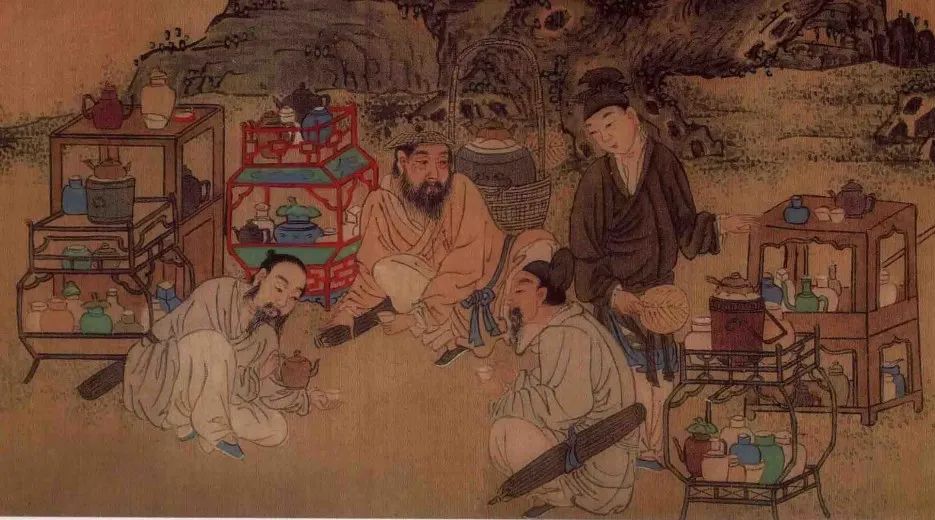
Song dynasty’s anonymous "dou cha tu"

Generally speaking, not all tea leaves will use tea in this way. Song Wangguan said in "Learning Forest" that "the best of tea is to sip it; Those who fry and sip it are all common ",that is to say, good tea will use the way of ordering tea, and ordinary tea will still be used to fry tea." But in fact, almost everyone in the Song Dynasty used some tea when drinking tea.

Song people like tea, from the emperor or the public to the common people. Song Huizong once painted a picture of Wen Hui Tu, which was about the literati’s elegant collection of tea. The lower part of the painting depicts several waiters waiting for soup and ordering tea, showing the literati’s love for ordering tea at that time. In addition, in order to meet their own demand for tea, the royal family in the Northern Song Dynasty specially sent a transshipment ambassador to Beiyuan, Fujian Province to make tribute tea, with the name "Dragon and Phoenix Tuancha". Song Huizong once praised it as "Dragon and Phoenix Tuancha, which is famous in the world", and even wrote "Daguan Tea Theory" himself, becoming the only emperor in China history who personally wrote the tea theory.
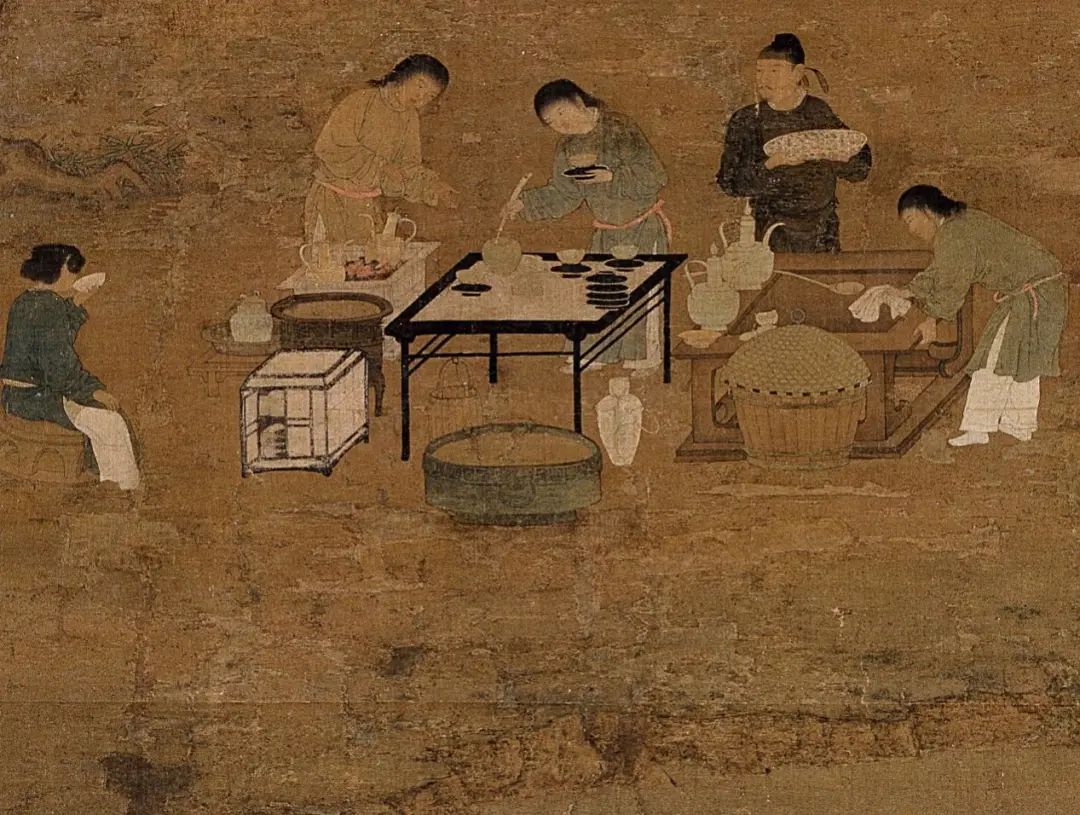
Wen Hui Tu by Song Huizong in Northern Song Dynasty (partial)

In the masterpiece The Riverside Scene at Qingming Festival, we can find tea shops everywhere in the bustling Bianjing street, which became the most important place to meet the material and spiritual needs of the citizens in the Northern Song Dynasty.
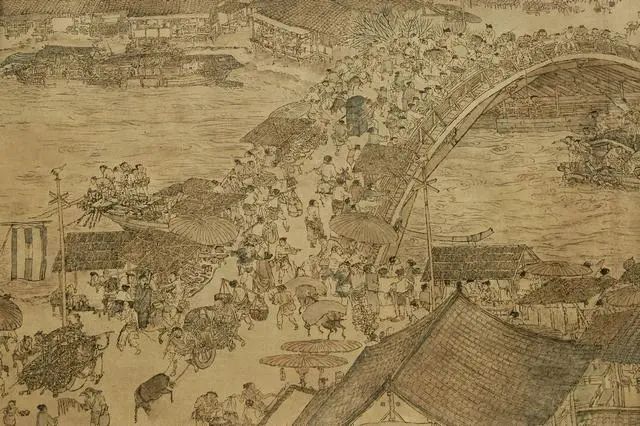
Song Zhang Zeduan’s Riverside Scene at Qingming Festival (partial)

Second, tea affairs in Yuan, Ming and Qing Dynasties

The Yuan Dynasty was a dynasty established by Mongolian ethnic minorities. Because of the difference in diet, the Mongols were not very interested in drinking tea. In addition, the country of the Yuan Dynasty was not very long, so the drinking habits of the Yuan Dynasty basically followed the way of drinking tea in the Song Dynasty. However, the Yuan Dynasty was a transitional stage. At that time, there was a tea-making method of "soaking soup to remove smoke and decocting it with soup" in the south, which was basically consistent with the tea-drinking method in the Ming and Qing Dynasties.
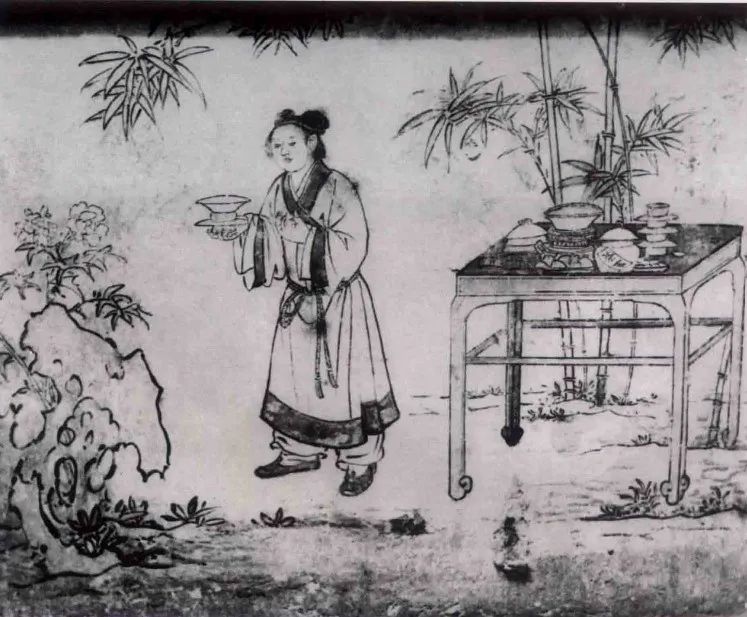
Yuan mural Dao Tong

By the Ming Dynasty, there had been another great change in the way of drinking tea in China. Because the manufacturing process of tea powder is complicated, Ming Taizu officially abolished the tribute tea in Fujian in the Song Dynasty in the 24th year of Hongwu, and changed the tea powder to make tea. The form of tea was formally changed from group tea and cake tea to loose tea, which led to the general way of making tea now. Tea powder was abandoned, and the method of ordering tea was naturally abandoned. Over time, people in the Ming Dynasty did not know what the method of ordering tea was.

Xu Cishu, a Ming Dynasty man, recorded the way of making tea in Tea and Vegetables Cooking Point: "First, hold tea in your hand, once the soup is put into the pot, throw the tea soup at hand, and cover it with a lid. When you breathe three times, you will pour it into the pot again." Although the Ming people still pay attention to the first tea soup for washing tea and the second for drinking, this way of making tea has been much simpler than the tea frying method in Tang Dynasty and the tea ordering method in Song Dynasty.
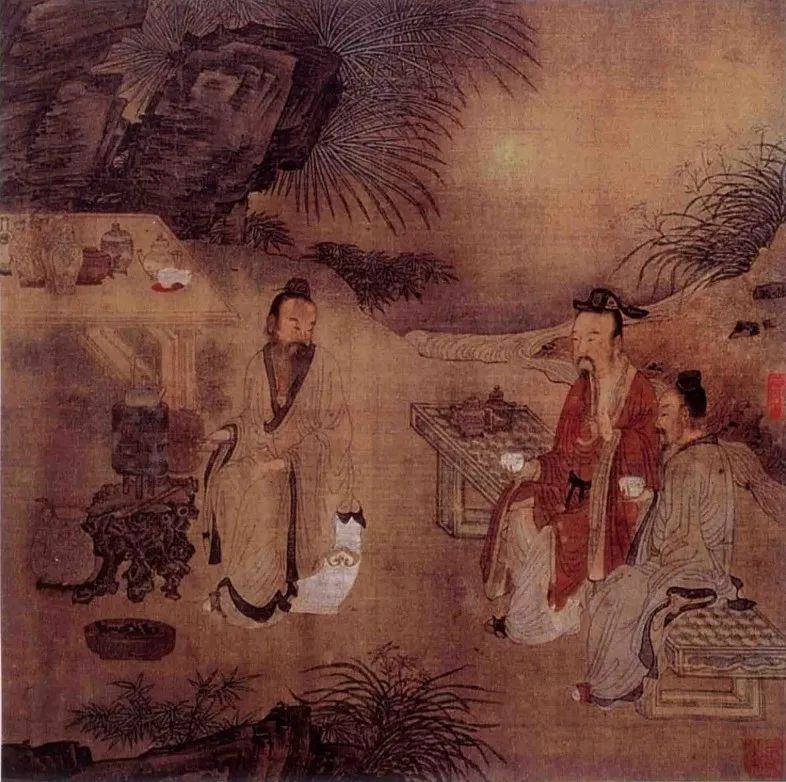
Ming anonymous "tea tasting map"

In Wen Zhiming’s Tea Tasting Map, we can see a grass hiding under a tree, two people sitting opposite each other in the cottage, a teapot and two white porcelain teacups on the middle desk, and a boy cooking water in the side room. Tea drinking is born with a quiet temperament. Drinking tea in downtown is lively, but in such an environment as painting, tea drinking pays attention to quietness, and it is the most desirable way for scholars in Ming Dynasty to discuss tea in quietness. Zhang Yuan, a Ming Dynasty scholar, said in Tea Record: "Drinking tea with few guests is more expensive, but many guests are noisy, and noisy is lacking in elegance." It can be seen that the tea drinking of Ming scholars is a static word, which also gives a different sustenance to tea tasting.
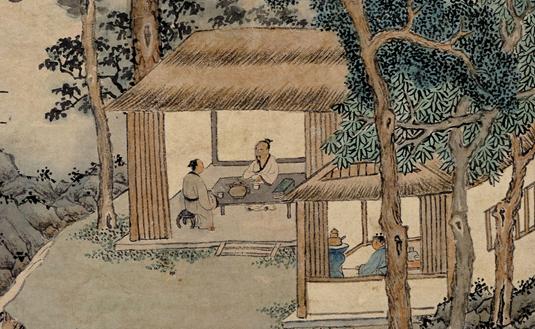
Tea Tasting Map by Wen Zhiming in Ming Dynasty (partial)

When we compare this picture with the Song Dynasty’s "Dou Cha Tu" mentioned before, we will find that with the disappearance of tea powder and tea ordering, tea sets have been simplified, and the tools needed for drinking tea in the Song Dynasty, such as tea grinders, teaspoons and tea baskets, are no longer popular, so that scholars in the middle and late Ming Dynasty will be confused when they read the tea baskets written by Song people.
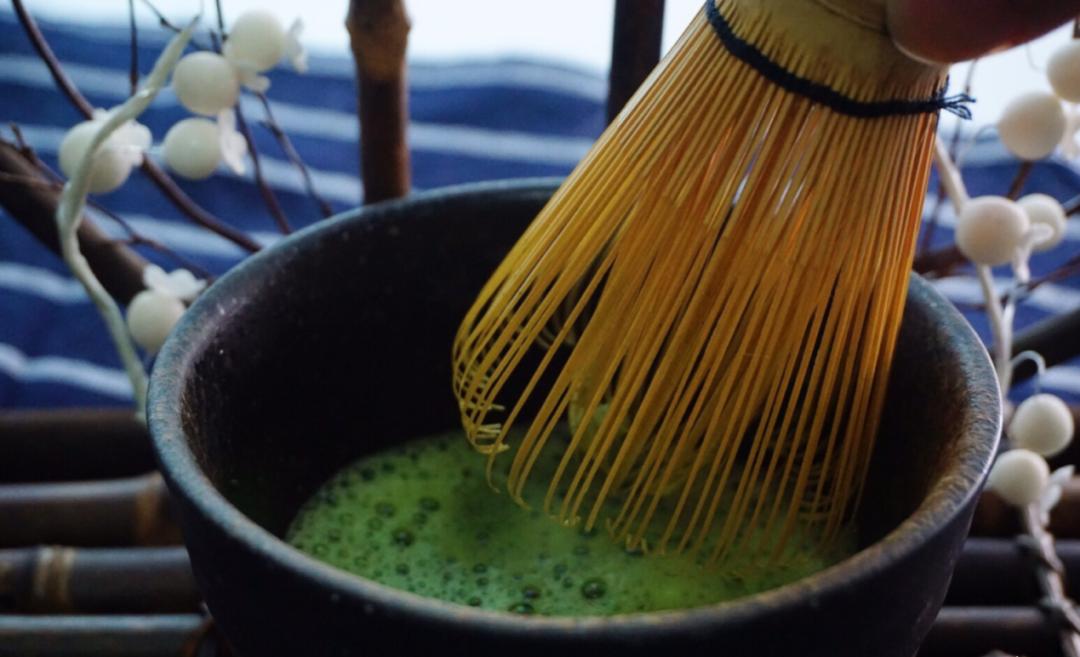
Tea basket

Although the procedures for drinking tea and tea sets have been simplified, the quality of life of the literati in Ming and Qing dynasties has not decreased at all. They have played new tricks on the remaining teapots, teacups and tea cans, and the tea sets in the Ming and Qing dynasties are more exquisite and exquisite.

Teapots in the two dynasties were made of purple clay pots, and Wen Zhenheng, a Ming dynasty, said in "Chronicles of Long Stories" that "the teapot is made of sand, and the cover is neither fragrant nor cooked." Ming people also prefer small pots, it is best to have a small pot for each person at the elegant meeting, so as to enjoy themselves.

Porcelain firing in Ming and Qing Dynasties reached its peak, which was reflected in tea ware’s style. Most of tea ware are exquisite, but the style is according to the emperor’s preference. Yong Zhengdi in Qing Dynasty likes elegance, while tea sets in Yongzheng Dynasty are mostly simple in shape, fresh and elegant in style, giving people a pleasing feeling. For example, in Yongzheng period, there were two Yixing Kiln Zisha tea pots, one of which was hexagonal, with the word "before the rain" engraved on the lid, while the other was round and round, with the word "Zhulan" engraved on the lid.
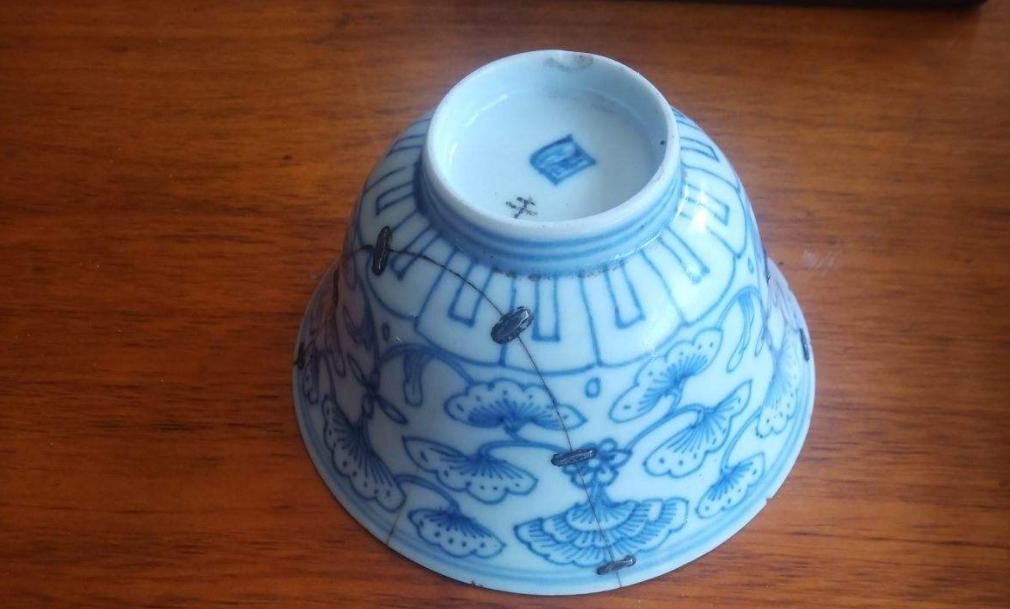
Objects in Yongzheng period

However, Emperor Qianlong advocated magnificence, so the style of tea set in Qianlong Dynasty was warm and gorgeous, and glaze and other techniques were widely used, with bright colors and diverse patterns, with the intention of highlighting the weather of a prosperous generation. For example, in the Qianlong Dynasty, a sapphire Sanqing tea poem covered the bowl. The sapphire was transparent, covered with gold patterns, and the bowl was exquisitely carved with poems. But this is also generally speaking, there were gorgeous tea sets in Yongzheng Dynasty, and there were also elegant tea sets in Qianlong Dynasty.
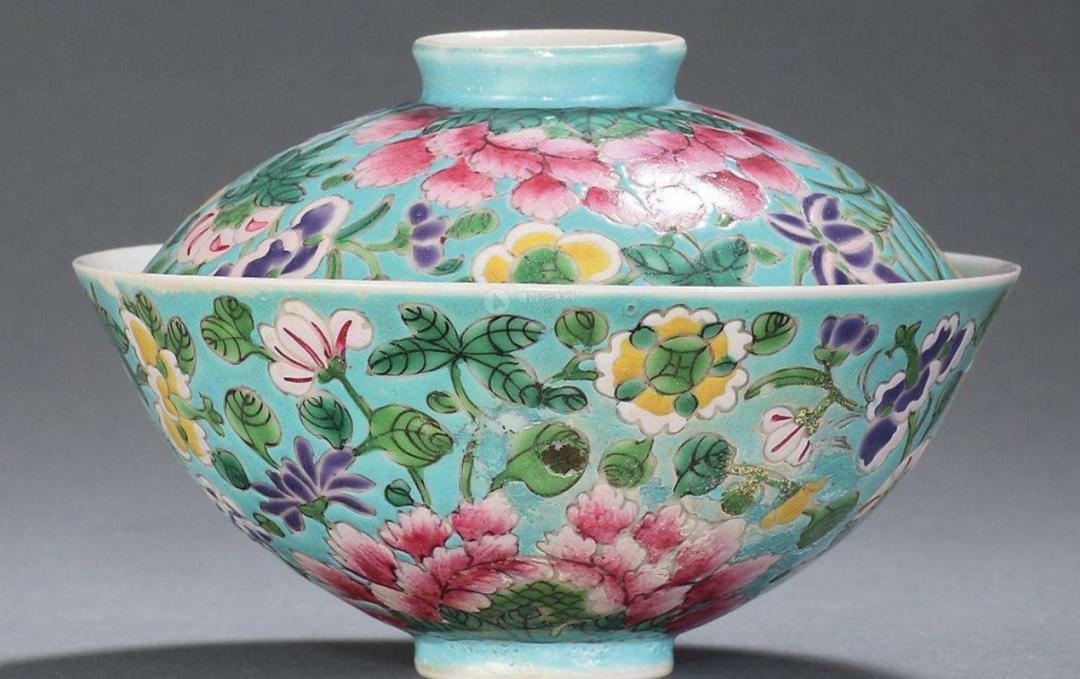
Qianlong period artifacts

It is worth mentioning that the rulers of the Qing Dynasty kept their own tea culture-milk tea when they accepted the tea culture of the Han nationality. According to records, Manchu people still kept the habit of drinking milk tea after entering the customs, and the palace also set up a special institution to provide milk tea. The Qing emperor liked to have a cup of milk tea before eating, and the milk tea and other drinks in the court were also distributed according to the quantity. The rulers of the Qing dynasty loved milk tea, and even when they went hunting, they didn’t forget to have a drink.
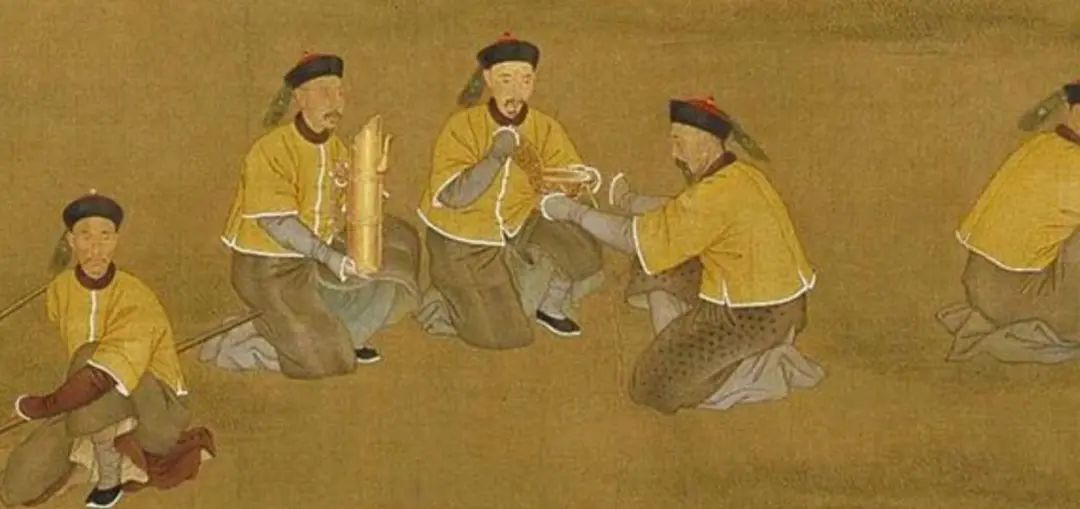
Ranz Ning’s Hongli Hunting Dinner in Qing Dynasty (partial)

Wen Shijun said

The origin of tea culture in China is very early, and ancient ancestors have already recognized the medicinal function of tea. With the development of history, tea has increasingly entered people’s daily lives, and the fragrance of tea can be smelled in the deep gardens of the palace, in the streets of the streets and in the barren hills and wild forests. The rise of tea culture has led to the change of the material form of tea drinking, and also enriched the spiritual life of the ancient people, and tea tasting has been given a different spiritual sustenance by the ancient people. Therefore, China’s tea culture includes both material and spiritual aspects.

reference data

Qiu Jiping: Chinese Tea Painting, Zhejiang Photography Publishing House, 2014.

Liao Baoxiu: Tea Affairs and tea ware in Past Dynasties, Palace Museum Press, 2017.

Zhao Qiuli and Fan Feng: The Archaeological Team of Shandong University Discovered the World’s Earliest Tea Remains, Guangming Daily, November 26, 2021.

(Author: Haoran literature and history Jingsu)

The pictures used in this article are all from online search unless otherwise specified. If there is any infringement, please contact the author to delete them. Thank you!
Summer Economy | Night shopping, night entertainment, night travel … Which cities love "nightlife" best?

In the evening of summer, the business circle of the city is gradually becoming lively, and "shopping" and "shopping" have become "necessary" items in summer nights. In recent years, "nightlife" is expanding from catering and shopping to entertainment and leisure, and night cultural activities such as performances and exhibitions are gradually increasing.
Night shopping, night eating, night practice, night reading, night entertainment, night outing … The prosperity of "night economy" is an important symbol of a city’s economic openness and activity. Since the beginning of this year, many places have proposed to develop the night economy, and local government officials have taken the lead in taking to the streets to eat supper, and many places have issued documents to promote the vitality of night consumption.
In the hot summer, how can cities ignite "fireworks" in 2022? What are the new trends of night economy under the boost of local consumption policies? Which cities love "nightlife" best? Who is the main force of night consumption? The Beijing News Shell Finance takes you through the data to see the "consumption picture" of midsummer night.
1.2022Economic scale is expected to break through.40Trillion yuan
Which cities are"The city that never sleeps"?
Night economy is an important part of urban economy, and it is also an important starting point for cities to stimulate consumption.
According to the survey report of urban residents’ consumption habits of the Ministry of Commerce, 60% of residents’ consumption occurs at night, and young people born after 1995 are the main group of night economy.
2019 is called "the first year of night economy in China", and the night economy develops rapidly. The State Council issued "Opinions on Accelerating the Development of Circulation to Promote Commercial Consumption", proposing to enliven night businesses and markets and improve the convenience and activity of night consumption. In 2019, the night economy reached 26.4 trillion yuan, a year-on-year increase of 15.3%. In the following two years, the night economic growth rate exceeded 17%. According to Ai Media Consulting, China’s nighttime economic growth rate will continue to grow in 2022, and the economic scale is expected to exceed 40 trillion yuan.
In 2021, the Ministry of Culture and Tourism announced the first batch of 120 national night cultural and tourism consumption gathering areas. The data shows that Beijing, Hebei, Shanghai, Jiangsu, Zhejiang, Jiangxi, Shandong, Guangxi, Chongqing and Sichuan have the largest number of night culture and tourism consumption areas. Qianmen Street in Dongcheng District of Beijing, Tianqiao Performing Arts Zone in Xicheng District, 798-751 Art Block in Chaoyang District, Liangmahe Style Waterfront in Chaoyang District, Huaxi LIVE· Wukesong in Haidian District and Gubei Water Town in Miyun District are all on the list.
Night economic agglomeration has become the common carrier of night economic construction in most cities. Guangzhou, Beijing, Shanghai, Qingdao, Suzhou, Foshan and Kunming have clearly put forward relevant construction plans. For example, Foshan proposes to build eight high-quality night economic clusters by the end of 2021, and Kunming proposes to build 15-20 night economic clusters.
In order to boost the economy and consumption vitality, measures to develop night economy have been issued in many places this year.
The Beijing News Shell Finance reporter found that taking Beijing as an example, in February 2022, the Beijing Municipal Bureau of Commerce and other 10 departments issued "Several Measures for Further Promoting the Development of Business Circle", which put forward 14 specific measures to promote the development of business circle from four aspects: innovating business circle management mode, creating a prosperous and standardized business circle consumption environment, improving the intelligence level of business circle and increasing policy support, among which "encouraging key business circles to develop night economy" became an important content.
Henan proposes to focus on the development of "night economy", allowing the use of "shops outside" and "open-air markets" under standardized and orderly conditions. In Xi ‘an, qualified commercial pedestrian streets and commercial complexes are allowed to operate outside in the specified time period at night, and outdoor activities such as automobile market, cultural and creative market, cultural performances and night trips to Chang ‘an are held based on characteristic commercial districts.
This summer, the "trunk market" rose again, enriching the nightlife consumption scene.
In Nanjing, Qingdao and other cities, whenever night falls, many people drive their cars to the local square, line them up in turn, open the trunk to display goods, install small light bulbs and literary signs, and turn them into miniature shops. Such a "trunk shop" has attracted many citizens to stop.
Generally speaking, China’s night economy presents the characteristics of "strong in the south and weak in the north". According to the big data of the ride, during the period from May 1 to June 20, 2022, among the TOP 10 cities with night travel activity, 9 cities in the south and only one city in Beijing in the north. Among them, the top five cities in activity belong to South China.
In addition, the demand for night travel also reflects the economic vitality of the city, and the demand for night travel of residents in new first-tier cities is generally more. The Beijing News Shell Finance reporter found that among the top ten cities traveling at night, there are 5 new first-tier cities, 3 first-tier cities and 2 second-tier cities. In 2021, the GDP trillion club, New Jincheng, Dongguan ranked third, and Foshan ranked fourth.
It is worth mentioning that second-tier coastal cities are also active at night. Two second-tier cities, Xiamen and Quanzhou, ranked in the top ten for night trips, and Xiamen ranked second, second only to Shenzhen.
2."at nightDrink "into a young man"New consumption trend
exceedsixsucceedInterviewedConsumers go at least once a month.
On summer nights, having a drink with three or five friends has become one of the ways for young people to relax at night.
Urban nightlife scenes are constantly enriched, and pubs that are mainly open at night have become an important scene for people to socialize and entertain. According to the sample survey of Ai Media Consulting, more than 60% of the consumers interviewed go at least once a month, among which 27.5% go once every two to three weeks and 18.9% go once a month.
Although drinking is the main thing, unlike nightclubs, the bistro with a sense of atmosphere provides more social space and is a "compound" venue that includes music, board games, performances and catering.
Night consumer demand is constantly released, and the pub economy is growing steadily.
In 2018, the scale of China’s tavern market exceeded 100 billion yuan; In 2021, the market scale reached 128.04 billion yuan, an increase of 26.2% compared with 2020. Zheshang Securities said that with the relaxation of epidemic prevention and control policies in various places and the peak of night consumption in summer, the demand for night consumption has been steadily restored, which is expected to promote the concentrated outbreak of pub format in summer.
The pub economy is hot, more people are eyeing this "cake", and many catering enterprises have entered the "bistro" across the border. According to Ai Media Consulting, from 2015 to 2020, the total registered volume of China tavern-related enterprises showed an overall upward trend, with a compound annual growth rate of 49.5%. By the end of 2021, the total registered volume of related enterprises reached 14,658. Among them, there are many new consumer brands like Naixue, as well as catering enterprises such as Puju and Laoxiang Chicken.
3. DuodiExtend the opening hours of cultural venues such as museums.
Cultural life enters night economy.
In addition to catering and shopping, the cultural consumption of night life is also increasingly prosperous. Many places propose to extend the opening hours of museums, art galleries and other cultural venues, and visiting museums and watching exhibitions has also become a favorite night cultural activity for consumers.
The rise of night cultural activities has promoted the gradual recovery of China’s performance market.
In 2021, the overall scale of China’s performance market reached 33.585 billion yuan, an increase of 27.76% compared with 2020. Among them, drama has become the most popular type of performance. In 2021, among the 114,400 theatrical performances, the box office revenue of drama performances ranked first, and the number of drama performances ranked third.
On June 29th, Ma Li, deputy director of the Industrial Development Department of the Ministry of Culture and Tourism of China, said that the Ministry of Culture and Tourism would plan and implement an action plan to promote cultural and tourism consumption in the second half of the year, seize the peak summer consumption season, focus on developing night culture and tourism economy, and guide relevant institutions to publish night culture and tourism consumption maps.
4.E-commerce night market "helps night economy"
Which cities like to place orders at night?
Liu Genghong, who escaped the aerobics this summer, did not escape Dong Yuhui, who brought goods in the live broadcast room of Oriental Zhenpin.
Since June this year, the bilingual live broadcast of New Oriental has been on fire, which not only allows people to see the new way of live broadcast with goods, but also allows people to see the potential of e-commerce night market economy.
With the maturity of new consumption patterns such as live e-commerce, the proportion of online sales channels shopping at night is expanding. Ningbo, Shanghai and other places issue e-commerce coupons to stimulate consumption. On June 27th, Anhui started the night economic consumption season, focusing on key sectors such as automobiles, home appliances, catering and e-commerce, to help the whole chain of consumption recover.
The data shows that people in first-tier cities prefer to place orders online on summer nights. From May to June 20, 2022, the number of online shopping orders in first-tier cities ranked in the top four, and Beijing ranked first. Chengdu, which is called "the city that never sleeps" by many tourists, is also enthusiastic about online shopping.
What do people who don’t sleep buy? Residents in different areas have regional characteristics in shopping. Consumers in Changsha and Hangzhou, online celebrity’s tourist cities, prefer travel products, while residents in Fuzhou and Guangzhou prefer entertainment products. People in Sichuan and Chongqing prefer food and drinks, while Beijing and Shanghai prefer fresh food.
Reporting/feedback

2023 Oriental Beauty Valley International Cosmetics Conference opens. How can China’s beauty industry break?

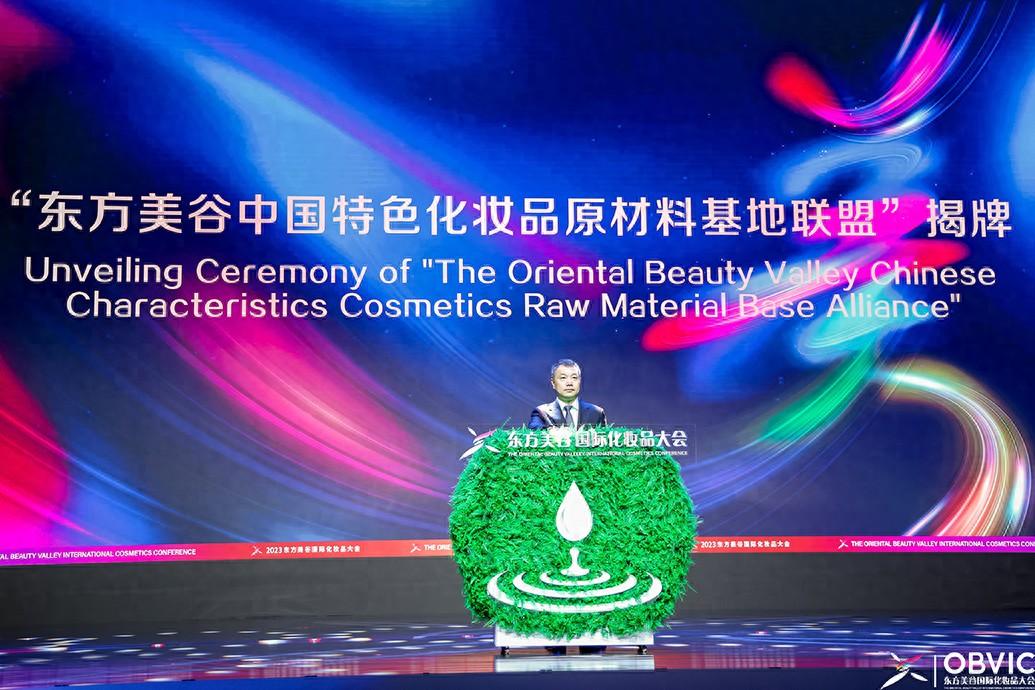
"Oriental Beauty Valley China Characteristic Cosmetic Raw Material Base Alliance" was unveiled. The pictures in this article are all provided by the organizers.

The 6th China International Import Expo is in full swing, and the international top event of cosmetics industry is also on schedule.

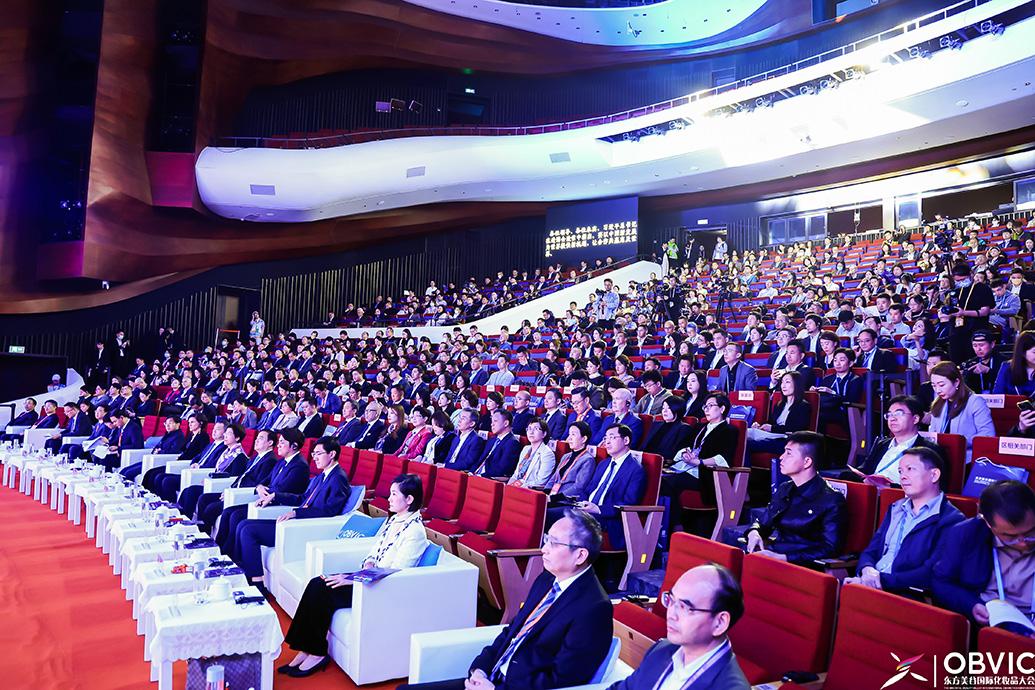
On the morning of November 9, 2023 Oriental Beauty Valley International Cosmetics Conference officially opened. This conference is the sixth, with the theme of "Beautiful World of Oriental Beauty Valley", and many well-known enterprises, experts, scholars and industry leaders from home and abroad gathered together.

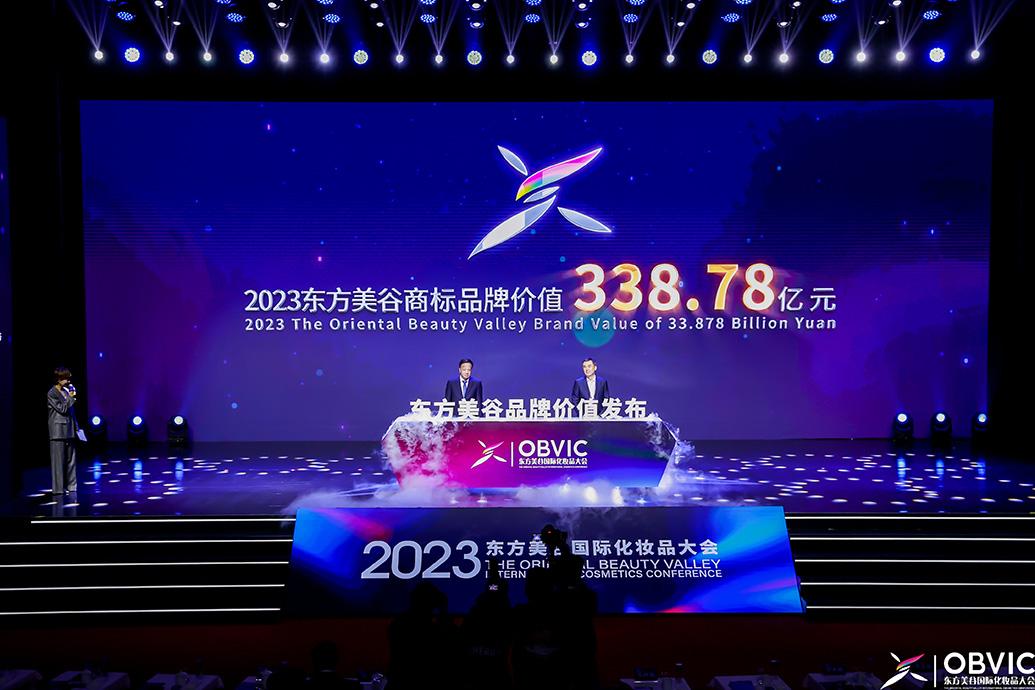
As the "capital of cosmetics industry in China", Oriental Beauty Valley has gathered more than one third of cosmetics enterprises in Shanghai, with an industrial scale of nearly 100 billion yuan. According to the "2023 Oriental Meigu Trademark Brand Value Evaluation Report" released at the opening ceremony, the trademark brand value of Oriental Meigu has reached 33.878 billion yuan, with a total increase of 312% in the past five years.

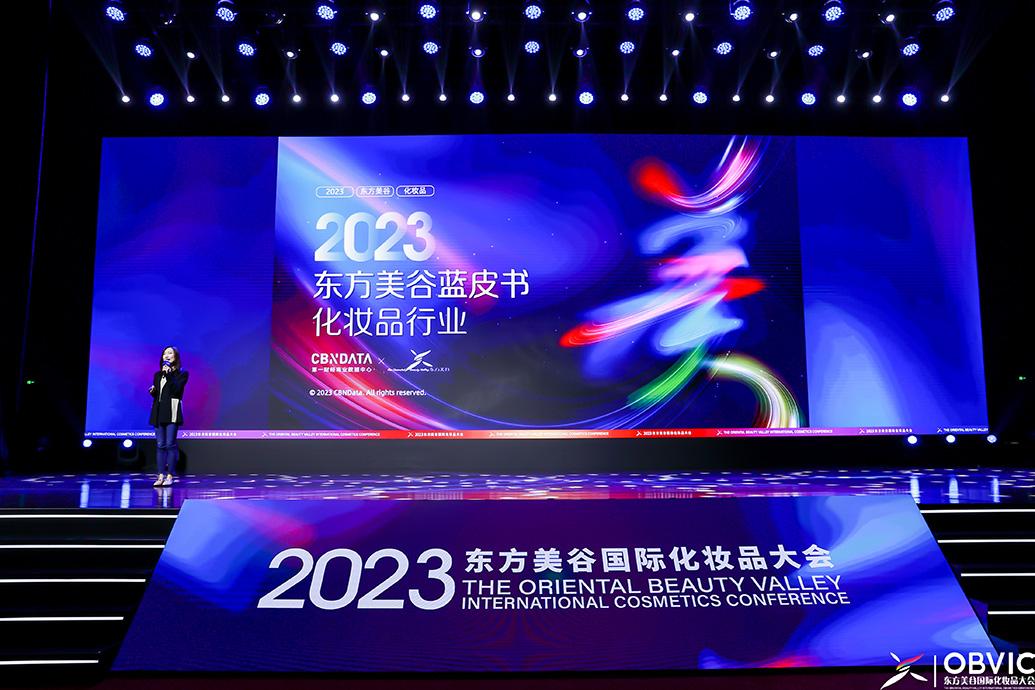
Release the blue book on the spot

Post-80s and post-90s become the main consumer groups of high-quality cosmetics.

According to the "Blue Book of Oriental Beauty Valley 2023" released at the opening ceremony, the cosmetics market in China will usher in a new round of rapid growth in 2023. In the first half of this year, the total retail sales of cosmetics market reached 207.1 billion yuan, up 8.6% year-on-year.

The blue book shows that consumers tend to pay extra premium for high-quality products, among which the post-80 s and post-95 s are the main consumer groups. More than 80% of consumers are willing to spend money because cosmetics can provide high emotional value (improve the quality of life and happiness). At the same time, consumers’ purchasing decision-making process is becoming more rational.

In terms of product cognition, the resonance between ingredients, raw materials and R&D is pushing the beauty industry to turn to biotechnology, and the beauty market has entered the raw material bonus period, and the China raw materials of domestic beauty cosmetics are also widely loved. The olfactory economy is on the rise, and perfume brands have laid out the field of care. Green and safe sustainable beauty cosmetics are leading the new trend of health and beauty.

In 2023, the brand value of Oriental Meigu trademark reached 33.878 billion yuan.

In addition, the "Oriental Beauty Valley China Characteristic Cosmetic Raw Material Base Alliance" was officially unveiled at the opening ceremony.

Raw material innovation is the source of cosmetic research and development innovation. "Grasping the source is a very high-level thing." When interviewed by reporters, Yuan Fei, deputy secretary of the Party Committee and general manager of Oriental Meigu Enterprise Group Co., Ltd. said. The alliance was jointly initiated by China Fragrance, Flavor and Cosmetics Industry Association and Oriental Beauty Valley, and was jointly established with China characteristic plant raw material planting bases in Yunnan, Anhui, Shandong, Ningxia, Gansu, Sichuan, Xinjiang and Guangxi. In the future, the alliance will solve the problems of low added value of domestic raw materials technology and weak market competitiveness through raw material innovation and Industry-University-Research empowerment. In addition, quality standards related to China characteristic plant raw materials will be formulated, and the substitution process of domestic raw materials will be greatly accelerated with "Oriental Meigu Raw Materials" as a booster.

Opening ceremony site

Start the brand going to sea plan and lead the international development.

Ximu Zhenpin (Shanghai) Biotechnology Development Co., Ltd. is a start-up company established in 2022 and officially settled in Oriental Beauty Valley in 2023. Talking about this choice, Hu Xiaoyan, Chairman of the Board of Directors, expressed the hope that Ximu Zhenpin could borrow a boat and build itself into an international brand.

Going international has always been the development direction of Oriental Beauty Valley. As early as 2016, Oriental Beauty Valley signed a strategic cooperation agreement with French Cosmetics Valley, and "Double Valley Linkage" promoted the development of beautiful and healthy industries. In 2021, Oriental Beauty Valley built the "Oriental Beauty Valley Milan Center" in Milan, Italy, becoming the first overseas platform of China’s beauty industry, fully combining beauty and fashion. In addition, Oriental Beauty Valley has been cooperating with international trade associations and has close interaction with cosmetics trade associations in Denmark, Britain, Germany, Japan, South Korea and other countries.

On the stage of the opening ceremony of the International Cosmetics Conference, Oriental Beauty Valley officially launched a new voyage of "brand going out to sea".

Yuan Fei told reporters that cosmetics brands and products must find the right entry point in addition to product quality. Brand going out to sea is always on the road. With the local online live broadcast and offline shopping malls showing the Red Sea trend, local cosmetics enterprises have shown an urgent incremental demand for going out to sea.

Football physical fitness: how do I maintain my physical fitness during the season?

Hello, everyone, today we share how I keep fit during the season. I hope you like it!

front cover

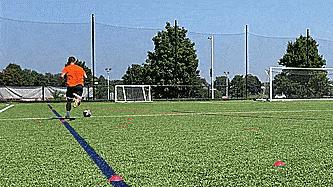
In 2020, Joshua kimmich scored the winner in the match with Dortmund. In that match, he ran 13.73 kilometers. This is the sport of football and kicking. In this sport, most of the running is not jogging, sprinting, walking, jogging and then sprinting. Because of this, the best way to improve physical fitness is to carry out high-intensity training.

We can achieve this goal by sprinting or intermittent training, but the least boring way to improve physical fitness is to use the ball for high-intensity training, which is also the focus of today. Today we will share the training methods to keep in shape during the season. Let’s officially start:

warm up

Before we start training, make sure that we have fully warmed up, do some dynamic stretching and sprinting, so that all our fast muscles will be activated, thus reducing the risk of muscle strain. Take 10 minutes to relax, and then start formal training.

Figure 1- Warm up

This is the only part that does not include the ball, and it is one of the very good agility and quick training.

We can find a friend, or install an application on our mobile phone, which can flash colors and numbers for us for 10 times as a group. I

Figure 2- Fast Move on Command

When our cell phones flash or our friends shout out a color, we sprint to the sign plate and then go back to the middle. About 30 seconds, depending on the length of the interval. In short, do five groups and rest for 30 seconds between each group.

Figure 3- Gap Time

The rest of the training is divided into three small cycles. The first cycle is what we see now. Before Ronaldinho’s dribbling training and shooting, he makes a 30-yard sprint dribble.

Figure 4- Fast Dribble

This training is great, because it can train our dribbling speed, dribble in a narrow space, and persist in dribbling when we are tired.

Figure 5- Exercise dribbling speed

It’s a hard training, but it’s important for us to keep high shooting quality. Imagine that we will be very tired in the 80th minute of the game, so even if we are tired, we should be able to shoot correctly.

Figure 6- Correct Shooting

In this cycle exercise, we can jog or walk back to the starting point as a break between repeated exercises.

If we only have one or two balls, run after them, make sure we are jogging, then jog back to the starting point, and then give yourself an extra 30 seconds to rest.

Figure 7- Jogging or Walking

In addition, because it takes a long time to start each action, you should do it for 15 minutes before continuing this circular action, and it should be very fast.

Before entering the second cycle, give yourself three to five minutes to rest. We should make sure that each cycle has intensity, and even if we are tired, we should work 100%.

Figure 8- Guaranteed Strength

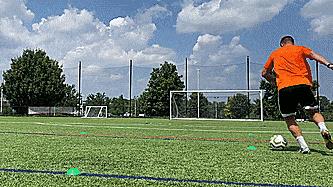
In the second cycle, we make 10 passes to the wall, then zigzag dribble to practice turning and dribbling, then rush out and beat the last sign plate with one of our actions.

Figure 9- Passing the ball to the wall

Put the sign plate 8 to 10 yards away, make sure we don’t go straight through it, rush out of the sign plate for at least a few steps, then cut back the sign plate and walk back to the starting point.

Figure 10- Switch back the sign plate

Once again, this is our break time, and a sign plate is set for passing the ball on the wall to ensure that we keep good habits when passing the ball and that we will not be lazy.

This cycle improves our ability to pass, touch the ball with the first foot, dribble and cut inside with the ball, and the ability of all 1V1 to beat the defender.

All this will make our leg muscles stronger, and at the same time enhance our heart and lung function. Do it for 10 minutes, and then rest for three to five minutes before continuing.

Figure 11- Cardiopulmonary Enhancement

Figure 11- Cardiopulmonary Enhancement

The hardest part was left to the end. Many people hated doing this exercise, but it was the simplest exercise, and it was timed in 10 minutes.

Start by running back and forth, run to the small restricted area and then run to the penalty spot at the back, then run to the top of the restricted area and come back.

Figure 12- Simple exercise

After the round-trip run, start bouncing the ball as soon as possible, don’t rest for a few seconds before starting, and then bounce the ball 30 times before starting the next round-trip run.

Figure 13- Start the ball.

The key point here is that if we screw up and drop the ball, then we need to start the next round trip immediately, which puts pressure on the ball-passing part to ensure that we concentrate on the ball-passing and strive to maintain the quality.

If we don’t have this kind of pressure, then we will drop a few times, then pick up the ball on foot, and then continue to bounce the ball and give ourselves a long rest. After 10 minutes, we have finished the hardest part, but we are not completely finished.

Figure 14- No End

Although this is not the main part of training, it is very important to do 5 to 10 minutes of cold-body exercise, which will make our muscles less tense and help us recover from the next training.

Figure 15- Let the muscles loose.

Don’t skip this link, do some static stretching or the same dynamic movement as before, but with less intensity.

Figure 16- Don’t try to hide from the tiger

Figure 16- Don’t try to hide from the tiger

That’s all for today. Please continue to pay attention to the road of football for more exciting football teaching!

Global artificial intelligence competitiveness, the United States first, South Korea seventh, China ranked?

On March 12th, the Korean media Caijing Today published an article saying that some analysts said that South Korea’s AI (artificial intelligence) competitiveness ranked seventh in the world. The United States ranks first in the world.

According to the "The Global AI Index" of British data analysis media Tortoise Intelligence, the AI competitiveness of the United States ranks first. The analysis target is 62 countries.

The scores of the United States are: 86.19 for implementation, 100 for innovation and 88.69 for investment. Totus Intelligence converted the scores of various fields in the United States into a comprehensive score of 100, and scored other countries as a standard.

In second place is China. China scored 69.36 points for implementation, 75.69 points for innovation and 69.44 points for investment, with a comprehensive score of 62.92 points. Ranked third to sixth are Britain (40.93 points), Canada (40.19 points), Israel (38.89 points) and Singapore (38.67 points).

South Korea ranked seventh (38.6 points). The scores of each field are: 56.21 points for implementation, 51.95 points for innovation and 46.45 points for investment. In terms of specific projects, South Korea scored high in government strategy (87.5 points) and infrastructure (85.2 points). However, it ranks lower in commercial projects (5.4 points) and talents (14.5 points).

Ranked 8th to 10th are the Netherlands (36.35 points), Germany (36.04 points) and France (34.42 points). In addition, Japan and India ranked 16th (30.53 points) and 17th (30.36 points) respectively.

Epic CEO: Commercial AI should not use works for training without the author’s permission.

Epic Games is not only the game and technology, but also the parent company of ArtStation, a platform for hosting commercial artists’ works. In a recent interview, Tim sweeney, CEO of Epic Games, said that he hoped the company would strike a balance between the protection of works of art and the participation of creators in new technologies such as AI image generation.

A few months ago, ArtStation created a label called "noAI" because of the protests of many artists, and the tagged works will be banned from being used by the AI system on its platform.

Sweeney said: "We support many game developers. Some of them will use artificial intelligence, and some people will hate artificial intelligence. We hope to be a reliable neutral intermediary that does not hinder the development of the industry, but we will not deliberately collect data on everyone’s works. "

During the interview, he also explained that if it is for commercial use, the AI system should never use their works without the unification of artists.

He added: "They grab people’s works of art on the Internet and then use it without their explicit consent."

"A company should not do such a thing, right? Maybe it is within the scope of research and study (no problem), but when you sell it for making commercial works of art and commercial products, you should not do so. "

The core technology of "making the brain" serves the important needs of the country

In today’s world, the level of human science and technology has reached an unprecedented height. With the entry into the intelligent era, a new round of scientific and technological and industrial revolution characterized by the deep integration of information technology and manufacturing industry has flourished, and technical groups in many fields have broken through and merged, which has promoted profound changes in manufacturing production methods. Countries all over the world have taken a series of major measures, hoping to rely on the manufacturing revolution with intelligent manufacturing as the core, consolidate the foundation of innovation and development of manufacturing industry, and build new kinetic energy and new advantages. As a manufacturing power in the world, China has listed intelligent manufacturing as the main direction determined by Made in China 2025, which is not only the key to promote the transformation and upgrading of China’s manufacturing industry, but also an important strategy to become a manufacturing power in the world.

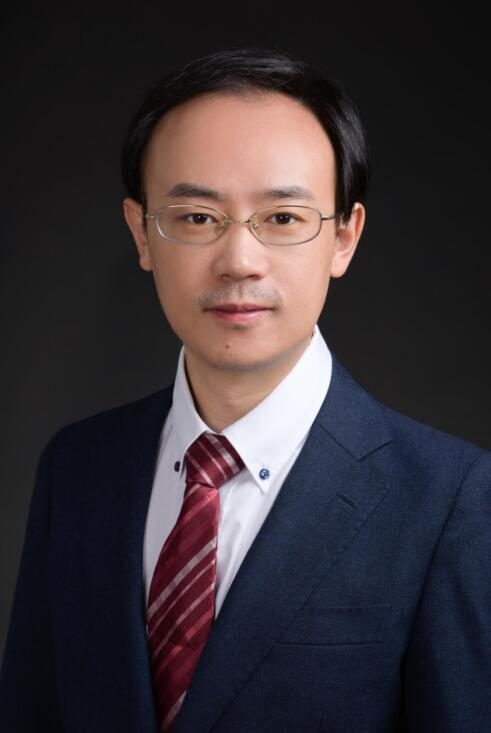
Professor Song Xuan from the Department of Computer Science and Engineering in south university of science and technology of china, whose main research direction is artificial intelligence and its related fields, including big data analysis, data mining and urban computing, has applied the research results to disaster emergency and epidemic prevention of major infectious diseases, and achieved good results. At present, in the series of research in the field of intelligent manufacturing, it contributes scientific research strength to promote the development of intelligent manufacturing in China and accelerate the pace of building a manufacturing power in China.

Intelligent analysis of data model is committed to tackling the key core technology of "intelligent brain"

Since 2013, China’s development strategy has specifically pointed out that "the country’s strength depends on the real economy and cannot be bubbled" and "the innovation-driven development strategy is deeply implemented to enhance the core competitiveness of industry". "Made in China 2025" clearly emphasizes the need to accelerate the integration and development of a new generation of information technology and manufacturing technology, and take intelligent manufacturing as the main direction of deep integration of the two; Efforts will be made to develop intelligent equipment and products, promote the intellectualization of production processes, cultivate new production methods, and comprehensively improve the intelligent level of R&D, production, management and service of enterprises. Intelligent manufacturing can effectively improve the production efficiency of manufacturing industry, shorten the product development cycle and reduce the defective rate of products, which is the key to building a digital China, realizing "Made in China 2025" and breaking the chip blockade.

The national science and technology strategy points out that "it is necessary to cultivate a large-scale team of young scientific and technological talents, focus on the policy of cultivating the strength of national strategic talents, and support young talents to take the lead and play the leading role." As a young scientist born in 1980s, Professor Song Xuan is currently presiding over the national key R&D project "Multi-dimensional data space and service theory of manufacturing product life cycle value chain". The project focuses on the key technology of "manufacturing brain", which is the key theoretical model and technical method of tackling the problem, and provides technical support for the intelligent upgrading of high-end manufacturing industries (such as automobile manufacturing) in China.

Professor Song Xuan said that there are some problems in the process of data storage and analysis in manufacturing industry, such as chaotic data interface, inefficient storage, low level of intelligence and opaque information, which affect the quality of product collaboration and data value-added in manufacturing industry and are not conducive to the sustainable development of manufacturing intelligence. In view of this situation, the project puts forward a set of multidimensional data space and service theory of manufacturing product life cycle value chain, which integrates data sharing and integration and data analysis service. The multi-dimensional collaborative data space prototype model theory of product life cycle value chain based on blockchain proposed by this project can guide safe and efficient data sharing and assist product R&D collaboration; The data analysis method based on deep learning and knowledge generation technology proposed by the project can realize causal inference, speed up the traceability of problems and shorten the product development cycle. Taking intelligent manufacturing as an opportunity and the actual upgrading demand of manufacturing industry as a guide, the project focuses on the two cores of "manufacturing brain": data flow and intelligent analysis, which is of great significance for China’s manufacturing industry to build a competitive advantage in the industrial chain and further improve the intelligent level of manufacturing industry. The project also puts forward a set of multi-dimensional data space and service theory of manufacturing product life cycle value chain, which integrates data sharing and integration and data analysis service.

Professor Song Xuan believes that intelligent manufacturing needs a "manufacturing brain", and manufacturing data is the "blood" of "manufacturing brain"; Algorithm models such as deep neural network are the main part of "manufacturing brain" and play the role of thinking and decision-making; Data flow is collected in the "manufacturing brain", which can automatically complete data analysis, intelligent decision-making and product life cycle prediction and deduction, and realize efficient intelligent manufacturing. The theory of multi-dimensional collaborative data space prototype model of product life cycle value chain based on blockchain proposed by Song Xuan can guide safe and efficient data sharing and assist product R&D collaboration. The data analysis method based on deep learning and knowledge generation technology proposed by the project can realize causal inference, speed up the traceability of problems, shorten the product development cycle, and predict and simulate the product life cycle.

Building an urban brain platform and focusing on building a smart city

From December 2019 to December 2022, with the liberalization of the epidemic, the pneumonia epidemic in Covid-19, which lasted for three years, finally came to an end, and the epidemic situation was gradually controlled. In this epidemic prevention and control, Professor Song Xuan led the project team to develop the "novel coronavirus (Covid-19) communication modeling, prediction and simulation deduction platform driven by human flow big data and AI", which played an important role. Based on artificial intelligence (AI) technology, the model of potential infection sources and risk areas was mined on the city scale, and the communication modeling, prediction and simulation deduction platform for COVID-19 was built. For the big data analysis and AI modeling platform for novel coronavirus communication, the prediction and simulation deduction model was complete. Made outstanding contributions to the prevention and control of the epidemic.

In addition, Professor Song Xuan, as the project leader, has developed an "epidemic prevention chain" APP on the mobile device side. The APP on the mobile phone side can assess the risk of epidemic or major infectious diseases (such as new crown pneumonia, seasonal influenza, etc.) in real time by sensing the contact between users and others and analyzing various urban environmental big data (such as crowd density, air quality, environmental humidity and temperature, etc.).

In fact, as early as 2011, the big data analysis and modeling of people flow carried out by Song Xuan’s team contributed to the fight against viruses and natural disasters. In March 2011, after the earthquake in Japan and the Fukushima nuclear accident broke out, Song Xuan led the team to develop a number of emergency flow prediction models and a system to help the Japanese government analyze the evacuation and migration of victims after the disaster and formulate more efficient post-disaster reconstruction policies. In 2016, in response to the Ebola outbreak in West Africa, the research of Song Xuan’s team helped the International Telecommunication Union to analyze the flow of people in West Africa and the spread and infection of Ebola virus, which played an important role in the prevention and control of Ebola virus.

Professor Song Xuan has been deeply involved in the field of artificial intelligence for 15 years. He deeply realized that the main place for modern people to live and work is the city, and the core of urban management is to make people’s life in the city safer, more comfortable and more convenient. With the proposal of building a smart city, Song Xuan now pays attention to urban data and tries to alleviate or solve various "urban diseases" such as traffic congestion, environmental pollution and natural disasters. His team realized the simulation and prediction of the large-scale movement of urban people by building a modeling model of urban mass people movement, thus realizing efficient urban intelligent management. Song Xuan is currently tackling key problems and building an urban brain platform, bringing together all aspects of urban informatization and the whole process of urban management through high and new technologies to carry out control and support, so as to ensure travel safety, give full play to the efficiency of urban infrastructure, improve the operational efficiency of transportation system and the level of urban governance, alleviate all kinds of "urban diseases" to the greatest extent, and help urban governance to be more scientific, refined and intelligent.

"Scientific research should always serve the public" is precisely with such a sense of mission and responsibility. In the future scientific research, Song Xuan will always focus on his mission, aim high and live up to his youth, take data as the core and science and technology as the weapon, and strive to build an intelligent brain, help build a smart city and build an intelligent manufacturing power.