With the steady recovery of industrial production demand, manufacturing investment continued to grow in the first half of the year.
According to the data of the Bureau of Statistics on July 27, in the first half of the year, the profits of industrial enterprises above designated size increased by 66.9% year-on-year, an increase of 45.5% over the same period in 2019; The average growth rate was 20.6% in two years, maintaining rapid growth. Among them, in the second quarter, the profits of industrial enterprises above designated size increased by 36.0% year-on-year, by 42.5% compared with the same period in 2019, and by an average of 19.4% in two years.
At the same time, many places have recently announced the "14 th Five-Year Plan" of manufacturing industry, and the digital transformation of manufacturing industry has become the focus of common concern.
Announce manufacturing in many places“China’s 14th five-year plan"plan
According to statistics from the Bureau of Statistics, in the first half of this year, the added value of industrial enterprises above designated size increased by 15.9% year-on-year, with an average increase of 7.0% in two years, 0.2 percentage points faster than that in the first quarter; Among them, the second quarter increased by 8.9% year-on-year. In the first half of the year, the manufacturing industry grew by 17.0%, with an average growth of 7.5% in two years. Among them, the added value of high-tech manufacturing increased by 22.6% year on year. The trend of industrial upgrading is obvious, and new kinetic energy has grown stronger.
China’s "14th Five-Year Plan" outlines that we should accelerate the development of the modern industrial system and consolidate and expand the foundation of the real economy, including in-depth implementation of the strategy of manufacturing a strong country and the development and expansion of strategic emerging industries.
CBN found that since July, Shanghai, Zhejiang, Fujian, Tianjin and other places have publicized the "14th Five-Year Plan" of manufacturing industry, and defined the key development direction in the next five years.
Shanghai, a major manufacturing city, issued a notice on July 14th on the issuance of the 14th Five-Year Plan for the Development of Shanghai’s Advanced Manufacturing Industry, proposing that by 2025, the proportion of manufacturing industry that is compatible with Shanghai’s urban functions and high-quality development should be maintained, and the development speed of manufacturing industry should strive to be higher than that in the 13th Five-Year Plan period, and the key areas of high-end industries should move forward from "following" to "running" and "leading" internationally, in order to build a coordinated Yangtze River Delta and serve the whole country.
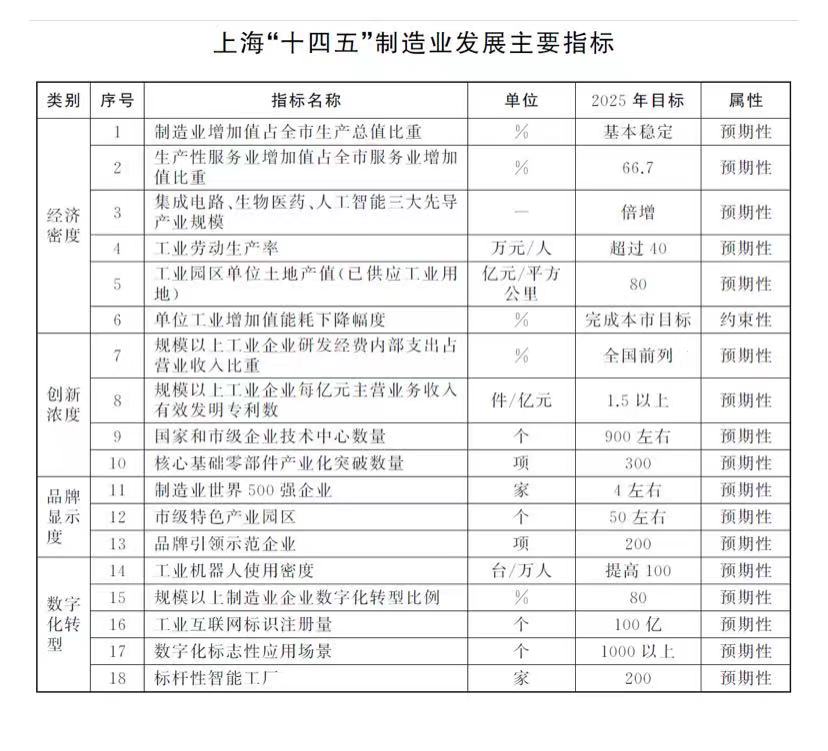
The planning of Shanghai puts forward 18 indicators from the dimensions of economic density, innovation concentration, brand display and digital transformation; Guided by the three leading industries of integrated circuit, biomedicine and artificial intelligence, we will vigorously develop six key industries of electronic information, life and health, automobiles, high-end equipment, advanced materials and fashionable consumer goods, build a "3+6" new industrial system, and build a high-end industrial cluster with international competitiveness. At the same time, the three leading industries strive to double their scale on the basis of the "Shanghai Plan" in 2019.
Tao Chuanliang, executive vice president of CCID (Shanghai) Advanced Manufacturing Research Institute, said in an interview with CBN that from the planning, Shanghai pays attention to the proportion of industrial added value. During the 13th Five-Year Plan period, Shanghai proposed that the manufacturing industry accounted for 25%, and the 14th Five-Year Plan required basic stability.
Tao Chuanliang also said that from the perspective of key industries, in the development of biomedical industry, "Zhangjiang R&D, Made in Shanghai" was clearly put forward, and fashion consumer goods were once again regarded as key industries. This industry includes relatively traditional fields such as fashion clothes, specialty food and intelligent light industry, with the aim of maintaining the manufacturing level in Shanghai and preventing hollowing out.
The Tenth Five-Year Plan for the Construction of Global Advanced Manufacturing Bases in Zhejiang Province makes arrangements for better promoting the high-quality development of the province’s manufacturing industry during the Tenth Five-Year Plan period and accelerating the construction of global advanced manufacturing bases. According to the plan, by 2025, the proportion of manufacturing industry in the whole province will remain basically stable, and it is expected to increase from 32.7% in 2020 to about 33.3%, and significant progress has been made in the construction of advanced manufacturing bases in the world.
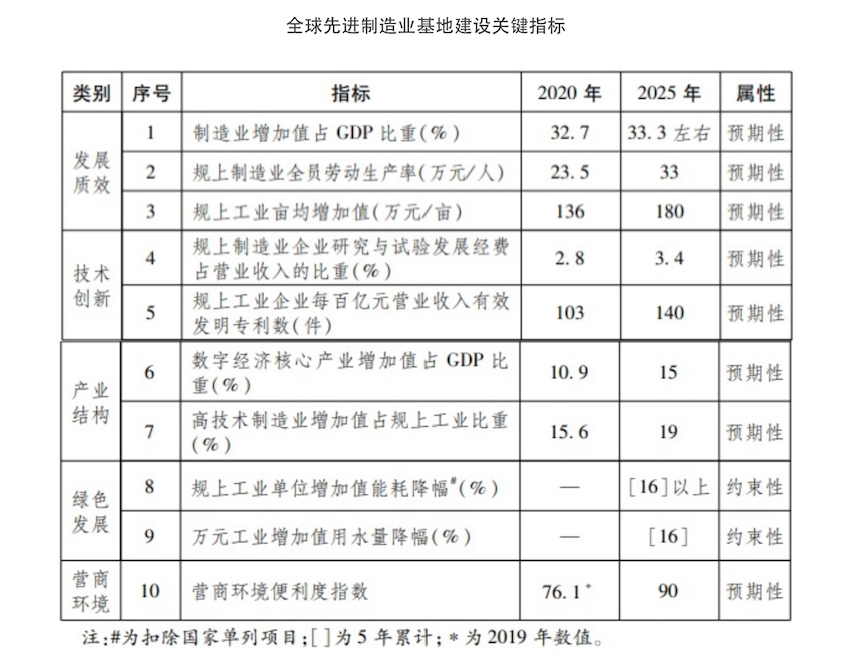
The planning of Zhejiang Province is clear. In terms of emerging industries, we will focus on developing a new generation of information technology industries, biomedicine and high-performance medical devices, new materials, high-end equipment, energy conservation, environmental protection and new energy. Consolidate and upgrade advantageous industries, focusing on the development of automobile, green petrochemical, modern textile, smart home and other industries; In terms of future industries, subversive technologies and frontier industries such as artificial intelligence, blockchain, third-generation semiconductor, brain-like intelligence, quantum information, flexible electronics, deep-sea aerospace, Beidou and geographic information will be planned and laid out.
In terms of spatial layout, Zhejiang should build the overall layout of "two cores (Hangzhou and Ningbo), one belt (coastal industrial belt around the Bay Area) and one corridor (Jin Qu Li Green Economic Corridor)", and build four world-class advanced manufacturing clusters and 15 advantageous manufacturing clusters.
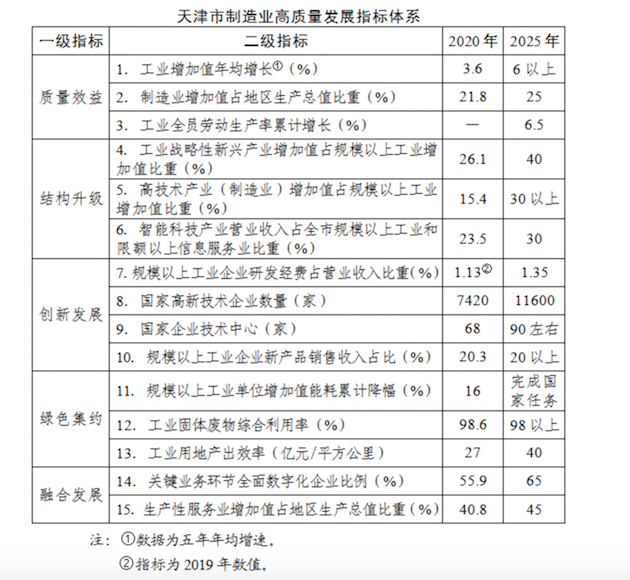
The 14th Five-Year Plan for the High-quality Development of Manufacturing Industry in Tianjin clearly states that Tianjin will adhere to the establishment of manufacturing industry in the new stage of development, and by 2025, it will basically build a national advanced manufacturing R&D base with strong R&D and manufacturing capabilities, high-end industrial value chain and remarkable radiation-driven effect. In order to achieve the goal, Tianjin will focus on building a "1+3+4" modern industrial system, focus on key industrial chains, fully implement the "chain length system", and establish "two maps and two databases" for more than 10 key industrial chains such as information technology application innovation, integrated circuits, car networking, biomedicine, new energy, new materials, high-end equipment, automobiles and new energy vehicles, green petrochemicals, aerospace and Chinese medicine.
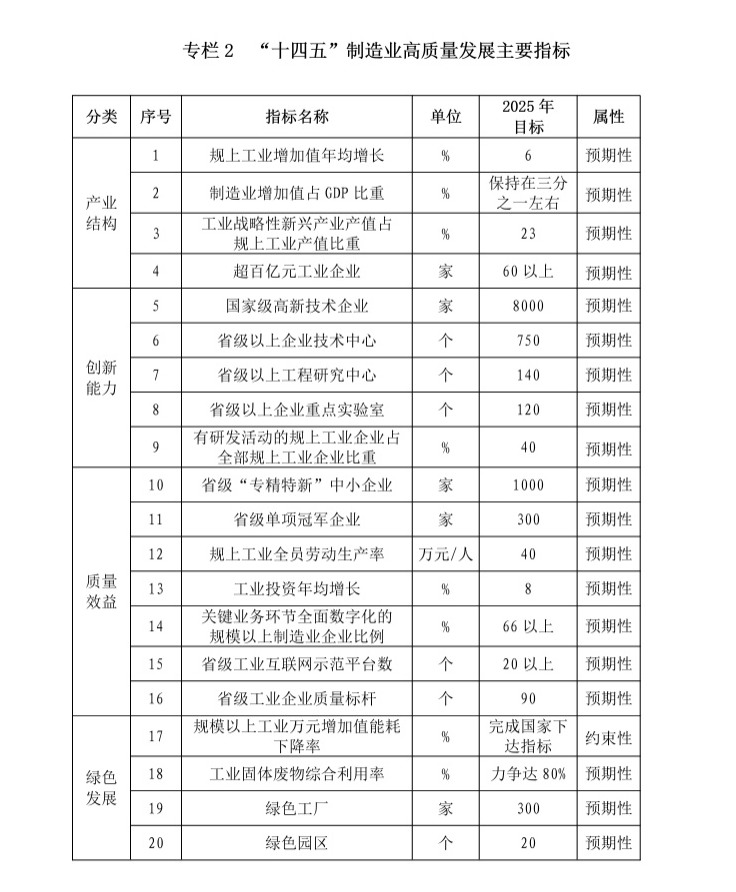
The Special Plan for High-quality Development of Manufacturing Industry in Fujian Province during the Tenth Five-Year Plan period puts forward that during the Tenth Five-Year Plan period, we should unswervingly take new industrialization as the focus of modernization, and vigorously implement the plan of "Strong Manufacturing" with the guidance of intelligence, digitalization, high-end and greening, and put forward 20 specific goals. For example, by 2025, we will strive to achieve an average annual increase of 6% in the province’s industrial added value, with the added value of manufacturing industry accounting for about one-third of GDP, and the output value of industrial strategic emerging industries accounting for 23% of the industrial output value.
Digital transformation of manufacturing industry
Six departments, including the Ministry of Industry and Information Technology and the Ministry of Science and Technology, issued the Guiding Opinions on Accelerating the Cultivation and Development of High-quality Manufacturing Enterprises in July. In guiding the high-end, intelligent and green development of high-quality enterprises, they proposed to implement intelligent manufacturing projects, digital transformation actions of manufacturing industries and 5G application innovation actions, organize the implementation of the digital transformation action plan of state-owned enterprises, and build a number of benchmark enterprises for digital transformation of manufacturing industries.
In the internal structure of digital economy, the leading position of industrial digitalization in digital economy has been further consolidated. In the manufacturing planning published in various places, the importance of digital transformation of manufacturing industry is also emphasized.
For example, the planning of Shanghai puts forward 10 key tasks, the first of which is to accelerate the empowerment of industrial figures. Promote the all-round, all-angle, all-chain development of digital technology to empower the manufacturing industry, enhance the ability of intelligent production, personalized customization, networked collaboration, service extension and digital management of enterprises, and enhance the digital competitiveness of "Made in Shanghai".
Tao Chuanliang told reporters that in the "14 th Five-Year Plan" of Shanghai’s manufacturing industry, it is proposed that intelligent manufacturing and industrial Internet can achieve industrial digital empowerment. As the focus of economic digitalization, industrial digitalization transforms enterprises through intelligent manufacturing and industrial internet, and finally presents smart factories and AI+ manufacturing demonstration application scenarios to pragmatically promote the upgrading of manufacturing industry.
Zhejiang’s planning also clearly puts forward "accelerating digital development and leading the all-round upgrading of manufacturing industry". It starts from the following aspects: building "industrial brain+future factory", promoting the innovation and development of industrial Internet, promoting the deep integration of manufacturing industry and modern service industry, promoting the digital transformation of enterprises, and building first-class digital infrastructure.
Tianjin’s goal is that by 2025, the penetration rate of digital R&D design tools for key enterprises will exceed 90%, the numerical control rate of key processes will exceed 60%, and the digital production equipment will exceed 60%. Enterprises above designated size in the city have basically realized digital application, and the number of intelligent factories and digital workshops has exceeded 500, cultivating 10 intelligent manufacturing system solution suppliers with strong competitiveness.
On July 24, Xu Xiaolan, Vice Minister of the Ministry of Industry and Information Technology, said during the investigation that promoting the digital transformation of manufacturing industry and accelerating the innovation and development of industrial Internet are the strong support for implementing the deployment of the "14 th Five-Year Plan" and strengthening innovation-driven, reform-driven and integration-driven, which is the only way for industrial transformation and upgrading.
Xu Xiaolan pointed out that it is necessary to improve the quality of platform technology supply and application service level, deepen the concentration of industrial Internet platform resource elements, strengthen the synergy between industrial Internet promotion and application and digital transformation of the industry, and thoroughly implement the digital transformation of manufacturing industry.
At this year’s World Artificial Intelligence Conference, Qian Feng, an academician of China Academy of Engineering, said that focusing on the core of digital transformation of manufacturing industry, such as industrial intelligence and intelligent systems, as well as manufacturing logistics, raw materials and material products, all need to be digitized. "Because this is a process of interdisciplinary integration, we need to deeply integrate with automation and information disciplines", so we need to strengthen technical research.
Qian Feng said that in the era of intelligence, how to use industrial intelligence to achieve intelligent management and control requires information perception and accurate cognition first, so as to finally achieve intelligent management and control and achieve digital management and control throughout the life cycle. "The cutting-edge research of industrial intelligence and intelligent systems will strengthen the innovative source capability of deep integration of new information technology and manufacturing industry, promote the digital transformation of traditional industries in all directions, all angles and the whole chain, and promote the upgrading of industrial technology and the modernization of industrial chain."