标签归档 苏州楼凤

Satellite perspective | Look! The green kinetic energy behind this "transcendence"!

  Strive to achieve peak carbon dioxide emissions by 2030 and carbon neutrality by 2060, which is a major strategic decision made by the CPC Central Committee based on the situation and the national conditions, and a solemn commitment of China.

  Energy is the main battlefield to promote carbon neutrality in peak carbon dioxide emissions, and China has accelerated the planning and construction of a new energy system. By the end of June this year, China’s renewable energy installed capacity reached 1.322 billion kilowatts, historically surpassing coal-fired power, accounting for about 48.8% of China’s total installed capacity.
  Seen from space, the satellite captures the green kinetic energy behind the above-mentioned "transcendence".

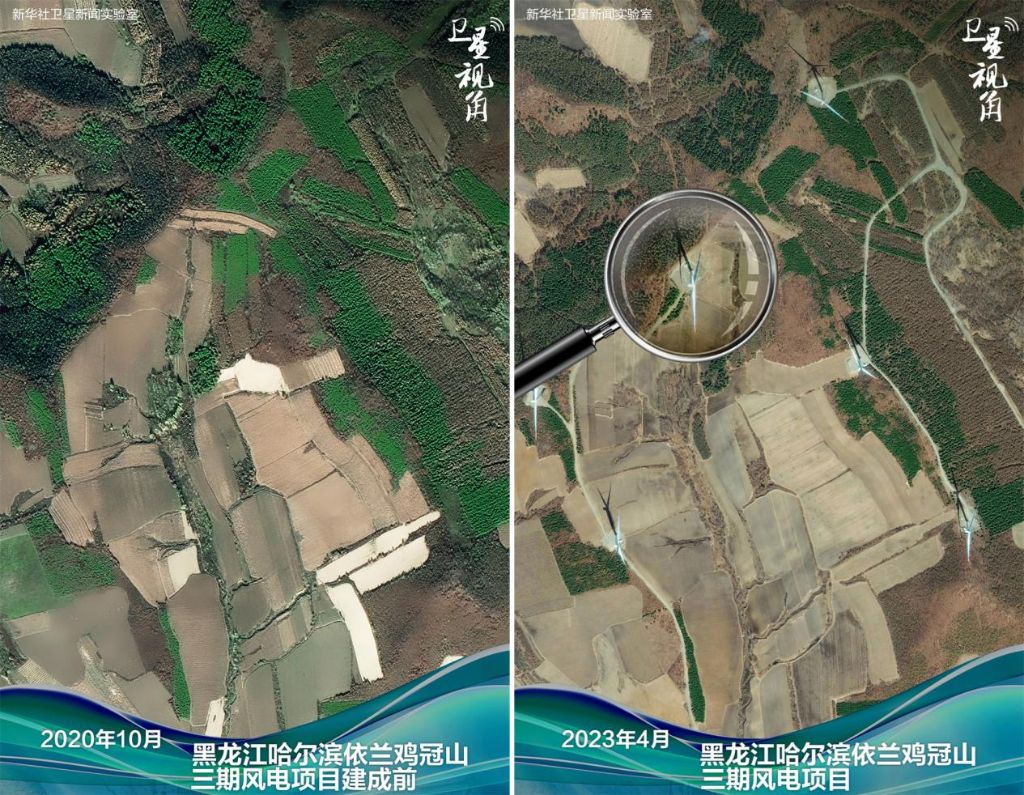
 ↑ Compared with 2023 and 2020, the third phase wind power project of Jiguanshan in Yilan, Harbin, Heilongjiang Province was connected to the grid for power generation.

  On Jiguan Mountain in yilan county, Harbin City, Heilongjiang Province, white windmills are arranged in an orderly way, waving "arms" in the wind, turning wind into electricity and guarding the lights of thousands of families.

  At present, the 150 MW wind power project in the third phase of Yilan Jiguanshan in Harbin, Heilongjiang Province has been successfully connected to the grid for power generation. The average annual power generation is 450 million kWh, which can save about 135,500 tons of standard coal and reduce 369,700 tons of carbon dioxide emissions every year.

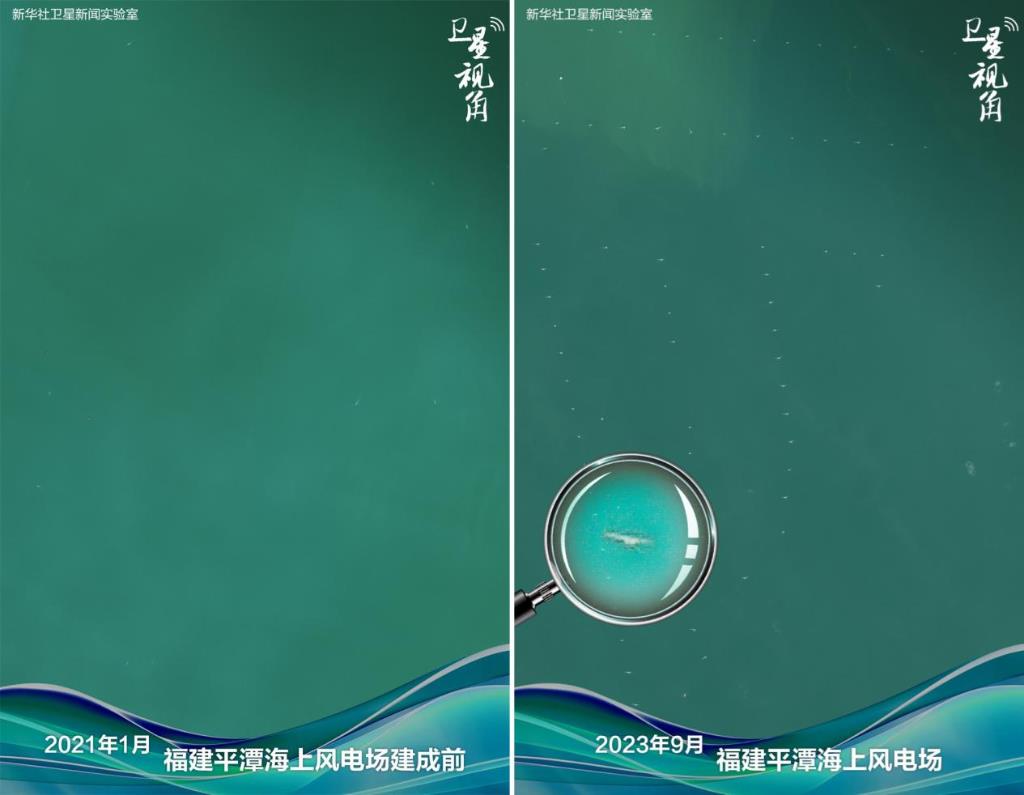
  ↑ Compared with 2021, the offshore "Optimus Prime" stands in Pingtan offshore wind farm in Fujian.

  The wind comes from the sea and sends electricity to thousands of homes.

  On July 19, 2023, the eye-catching "Optimus Prime" at sea — — The world’s first 16 MW ultra-large offshore wind turbine is connected to the grid at Pingtan offshore wind farm in Fujian, with an annual power generation of over 66 million kWh.

  In recent years, the installed capacity of offshore wind power in China has continued to grow, which has become an important starting point for promoting energy transformation. By March 2023, the cumulative installed capacity of offshore wind power in China was about 30.89 million kilowatts, ranking first in the world.
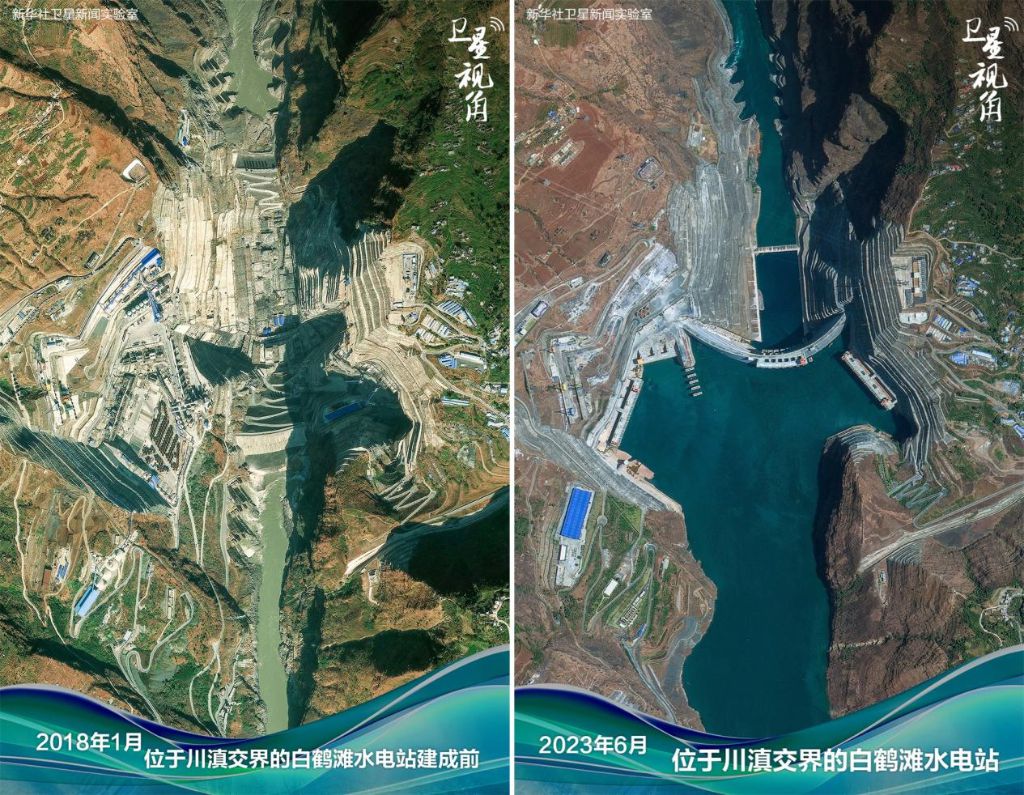
 ↑ Compared with 2018, Baihetan Hydropower Station has been put into operation.

  By the end of 2022, Baihetan Hydropower Station, which ranks second in the world in terms of total installed capacity, was put into operation in an all-round way. Together with Wudongde Hydropower Station, Xiluodu Hydropower Station, Xiangjiaba Hydropower Station, Three Gorges Hydropower Station and Gezhouba Hydropower Station, it formed the world’s largest "clean energy corridor".
  The average annual power generation of Baihetan Hydropower Station can reach 62.443 billion kWh, which can replace about 19.68 million tons of standard coal and reduce carbon dioxide emissions by about 52 million tons.

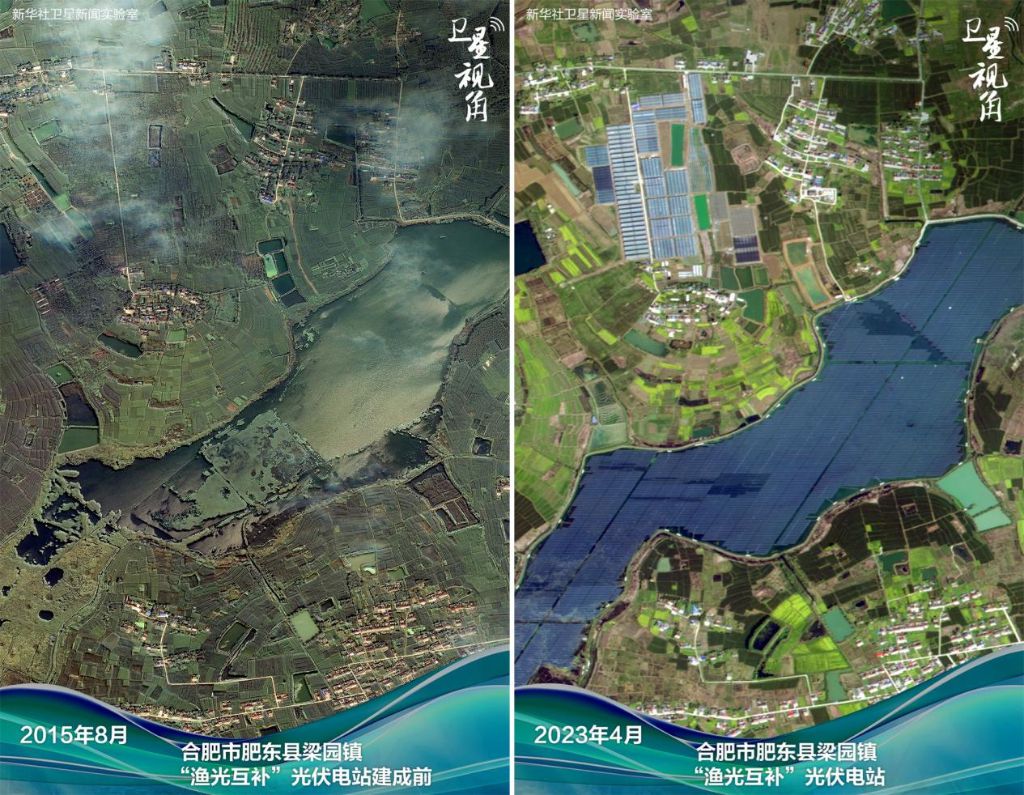
 ↑ Compared with 2015, the photovoltaic power station of "fishing and light complementary" was paved with a blue color in the sunken lake of Liangyuan Town.

  In Xiapi Lake, Liangyuan Town, Feidong County, Hefei City, Anhui Province, a blue photovoltaic panel stands on the lake like a sail, with about 360,000 solar photovoltaic modules, forming a photovoltaic power station with complementary fishing and light.

  The power station adopts the mode of "power generation on water and aquaculture under water", with an average annual on-grid electricity consumption of 118 million kWh, which is equivalent to saving 37,000 tons of standard coal and reducing carbon dioxide emissions by about 97,000 tons, which can bring more than 400,000 yuan in aquatic products income.

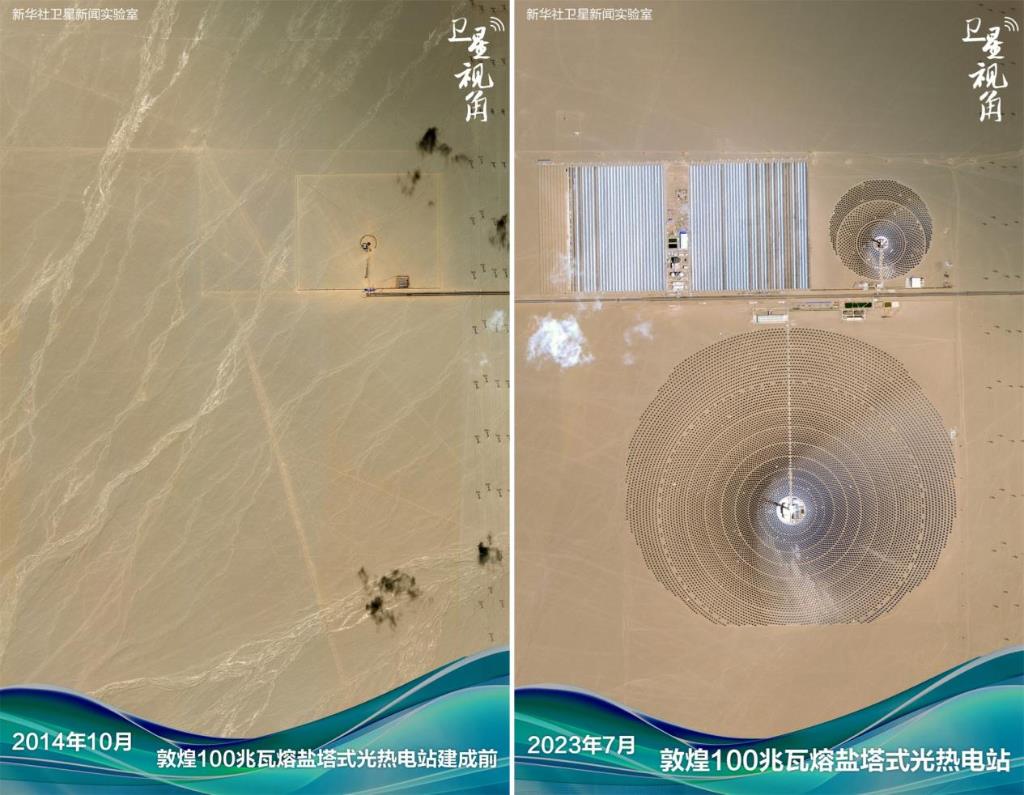
  ↑ Compared with 2014, the "Super Mirror Power Station" was built on the Gobi Desert in Dunhuang.

  On the Gobi Desert in Hexi Corridor, the Dunhuang 100 MW molten salt tower photothermal power station, known as the "super mirror power station", reflects dazzling light. More than 12,000 heliostats concentrically surround the 260-meter-high heat absorption tower, with a total reflection area of more than 1.4 million square meters, designed annual power generation of 390 million kWh, and annual carbon dioxide emission reduction of 350,000 tons.

  Solar photothermal power generation is considered as a new energy application technology with the potential to become a basic load power supply. Dunhuang 100 MW molten salt tower photothermal power station continuously transports new energy to all parts of the country with the help of good power grid foundation advantages.

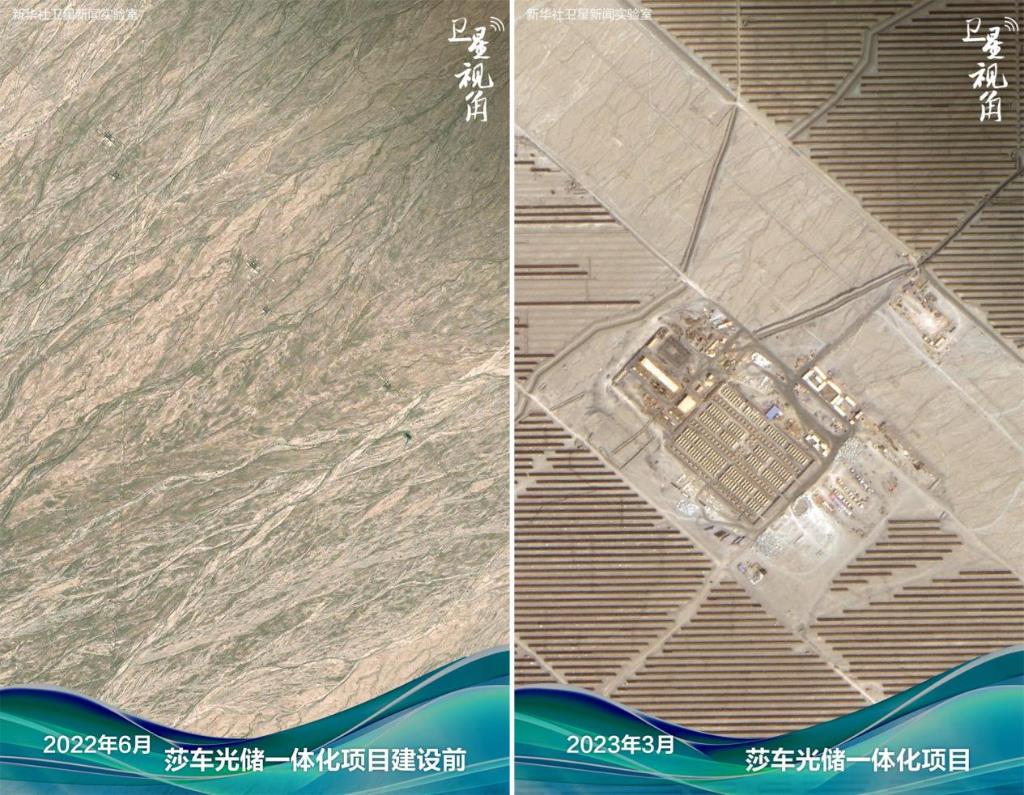
 ↑ Comparing 2023 with 2022, the shache optical storage integration project in Kashgar, Xinjiang has grown from scratch.

  On July 13th, 2023, the shache Optical Storage Integration Project in Kashgar, Xinjiang was successfully connected to the grid for power generation. After the project is completed and put into operation, it can realize peak shaving and frequency modulation, reduce light waste, and realize annual power generation of 1.612 billion kWh with photovoltaic power generation, saving 492,000 tons of standard coal and reducing 1.342 million tons of carbon dioxide emissions every year during the whole life cycle.

  With the rapid growth of the installed capacity of renewable energy, the demand for various types of regulated power sources in the power system has increased rapidly, and a number of new energy storage projects have been accelerated in China, and the installed capacity has been continuously and rapidly improved.

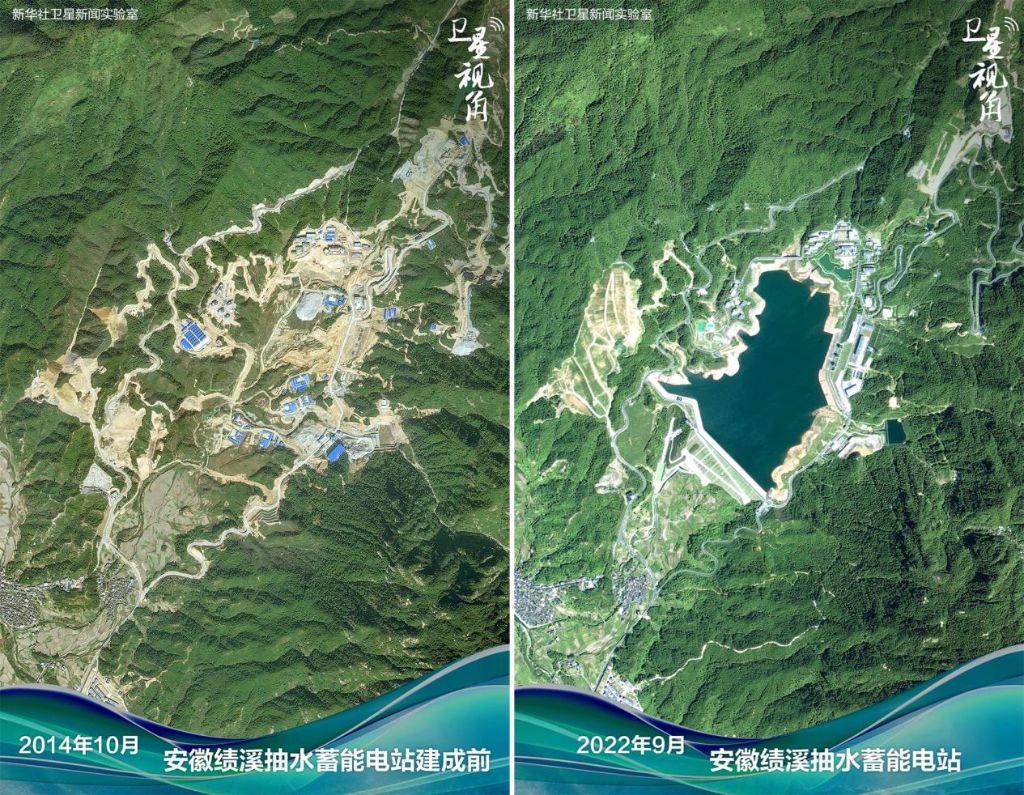
  ↑ Compared with 2014, the "Super Charging Po" Anhui Jixi Pumped Storage Power Station has been put into operation.

  As an important tool of "peak shaving and valley filling" in power grid, large-scale pumped storage power station is usually called "super charging treasure". Located in Fuling Town, Jixi County, Anhui Province, this pumped storage power station was fully put into operation in February 2021, with an average annual on-grid electricity consumption of 3.1 billion kWh. Considering the loss caused by various factors, it is equivalent to saving 216,000 tons of standard coal and reducing carbon dioxide emissions by about 475,000 tons every year, and the role of the energy storage power station as a "reservoir" is further exerted.

  Go green one by one. With the completion and operation of more and more new renewable energy infrastructure projects, more original and breakthrough achievements have emerged, and green energy has injected a steady stream of "green kinetic energy" into economic and social development.

  Planning: Li Jun Liu Jing

  Producer: Zhong Haoxi, Chang Ailing and Ling Weijia

  Coordinator: Zeng Yingying Huang Qinghua

  Final review: the anniversary of Yu Weiya and He Li

  Reporter: Ma Shurui Wu Huijun

  Editor: Wang Haocheng Wu Jinfu

  Design: Zhao Danyang

  Technology: Miyaqi

  Satellite Remote Sensing and Technical Support: Yin Ranyu, Guo Chao, Liu Xinyu, Guo Jianwei

  Xinhua news agency new media center

  State key laboratory of media integration production technology and system

  Xinhua News Agency Anhui Branch

  Joint production

Many people are wrong. Mao Zedong is not an "assistant" at Peking University.

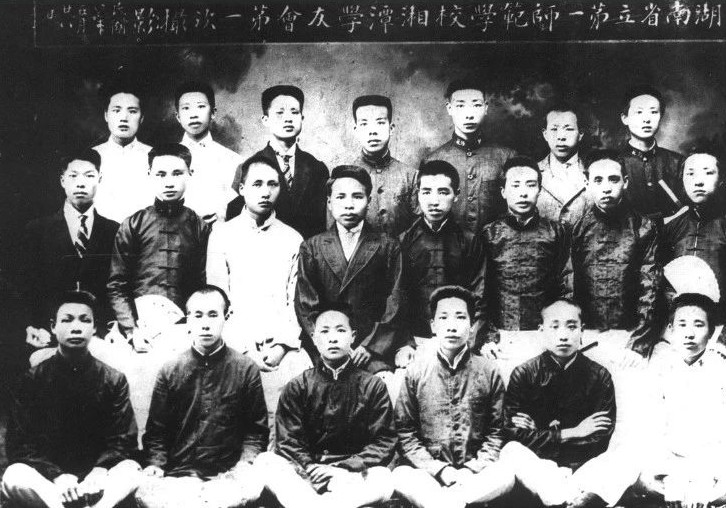
In May, 1919, a group photo was taken by Xiangtan Alumni Association of Hunan First Normal University, with Mao Zedong in the second row and the third from the left.

Author: Liu Yue, deputy inspector of Party History Research Office of Beijing Municipal Committee of the Communist Party of China.

Before the liberation of Beijing, Mao Zedong had only been to Beijing twice before and after the May 4th Movement. During these only two trips to the North, I have to mention his experience of "working" in Peking University Library.

On August 15th, 1918, Mao Zedong, Luo Xuezan, Xiao Zisheng, Zhang Kundi, Luo Zhanglong, Li Weihan and Chen Zanzhou left Hunan for Beijing on the 19th.

I came to Beijing this time to organize young people from Hunan to work and study in France, and also at the invitation of my teacher Yang Changji. The next day, Mao Zedong’s tall and thin figure appeared in the "Bancang Yangyu" at No.9 (now No.15) of the ancient Doufuchi Hutong.

Yang Changji hopes that Mao Zedong will either go to France or stay in Peking University to study for several years, and keep Mao Zedong and Cai Hesen here. Therefore, Mao and Cai temporarily stayed in the single room in the south room of Yangzhai quadrangle next to Xunmen in the southeast corner.

Because the members of Xinmin Society who came to Beijing lived in scattered places, it was inconvenient for them to carry out activities. Soon, Mao Zedong and others rented three rooms at No.7 (now No.8, Zuo Lane, Ji ‘an), a passageway in Sanyanjing Hutong, Jingshan East Street near Peking University at that time, and left the "Bancang Yangyu" in Tofu Pool Hutong.

Beijing "rice" is expensive, and "living in white" is not easy. Mao Zedong needs to find a job and earn some money in Beijing. So he asked Yang Changji for help.

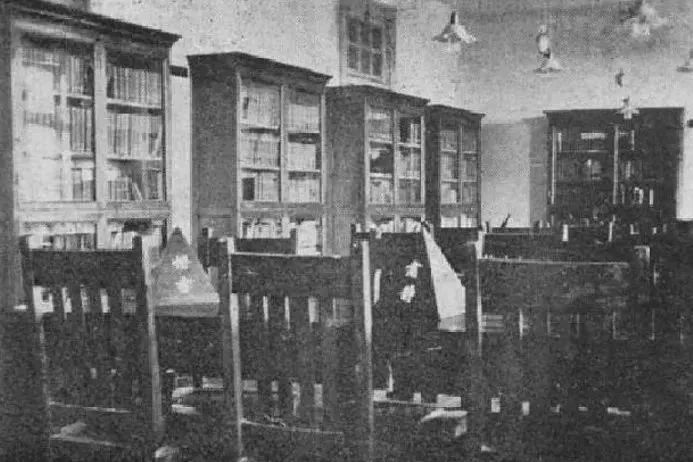
In September, 1918, Li Dazhao, director of Peking University Library, got a temporary job for Mao Zedong in the library, which was introduced by Mr. Yang and recommended in writing by Cai Yuanpei, president of Peking University. He was mainly responsible for managing 15 Chinese and foreign newspapers in the second reading room (newsprint reading room, which is today’s newspaper reading room), registering the names of readers, with a monthly salary of 8 yuan.

For the name of Mao Zedong’s temporary job in Peking University Library at that time, many works have slightly different descriptions.

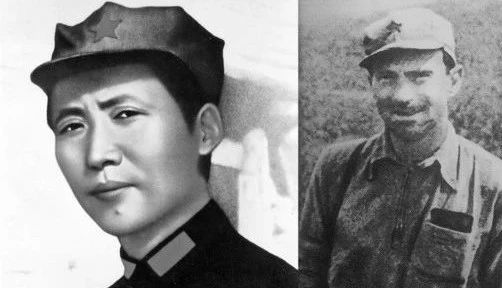
Mao Zedong (first from left) and Si Nuo

For example, Si Nuo’s "Red Star over China" records that Mao Zedong himself said: "Li Dazhao gave me a job as a library assistant, and the salary was not low, with eight yuan a month."

"Biography of Mao Zedong" compiled by the Central Committee of the Communist Party of China Literature Research Office wrote: "In October, Mao Zedong met Li Dazhao, then the director of Peking University Library, through the introduction of Yang Changji. Li Dazhao arranged for him to be an assistant in the library. "

So, what is the name of Mao Zedong’s temporary job in Peking University Library?

The author believes that it is neither an assistant nor a clerk, but a secretary, based on six reasons.

1. There is no job title of "Assistant"

According to the 1920 National Peking University Staff Record, there is no "assistant" job title not only in the Peking University Library, but also in the whole Peking University institution.

2. Among the four types of staff in Peking University Library, it is more appropriate to say "secretary".

According to the Trial Regulations of the Library Department of the General Affairs Department of Peking University published in Peking University Journal on May 10th, 1920, Peking University Library has four courses: management, reading, book management and bibliography compilation, with two rooms for sending and receiving handouts.

In addition to the director of the library, there are four categories of staff:

Teaching assistant-responsible for collecting books in the library and guiding students to borrow and refer. The staff was appointed from Peking University graduates and was established in September 1920;

Clerk-senior library staff, and the "leading class" of each course is served by the first-class clerk;

Secretary-generally held by newly hired novices;

Handyman-including bookbinder, typist, copywriter, etc.

It can be seen that there was no "assistant" position among the four types of staff at that time. From the above provisions, it can be seen that the post of "teaching assistant" in Peking University Library was set up in September 1920, and Mao Zedong left Peking University in March 1919, so it is impossible to hold the post.

In addition, he has never studied or worked in Peking University before, and it is impossible for him to be a clerk. His work category obviously does not belong to the category of "handyman".

Mao Zedong’s work in Peking University Library and his status as a new recruit are similar to the responsibilities and requirements of the "secretary".

3. Mao Zedong didn’t state that he was an "assistant" at that time.

Mao Zedong mentioned in "Letter to Seven or Eight Uncle’s Parents" on April 28th, 1919 that "my niece works as a clerk in Peking University, Beijing". He himself did not state that he was an "assistant". The post of "secretary" is the most appropriate with "staff".

In 1930, Jiang Menglin was appointed as the president of Peking University, and it was stipulated that one-fifth of the school’s funds should be used as the funds for books and instruments, and at the same time, it was ready to raise funds to build a new library.

4. Memories of Jiang Menglin

Jiang Menglin, acting president of Peking University, said in the article Li Dazhao and Mao Zedong in Memories:

Mao Zedong became a secretary in Peking University Library when I was acting as principal. One day, Li Shouchang (Li Dazhao) came to the principal’s office and said that Mao Zedong had no food. What should I do? I said, why not let him still run a cooperative? He said no, they were all broke. I said, is there anything wrong with the library? Just give him a position. So I picked up a pen and wrote a note: Mao Zedong was appointed as the librarian with a monthly salary of 17 yuan.

Jiang Menglin’s memory is obviously wrong in time. Cai Yuanpei left Peking University after the May 4th Movement in 1919. In July, Jiang Menglin took charge of the affairs of Peking University, and it lasted for two months until the new semester of Peking University started in September.

Mao Zedong worked in Peking University Library from September, 1918 to March, 1919. For about half a year, it was four months after Mao Zedong left Peking University. It was impossible for Mao Zedong to get a position in Peking University. Jiang Menglin’s memory, however, clearly shows that the name of the temporary errand Mao Zedong seeks is "secretary".

5. Memories of Xiao Zisheng

According to Fan, a classmate of Mao Zedong Hunan Provincial First Division and one of the main organizers of Hunan’s work-study program in France, Xiao Zisheng recalled in Mao Zedong and Me:

Because of the difficulties in life, they wrote to ask Cai Yuanpei if he could give his classmates a job of cleaning the classroom. When President Cai learned about this, he had a better idea and wrote a letter to Li Dazhao, the director of Peking University Library: "Mr. Shou Chang’s great advice: If Mao Zedong wants to get a part-time job in this school, please try to place a secretary in the library, who is responsible for sorting books and cleaning rooms, with a monthly salary of eight yuan. Cai Yuanpei today. "

Therefore, Li Dazhao arranged for Mao Zedong to clean the room and arrange books, which was a very simple task.

Xiao Zisheng’s memory also made it clear that the name of the temporary job Mao Zedong sought was "secretary".

6. There are mistakes in understanding and translation of individual nouns.

Cha Mao Zedong was appointed as a "library assistant", which was based on the book Red Star over China written by Hussenot. The book Red Star over China was dictated by Mao Zedong, translated by Huang Hua and written by Si Nuo in English. Therefore, mistakes in the understanding and translation of individual nouns are inevitable.

The word "assistant" in the English version of Red Star over China does mean "assistant, assistant and teaching assistant", and the translator translated it into Chinese literally, which gave rise to the widely spread saying that Mao Zedong was appointed as an "assistant" in Peking University Library.

To sum up, I think the job title of Mao Zedong in Peking University Library should be "secretary".

However, the "secretary" of Mao Zedong’s library at that time was quite different from the "secretary" who is now the main person in charge of political party organizations at all levels.

In ancient Chinese, "book" refers to letters and "notes" refers to notes. In the old days, "secretary" refers to people who are engaged in official document copying, belonging to low-level petty officials at the transaction level and office level.

The person in charge of the working-class political party is called the "secretary", which originated from Marx and Engels. At the beginning of 1846, the "Communist Communication Committee" (later renamed communist party), which was founded in Brussels, called the head of the organization "secretary", which means "public servant".

[Reference]

[1] Edgar Si Nuo: "Red Star over China", life reading and new knowledge Joint Publishing Company Limited, 1979 edition, p. 127.

[2] the Central Committee of the Communist Party of China Literature Research Office: Biography of Mao Zedong, Central Literature Publishing House, 1996, p. 41.

[3] the Central Committee of the Communist Party of China Literature Research Office, Mao Zedong Research Group, Shaoshan Mao Zedong Memorial Hall: "Letters from Mao Zedong to relatives and friends in Shaoshan", Central Literature Publishing House, 1996, p. 5.

[4] Jiang Menglin: "Li Dazhao and Mao Zedong in Memories", in Zhang Jingru’s Chronology of Li Dazhao’s Historical Materials, Shanghai People’s Publishing House, 1984, p. 59.

[5] Ma Yong: Biography of Jiang Menglin, Henan Literature and Art Publishing House, 1999, p. 99.

[6] Xiao Yu: "Mao Zedong and I" abridged translation of the fifth, contained in Taiwan Province’s "Arts and Records" No.20 p.20, May 1967.

This article was published on WeChat WeChat official account: Dongfanghongla (ID: dongfanghongla), please indicate the source.

Li Jiucheng, director of Henan Provincial Safety Supervision Bureau, was investigated by CPC Central Commission for Discipline Inspection.

   Who controls the ups and downs of mining industry?


  On the occasion of Li Yizhong’s resignation as director of the State Administration of Work Safety, a corruption case involving the highest level in the safety supervision system in recent years is under intense investigation.


  On February 21st, 2008, Li Jiucheng, director of the Henan Provincial Administration of Work Safety, was taken away by CPC Central Commission for Discipline Inspection for investigation. According to the statement from Henan safety supervision system, this is a typical "collusion between government and coal" case suspected of tens of millions.


  In recent years, cases of violation of law and discipline in safety supervision system are prone to occur, high-frequency and frequent, especially in handling administrative license for safety production, accident investigation, safety inspection, safety qualification assessment, qualification management of safety training institutions, training assessment, and recommendation of safety equipment and materials.


  At present, the profiteering of small coal mine owners has become the biggest obstacle to safety rectification. Corresponding to the high profits of coal mining enterprises, the salaries of people in the safety supervision system are relatively low-the subsidies they can get at most are only 200 yuan.


  Is it a system that such a huge gap between the supervision and the supervised has been ignored and ignored for a long time? Is it a policy?


  Shanxi, on the other hand, is planning another grand plan: to integrate small coal mines with complete licenses, whether state-owned or private. Clear coal mine property rights, under the regional strategy, have no choice but to carry out according to the time limited by the policy.


  In the absence of normal and sound property rights transactions, how to ensure the legitimate and reasonable interests of all parties and prevent the recurrence of the Li Jiucheng case under mandatory resource integration?


  For the safety supervision system, the shock caused by Li Jiucheng’s falling horse is no less than a mine disaster.


  On April 4, 2008, Zhao Anqing flew to Ningbo, Zhejiang Province in a hurry. Here, the annual meeting of China Work Safety Report is being held here. The meeting has been going on for several days. As the leader of the State Administration of Work Safety, which is directly in charge of China Work Safety News, Zhao Anqing, who has always been present on time, was "late" without any warning, which made the reporters of the always sensitive work safety news feel "ominous".


  It’s not that there has been another mine disaster, but the news is no worse than this.


  "Li Jiucheng’s case is basically finished". The reporter of Work Safety finally got the only sentence from Zhao Anqing. But the news has been shocking. Zhao Anqing’s other identity in the State Administration of Work Safety is the head of the discipline inspection team of CPC Central Commission for Discipline Inspection in the State Administration of Work Safety.


  "This is definitely the first major case since the upgrading of the State Administration of Work Safety. Never before has a director-level official been investigated for problems other than the responsibility for safety accidents. " "Everyone is shocked," commented a person from the Henan safety supervision system who has been in close contact with Li Jiucheng since 2002.


  On February 21st, 2008, at the Lantern Festival in Wuzi Year, at about two o’clock in the afternoon, Li Jiucheng, then director of the Henan Provincial Administration of Work Safety, was suddenly taken away by the discipline inspection department for "cooperating with relevant departments to investigate". Things happened quite suddenly. The day before, Li Jiucheng also presided over the annual work conference on production safety in Henan Province and delivered a speech on the stage.


  Li Jiucheng’s statement that tens of millions of yuan is involved in economic problems is circulated in Henan safety supervision system. "This matter has not yet been released." So far, the Henan Provincial Commission for Discipline Inspection has not made any formal response to the reporter.


  Just a year ago, Li Jiucheng was the "star" of the safety supervision system. On January 25, 2007, the National Conference on Work Safety was held in Henan. After the speech of the officials of the General Administration, Li Jiucheng made a typical speech on behalf of the local bureau.


  One month after Li Jiucheng’s incident, in late March, Zhao Anqing, head of the discipline inspection team of CPC Central Commission for Discipline Inspection in the State Administration of Work Safety, personally rushed to Zhengzhou and held a plenary meeting of the coal supervision system and the safety supervision system, demanding that the two systems cooperate in investigating the case and stressing that every cadre must be "honest and self-disciplined".


  According to the people in the safety supervision system who were present at that time, Zhao Anqing was anxious and haggard all the time in Henan, and he was worried.


  On March 20th, Li Yizhong made his last speech in the safety supervision system before leaving the post of director of the State Administration of Work Safety. In his speech, Li Yizhong also mentioned that some officials had "extremely individual problems" and were "distressing", and asked everyone to "learn a lesson and take a warning". At that time, the Li Jiucheng case was still under intense investigation.


  Since then, the anti-corruption voice in the State Administration of Work Safety has been escalating. Wang Jun, the new director of the State Administration of Work Safety, Zhao Anqing, the head of the discipline inspection team, and Zhao Tiechui, the director of the Coal Mine Supervision Bureau, respectively emphasized "honesty and self-discipline" at different levels of meetings and issued "six prohibitions" on safety production supervision.


  In the eyes of people in the safety supervision system, the Li Jiucheng case is at the peak of the property right change of small coal mines in China, and the case behind it is intriguing.


  There is a case in the case


  Two months have passed, and the relevant departments still haven’t officially notified the cause of Li Jiucheng’s murder. But at the same time, a company named Dengcao Group surfaced.


  Five months ago, at the beginning of December 2007, Yuan Zhanguo, the chairman of Dengcao Group, was suddenly taken away by the discipline inspection department during a meeting. A week later, the mine owned by Dengcao Group was informed that Yuan was "double-regulated".


  It is also surprising that Yuan Zhanguo’s case was handled directly by CPC Central Commission for Discipline Inspection, and the cause of the case has not been announced so far. Li Jiucheng and Yuan Zhanguo have a close personal relationship, which is an open secret in Henan safety supervision system.


  A person in the safety supervision system who has a good personal relationship with Yuan Zhanguo revealed that Yuan Zhanguo has always been a typical example established by Li Jiucheng. The former is not only the latter’s political achievements, but also their personal relationship is good. The last public "intersection" between them occurred in July 2007, when Li Yizhong, then director of the State Administration of Work Safety, visited Dengcao Group, which was accompanied by Li Jiucheng.


  Starting from Dengfeng city, drive southwest for about 20 kilometers, which is Dajindian Township. Yuan Zhanguo’s Dengcao Group is located here. At the entrance of Dengcao Coal Mine, there is a long and narrow tunnel connecting adjacent Dajindian Township and Baiping Township, and dozens of coal mines, large and small, are strung together. Every 2-3 minutes next to this tunnel, a heavy truck full of coal drives out.


  Dengcao Coal Mine has a long history, and it is the first batch of enterprises named as quality standardized mines in China. It was once rated as "five golden flowers" in township coal mines in China. It has jurisdiction over five coal mines and three non-coal enterprises, with an annual output of about 2 million tons of raw coal.


  The groove is short for the groove of gold. There is a river in the mountains here, and the river flows down with sand. Most villagers rely on the sand to find gold for their survival. The wooden trough where the gold was found was their simplest sustenance for getting rich, and then they discovered the coal mine and made a living from it.


  On April 15th, when the reporter arrived at Dengcao Group, a group photo of Yuan Zhanguo and some visiting leaders was still hanging at its gate. Yuan Zhanguo in the photo is about 50 years old, with a big round face and short stature.


  People in the office of Dengfeng Municipal Committee also told reporters that the case was handled directly by CPC Central Commission for Discipline Inspection, and the local government did not know the details, nor did it have any written materials on this issue.


  Judging from the expressions of many miners, Yuan Zhanguo is an authoritarian figure in the Quecao Group. In this collectively owned enterprise, the reputation is almost perfect. "Mr. Yuan is not bad for us. In recent years, the development of Quecao depends on him."


  Since 1980s, Yuan Zhanguo has won numerous honors. He is the current deputy of Zhengzhou Municipal People’s Congress and the Standing Committee of Dengfeng Municipal People’s Congress, and was awarded the title of "Top 10 Coal Mine Managers in China". In September 2003, it was awarded the title of "Star of Reform in the New Era" by the National Development and Reform Commission and China Academy of Social Sciences.


  It is this low-key and unassuming Yuan Zhanguo that has gradually revived the once-bankrupt old coal mine, and the annual output of the mine has increased from 300,000 tons to 600,000 tons.


  After Dengcao Coal Mine gradually dried up, Yuan successively purchased the state-owned enterprise Dengfeng Chemical Plant and Sanyuan No.2 Well, and integrated and expanded Jinyang Coal Mine and Jinling Coal Mine. Six enterprises, including Hua Hui Stone Factory, Jinguang Solar Factory, Jinlong Chemical Factory, Jinling Coal Mine and Jinyang Coal Mine, were newly established in six years by means of joint venture, cooperation, merger, purchase and shareholding system, and the pace of expansion was completed.


  The argument from the inside of the safety supervision system shows that Yuan Zhanguo’s "accident" is related to the ways and means of competing for resources in resource integration. At the same time that Yuan Zhanguo led Dengcao Group to "attack the city and pull out the village", the contradictions and conflicts of interest arising from resource integration have already buried hidden dangers. "If the company is big, it will definitely offend people." People in the office of Chengcao Group did not deny this statement.


  Since July 2004, the government of Henan Province has decided to integrate the coal and bauxite resources in the province in one to two years to ensure the rational and orderly development of mineral resources in the province.


  Driven by this decision, seven coal groups and five aluminum companies were identified as the promoters of integration through joint investigation by 12 government departments. Among them, Dengcao Coal Mine improved the resource utilization rate from 50% to 80% by transforming the small coal mine bought out, which became a successful footnote of this policy.


  There are also some grassroots people in the industry who are worried about the hidden dangers of excessive administrative discretion in resource integration and failure to compensate the mine owners for their losses. "This idea of administrative rectification of mining rights will not only lead to corruption and conflict of interests, but also seem to be farther and farther away from the original intention of marketization."


  There is a local saying from Dengfeng that Yuan Zhanguo is involved in corruption and bribery, and "other leaders" are implicated, and the amount is not cheap. However, the Chengcao Group is unwilling to believe in the possibility of corruption of this authoritarian figure. "He is the major shareholder of the group, so why is he greedy for his own money?"


  Up to now, Dengcao Group has not received a briefing about Yuan Zhanguo, and the group has not appointed a new chairman, and several mine managers are responsible for daily work.


  According to the statement from the safety supervision system, in addition to Dengcao Group, mine owners in Yuzhou City and xinmi city were summoned by the Commission for Discipline Inspection for the Li Jiucheng case. However, this statement has not been confirmed by relevant departments.


  A "star" official from a trained background


  Li Jiucheng has always been regarded as a "star" figure in Henan safety supervision system.


  Li Jiucheng graduated from the Department of Coal Mining, Jiaozuo Mining Institute, majoring in underground coal mining. He was born in a regular class. After graduating from college, he was assigned to work in the Coal Mine Hall of Henan Province, and then he went to Peigou Coal Mine, which belongs to Zhengmei Group, for temporary training. Since then, he has successively held leadership positions in the Coal Department and the Safety Supervision Bureau of the Coal Industry Administration. At the age of 39, Li Jiucheng became a CPC cadre and became one of the striking young officials in Henan Province.


  In 2000, safety supervision was placed in a prominent and important position. It was separated from the Safety Supervision Bureau originally belonging to Henan Coal Department, and the Coal Mine Safety Supervision Bureau was established, with Li Jiucheng as the director. In 2002, Henan Provincial Safety Supervision Bureau was established, and Li Jiucheng was appointed as the director, becoming the dual director of safety supervision in Henan, a major mineral province.


  Since then, Li Jiucheng has been the "star" of the local safety supervision system. In terms of the system innovation of safety supervision, Henan Safety Supervision Bureau has always been an example among the local bureaus of the safety supervision system, which is highly valued by the State Administration of Work Safety. "Before every national meeting, after the leaders of the General Administration made a speech, Chengdu, Li Jiu was the first to speak." A senior reporter from a local coal line in Henan said.


  During the first half of 2002, before the State Administration of Work Safety was upgraded to a ministerial-level unit, the relevant departments visited Li Jiucheng and planned to transfer him as the deputy director of the State Administration of Work Safety, but it did not take place for various reasons. A person from the Henan safety supervision system said this.


  "Li Jiucheng is the kind of pioneering official who dares to think and do things, but his work style is somewhat simple and rude, which is not conducive to uniting other cadres." On reflection, a person from Henan safety supervision system who is close to Li Jiucheng made the following comments.


  Li’s appointment has experienced many mine disasters, such as Daping mine disaster, Xin ‘an mine disaster and "July 29" in Shaanxi County. A safety supervisor who has experienced the mine accident command site described that "Li Jiucheng’s personality is quite suitable for disaster rescue." At the scene of the whole disaster, Li was informal, strict and resolute, which reduced the delay of rescue time because of hesitation.


  Due to proper rescue, all the trapped miners in the "July 29" mine disaster in Shaanxi County were rescued. With the cooperation of a local media reporter and a local safety supervision system official, a book tentatively named For the Lives of 69 Miners has entered the final publishing stage of the publishing house. This book spent three months of research time by two authors, and restored the whole rescue process of the "July 29th" mine disaster in detail.


  One of the authors admitted that the book was published to introduce the experience of successfully rescuing miners, and Li Jiucheng, as one of the main commanders of the rescue, also occupied an important part of the book.


  Under the leadership of Li Jiucheng, Henan Safety Supervision Bureau has been responsible for the innovative exploration within the safety supervision system. The safety supervision and coal management departments of Henan Province took the lead in promoting the "three-appointment" system, that is, the local government directly appointed safety mine managers, technical mine managers and safety commissioners to small coal mines. On this basis, the "safe wage" system is popularized, and production safety is linked with wage income, forming a "4-3-3" wage distribution system, that is, safe wage accounts for 40%, benefit wage accounts for 30% and basic wage accounts for 30%.


  In addition, the Henan Provincial Administration of Work Safety also takes the data such as the death rate of 100 million yuan GDP, the death rate of 10,000 people, and the death rate of one million tons of coal as important assessment indicators and promotes them throughout the country. And in the provinces, cities, counties, townships, villages, enterprises to form a six-level security network management, leading the country.


  According to various statements from the safety supervision system, the falling cost in Li Jiu is related to the interest transfer between some coal mines. It has always held a high position in the supervision system, and attached great importance to the so-called "loyalty". Some styles of cliques and careless personality inevitably led to the loss of supervision and checks and balances of power.


  "I also thought that he might have an accident before, and his style of doing things was too sloppy, regardless of the consequences." A person in the safety supervision system described that Li Jiucheng once struck a table at a deputy director in front of many media reporters at a public meeting, and the scene was very embarrassing.


  After the accident, Li Jiucheng’s resume was quickly removed from the official website of Henan Safety Supervision Bureau. In March, 2008, Zhang Guohui, former executive deputy director of Henan Coal Industry Administration Bureau, was appointed as the new director of safety supervision, taking a low-key position.


  system


  Li Jiucheng case is not an isolated case.


  In March 2007, Hu Jianchang, former deputy director of Guangdong Provincial Administration of Work Safety, was sentenced to three years’ imprisonment. Hu Ceng illegally issued coal safety production licenses and accepted bribes of 100,000 yuan from coal mine owners.


  "(Hu Jianchang) clearly knows that there are tens of millions of tons of water on the underground working face. The safety assessment did not mention it at all and must be punished by law." In February 2006, Li Yizhong, then director of the State Administration of Work Safety, commented in his speech.


  An earlier case occurred in April 2006, in which Diao Min, director of the Technical Equipment Division of Shanxi Coal Safety Supervision Bureau, four directors of safety supervision bureaus in subordinate districts and counties of Taiyuan City, and the president of Taiyuan Mine Design and Research Institute were successively dismissed. The reason is still that during the integration of coal resources in Shanxi, a major coal mine province, several officials "abused power for personal gain" during the new round of safety license renewal.


  Take coal mine as an example, its legal operation must be "complete with six certificates". Six certificates, including coal mining license, coal safety production license, mine manager qualification certificate, business license of enterprise legal person, etc., are issued by the Coal Industry Administration Bureau, the Coal Supervision Bureau, the Department of Land and Resources and the industrial and commercial departments respectively. Among them, the power to issue coal mine safety production licenses lies with the provincial coal supervision bureaus, while non-coal mines are issued by the safety supervision bureau.


  Under the current safety supervision system, the State Administration of Work Safety and the Coal Supervision Bureau are co-located at the national bureau level, and the director of the Coal Supervision Bureau is also a member of the party group of the State Administration of Work Safety. In some places, these two departments are often "one team with two brands", and it is more common for one person to concurrently serve as the dual director.


  "As far as the coal-mining provinces such as Henan and Shanxi are concerned, it must be that the director of the Coal Supervision Bureau has more real power, and the relative responsibility and anti-corruption are more difficult." A person from Henan Safety Supervision System said. Li Jiucheng, who has fallen this time, is also a dual director.


  In 2005, the State Administration of Work Safety was upgraded to "General Administration" and changed from a vice-ministerial unit to a ministerial level. The power of the upgraded safety supervision system has also increased.


  Since the second half of 2004, "Measures for the Implementation of Safety Production License for Coal Mine Enterprises" has been promulgated and implemented, and the responsibility of issuing safety production licenses for coal mines belongs to the safety supervision system, which is intended to make safety production dominate the "life and death power" of coal mine development.


  But the increase of power is often accompanied by the increase of rent-seeking space. On the premise that the visible hand still controls scarce resources, the price of mineral resources cannot be marketized, and state-owned coal mines can naturally obtain more mineral resources from the government in the form of "resource integration", while private capital is more inclined to obtain and maintain mining rights from those in power in the form of rent-seeking.


  "Now the power of safety supervision is too great. Without the certificate issued by them, it is impossible to mine, which is equivalent to mastering the power of life and death. Such power can easily breed corruption. " Li Chaolin, an expert from China Coal Transportation and Marketing Association, commented to reporters on April 14th.


  From 2005 to September 2007, the procuratorial organs of Zhejiang Province put on record 27 cases involving 27 people in the work safety system of Zhejiang Province. In the first issue of 2008, a publication of safety supervision system in Zhejiang Province, Safety Production Guide, described the safety supervision system as "high-risk group", saying that it was "at the cusp of competing interests and various contradictions", and it was possible to "stumble" with a little carelessness.


  "In recent years, the safety supervision system is prone to frequent violations of laws and regulations, especially in handling administrative licenses for safety production, accident investigation, safety inspection, safety qualification assessment, qualification management of safety training institutions, training assessment, and recommendation of safety equipment and materials." Every possible link of rent-seeking is listed in the publication.


  These rent-seeking links encounter huge interest temptations and are easy to spark. In recent years, the domestic raw coal price has advanced by leaps and bounds, reaching a high level of 300 yuan/ton. The cost of some small coal mines is relatively low, and the cost per ton is estimated to be around 100 yuan. According to the annual output of 200,000 tons, the annual profit of a small coal mine is 40 million yuan.


  Among them, the loss of safety rectification is the biggest, and it may cost millions if it stops for a few days. "We (coal bosses) also tend to take out some small money to’ get it done’."


  The realistic situation of safety supervision income


  After Li Jiucheng’s murder, our reporter was surprised to learn from the investigation in Henan and Shanxi that the income of the personnel in the safety supervision system was also heavily mentioned.


  In addition to the running-in of the new system of safe production, the hidden danger of corruption lies in the fact that the front-line employees of the safety supervision department have high labor intensity but generally low salary, and they are faced with the lucrative coal mining industry, which is easy to breed corruption.


  "No rest during the day, no rest at night" has become the normal work of the staff in the safety supervision system, "but our income has not improved, let alone overtime allowance." A person in the safety supervision system complained like this.


  Safety supervision often goes down to the mine, and emergencies happen from time to time. The labor intensity of front-line safety supervisors is often greater than that of ordinary civil servants, and they dare not turn off their mobile phones after work.


  According to the relevant national documents, discipline inspection, politics and law, public security, family planning, letters and visits and other departments all enjoy post allowances, but the safety supervision system has been delayed because there is no policy basis, which leads to the failure to issue post allowances.


  In the current salary system, the employees’ income of the coal supervision department is paid directly by the central government, while the financial power of the safety supervision department is at the local level. Comparatively speaking, the income of front-line employees in the safety supervision system is even lower, and the total annual income of safety supervisors in some remote areas is less than 30,000-40,000 yuan.


  On the contrary, the coal mining enterprises supervised by the safety supervisors are profitable, which is in sharp contrast.


  "If you quit to work as a manager in a state-owned coal mine, you will earn more than 100,000 yuan a year, and there will be hundreds of thousands when you are a deputy mine manager. It is definitely much higher than the income in the safety supervision department. " A person from the Henan safety supervision system said.


  The situation of staff turnover has gradually emerged. Since 2005, the staff of a branch under the Henan Provincial Administration of Work Safety has been moving rapidly. Many college students who have just graduated have quit their jobs and gone to various coal mines in less than a year. Even a leader of Zhengzhou Coal Supervision Bureau resigned from the sea after the Daping mine disaster.


  "Under the price of coal one day, the status of the Safety Supervision Bureau of the Coal Bureau is embarrassing, and there is no way to avoid the income problem." A senior local coal reporter in Henan said. Under unavoidable circumstances, the hidden danger of "derailment" of front-line safety supervisors who check the safety production conditions, safety of equipment and facilities, use of labor protection articles and personnel safety qualifications in related industries may even seek benefits in the design review and completion acceptance of safety facilities in large-scale construction projects.


  Solving the subsidy problem by local governments will not only cause regional differences, but also have policy obstacles. In 2005, six ministries and commissions, including CPC Central Commission for Discipline Inspection, jointly issued a document on regulating subsidies for Tianjin, requiring all localities to regulate the salary subsidies for civil servants. This year, Zhejiang Province held a special meeting on the distribution of post allowances, and finally decided that all the post allowances formulated by provincial, city and county governments would be cancelled, and only the national policy post allowance would be retained.


  Higher-level solutions are already in the pipeline. In 2007, the Ministry of Personnel and the Safety Supervision Bureau jointly investigated the income of the safety supervision system. According to the internal statement of the safety supervision system, the corresponding subsidies will be issued soon.


  "It is not enough to rely solely on professional ethics, but it is still necessary to appropriately raise the salary and maintain the income of front-line safety supervisors at a reasonable and dignified level." A person who has worked in the safety supervision system for a long time called for it. (Source: 21st century business herald reporter Chen Xiaoying, Henan Zhengzhou, Dengfeng report)

Editor: Zhang Toya

One hundred years ago, Mao Zedong’s choice that decided China’s fate.

  100 years ago, in the 1921 solar New Year, it snowed heavily in Changsha, Hunan. A dozen young intellectuals came to Chaozong Street Cultural Bookstore to hold the New Year’s Conference of Changsha Students of Xinmin Society, following the trend of saving the nation promoted by the May 4th advanced culture.

  The meeting was held in an unremarkable small house, but the topic of discussion was the method and purpose of transforming China and the world. Mao Zedong, 28, made two speeches at the meeting. These two speeches were later included in the first volume of Mao Zedong’s Collected Works with the title "Speech at the Changsha General Meeting of Xinmin Society" as the beginning of the book.

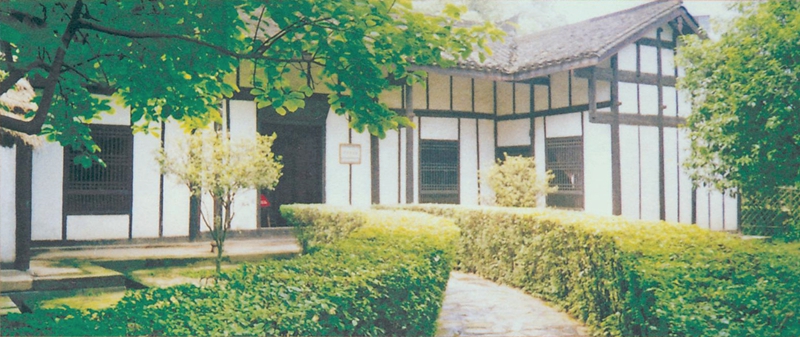
  In April 1918, thirteen people, including Mao Zedong, Cai Hesen, Xiao Zisheng and He Shuheng, established Xinmin Society in Cai Hesen. The purpose of the society is to "innovate academics, sharpen conduct and improve people’s hearts and customs". Members are required not to be hypocritical, lazy, wasteful, gambling or whoring. From its founding in 1918 to the establishment of the Communist Party of China (CPC) in 1921, Xinmin Society has been active for more than three years, with about 80 members. Most of these people later embarked on the revolutionary road. This is the former site of the founding meeting of Xinmin Society.

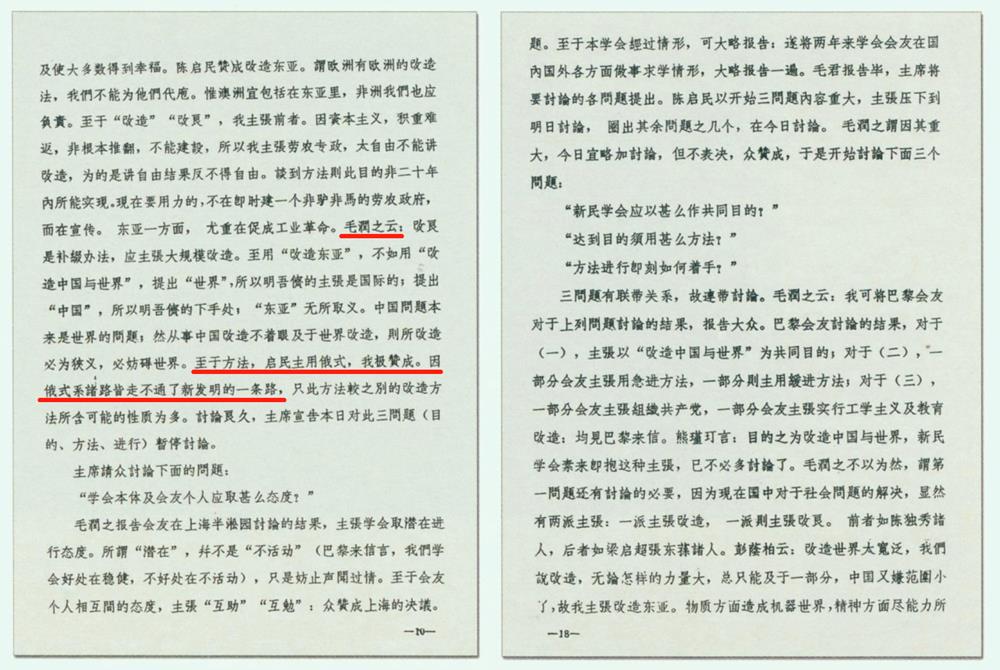
  Mao Zedong said in his speech: I am in favor of the Russian-style revolutionary road, which is a road that all roads can’t take new inventions. He also compared the methods of social democracy and anarchism, and thought that "the fierce method of communism, that is, the so-called labor-agriculture, can predict the effect by using the method of class dictatorship, so it is best to adopt it."

  Take this speech as the opening of the Collected Works of Mao Zedong, because it marks that Mao Zedong has chosen the revolutionary road of Marxism–Leninism. In fact, a month ago, Mao Zedong wrote a long letter to Cai Hesen and Xiao Zisheng, members of Xinmin Society in France, in which he devoted a lot of space to discussing the methods and purposes of transforming China and the world. In his letter, Mao Zedong said: Cai Hesen advocated the Russian-style revolution to transform China, while Xiao Zisheng and others disagreed with it and advocated the moderate revolution and education. Mao Zedong made it clear that he deeply agreed with Cai Hesen and disagreed with Xiao Zisheng and others. "I don’t think it is possible to use education. In my opinion, the Russian-style revolution is a change that all roads are exhausted. It is not a better way to abandon it, but to adopt this horrible method. " Mao Zedong’s letter was later included in Selected Letters of Mao Zedong as the opening.

  "All roads are impassable at the end of our resources", Mao Zedong summed up the bitter mental journey of people with lofty ideals exploring the road of national rejuvenation in modern times with ten words. Since 1840, saving the country and finding a way to revive the nation have become the basic political themes of modern China.

  In the second half of the 19th century, Chinese had made many attempts: the Westernization Movement, which only used some foreign guns and modern industrial technology, could not save China; the Reform Movement of 1898, which the upper-class scholar-officials had hoped to rely on the support of Emperor Guangxu for reform, failed again; the old boxer rebellion initiated by the lower-class people also failed; and the bourgeois revolution led by Sun Yat-sen failed to change the fate of China … …

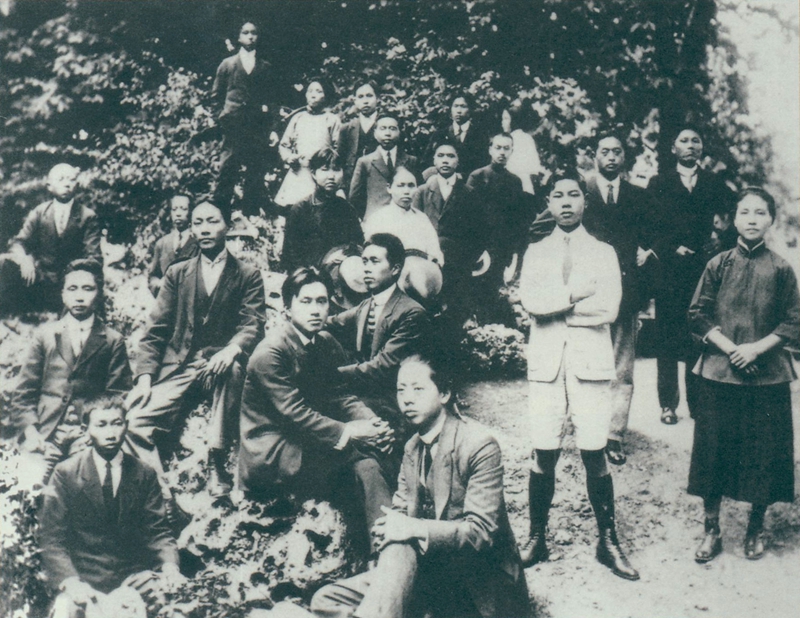
  In July, 1920, the members of Xinmin Society who went to France for work-study programs held a meeting in Mondal, France, and discussed and determined the purpose of Xinmin Society "to transform China and the world". As for the method of transformation, opinions are divided. Cai Hesen and others advocated accepting Marxism, organizing communist party and taking the Russian-style revolutionary road; Others advocate using education as a tool to carry out a "moderate revolution". In August, Cai Hesen, Xiao Zisheng and Li Weihan wrote to Mao Zedong respectively, stating their views. This is a group photo of the members attending the meeting.

  Qian Shan has traveled all over the world, but he can’t enter through the door. The spiritual pain torments generations of people with lofty ideals in China.Where is the way out for China?

  In February, 1899, two names that were unfamiliar to Chinese appeared for the first time in the No.122 World Bulletin published by the Shanghai Broadcasting Society, namely Marx and Engels. This article, translated by missionary timothy richard and written by China priest Cai Erkang, said, "He is famous as the leader of Hundred Workers, and the Englishman Marx is also". Then, Zhu Zhixin, Chen Wangdao, Ma Junwu, Liu Shipei, Jiang Kanghu and others also wrote and translated Marx’s theory. A number of Japanese works introducing Marx’s socialist theory have been translated into Chinese and published in Shanghai.

  At this time, Marx’s revolutionary theory and socialist theory were only introduced as a new trend of thought.

  Only when thoughts are illuminated by practice can they fundamentally affect human historical choices.

  In 1914, there was a worldwide catastrophe in human history — — The first world war broke out. This four-year war has clearly exposed the social contradictions inherent in the capitalist system in western countries in a sharper form than ever before. The devastation after the catastrophe, economic depression and social unrest have greatly disappointed the intellectuals in China who were once obsessed with western capitalist civilization.

  “灵台无计逃神矢,风雨如磐暗故园。”就在中国先进知识分子在黑暗中苦苦求索时,1917年,俄国取得了十月革命的胜利,建立了劳动人民当家作主的劳农政府,第一次把社会主义从理论学说变成了活生生的现实。它像一缕新世纪的曙光,照亮了暗夜中国的前程。

  于是,走俄国革命的道路,成为那时一批中国先进知识分子的鲜明主张,马克思主义的传播也因此成为五四新文化运动一种重要的新思潮。

  1918年11月,北京大学图书馆主任李大钊在天安门广场发表了题为《庶民的胜利》和《布尔什维主义的胜利》的两次演说。李大钊热情洋溢地告诉世人:俄国十月革命的胜利,是民主主义的胜利,是社会主义的胜利。试看将来的环球,必是赤旗的世界。

  那天,在李大钊讲演的现场听众中,就有25岁的湖南青年毛泽东。也就是从此以后,毛泽东开始具体了解十月革命和马克思主义,阅读了许多关于俄国情况的书。毛泽东后来对斯诺回忆说:当时阅读了《共产党宣言》、考茨基的《阶级斗争》、柯卡普的《社会主义史》这三本书,对他影响很大,建立起他对马克思主义的信仰。到1920年夏天,他已成为一个马克思主义者了。

  On New Year’s Day in 1921, Mao Zedong called 18 members of Xinmin Society in Changsha and held a New Year’s Congress in the Cultural Bookstore, which lasted for three days. After intense discussion, everyone finally agreed that the aim of Xinmin Society is to "transform China and the world". As for how to reform, Mao Zedong and He Shuheng and other 12 people agreed with Bolshevism and expressed their belief in communism. This is a speech (part) made by Mao Zedong in the conference report of Xinmin Society.

  Marx said: "The degree to which theory is realized in a country always depends on the degree to which theory meets the needs of this country." A theory, no matter how correct, fresh and publicized, will not be the object of historical choice if people do not have strong internal needs. Marxism–Leninism’s revolutionary theory just gave a brand-new answer to the advanced elements in China who were struggling to find their way at that time.

  In the summer of 1921, more than a dozen young people, including Mao Zedong, took up Marxism–Leninism’s ideological weapon and quietly unveiled a groundbreaking scene in China’s modern history — —Established the Communist Party of China (CPC).

  So the red ship of China Revolution set sail.

  This little red boat, bearing the great trust of the people and the hope of the nation, has crossed rapids and rapids and crossed stormy waves in the magnificent century-long journey, and today it has become a mighty ship to lead China in a stable and far-reaching way.

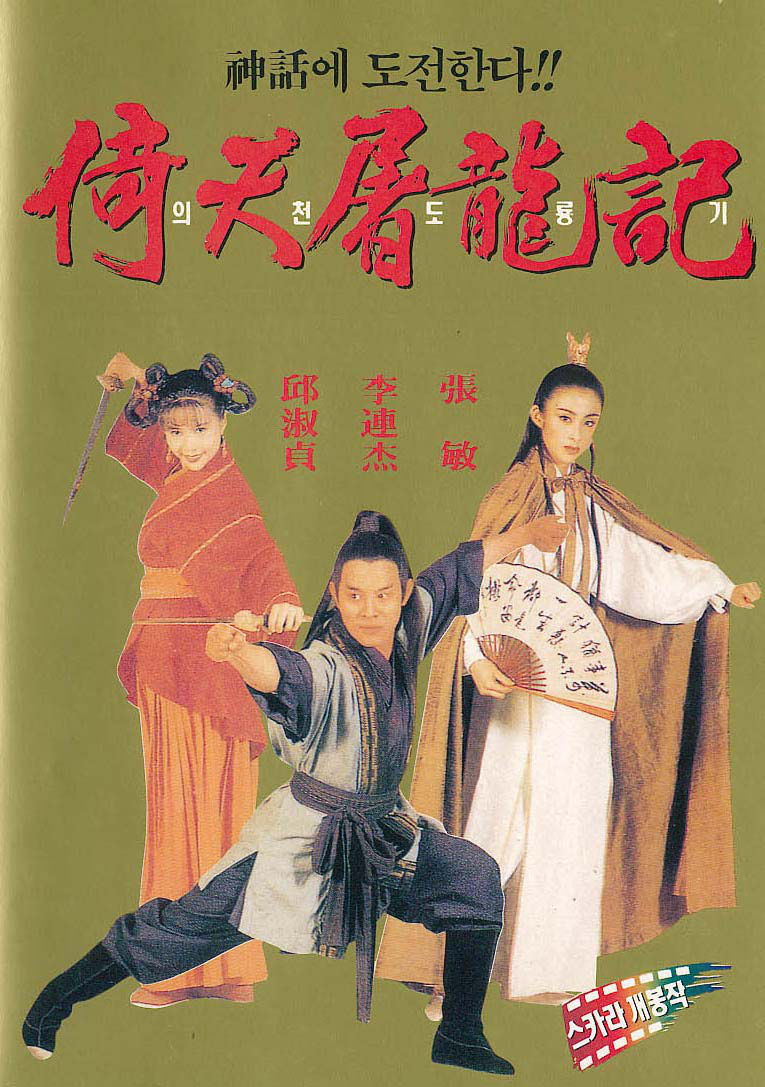
Is Jing Wong’s remake of "Eternal Dragon Slayer" a dream or a feeling of consumption?


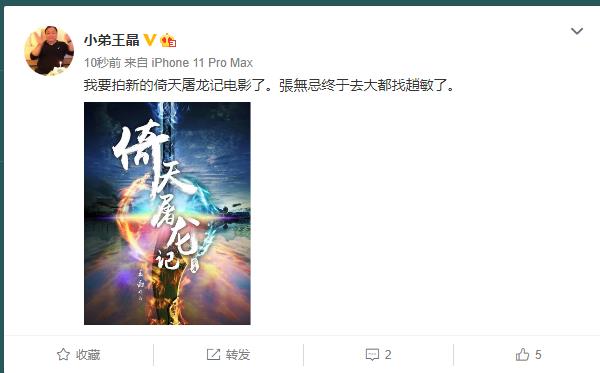
Special feature of 1905 film network At the end of last year, without warning, director Jing Wong posted on social platforms, "I’m going to make a new movie. Zhang Wuji finally went to most places to find Zhao Min. "


It can be seen in a few words that the new edition of "Eternal Dragon Slayer" will continue the story of 1993.


This historical dialogue after many years has kicked off.


For Jing Wong, who has been keen on "fried cold rice" in recent years, the most difficult thing to start shooting this film is not the development of the plot, but the choice of the cast.


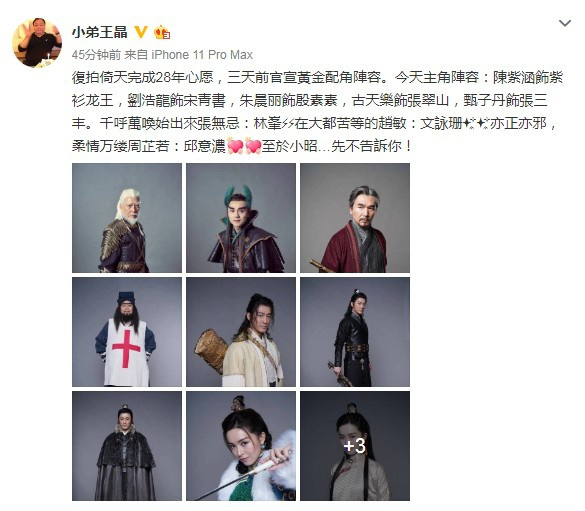
On May 7th, Jing Wong once again announced the starring lineup of the new edition of "Eternal Dragon Slayer" through his social platform, and exposed a group of actor modeling stills.


As for the leading role, Zhang Wuji is played by raymond lam, Janice Man plays Zhao Min, Yinong Qiu plays Zhou Zhiruo, Louis Koo and Donnie Yen also join the film, playing Zhang Cuishan and Zhang Sanfeng respectively, Chen Zihan plays the purple dragon king, Liu Haolong plays Song Qingshu, Zhu Chenli plays Yin Susu, and Xiao Zhao’s choice is still kept secret.


Of course, some people question that 40-year-old raymond lam is too old to play Zhang Wuji, and Louis Koo, who is nearly 50 years old, will also play raymond lam’s father in the film. In reality, the age difference between them is not big, so this role arrangement seems inappropriate.


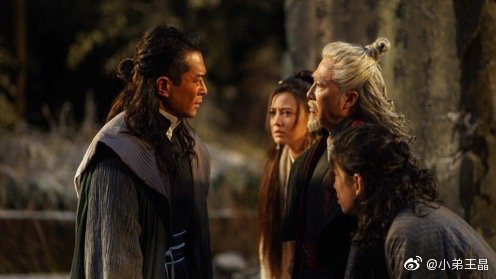
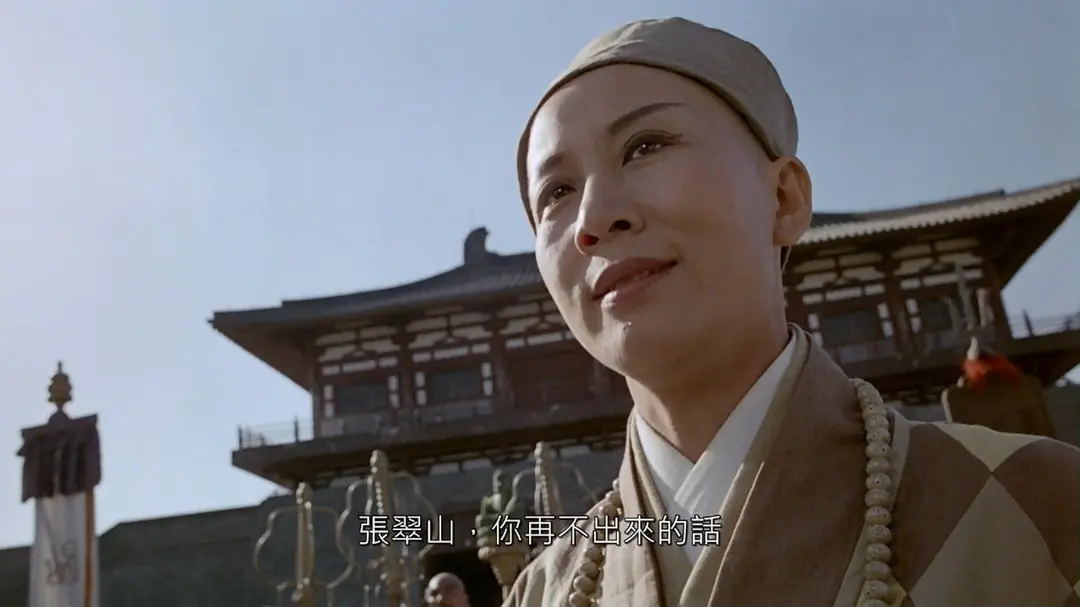
Louis Koo plays Zhang Cuishan.


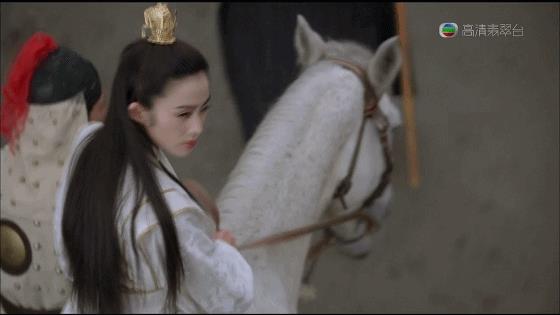
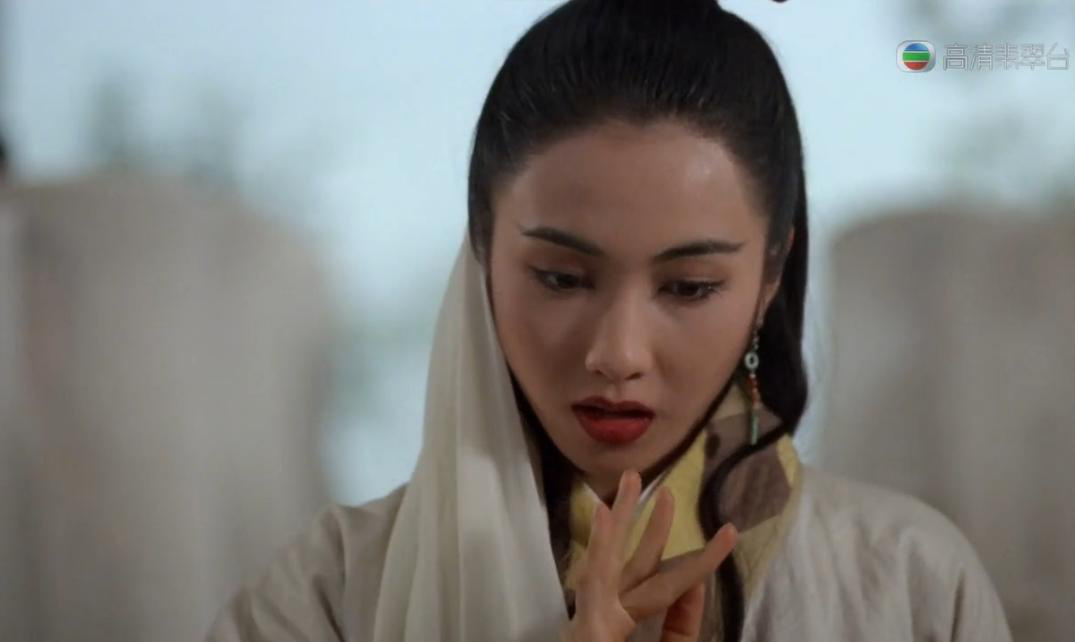
In addition, netizens are also puzzled by the heroine’s choice. After all, in the audience’s mind, Zhao Min in white as snow, Xiao Zhao in red and Zhou Zhiruo in delicate and touching have all become some insurmountable symbols.


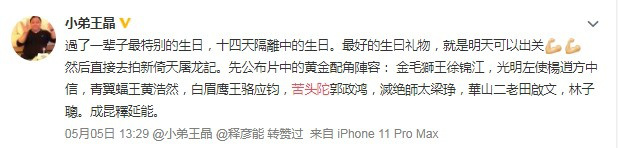
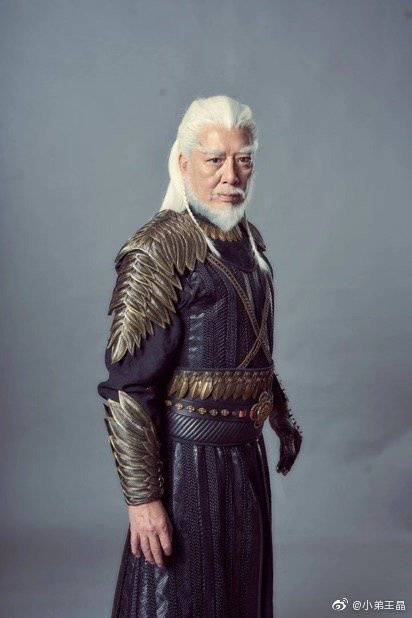
In addition to starring in the film, two days ago, he announced to netizens the luxurious lineup of golden supporting roles in the new film: Xu Jinjiang as the Golden Lion King, Fang Zhongxin as Yang Xiao, the left-hand ambassador of Guangming, Raymond as the king of the green-winged bat, Luo Yingjun as the white-browed eagle king, Guo Zhenghong as the bitter Buddhist monk, Liang Cheng as the extinct teacher, Tian Qiwen and Lin Zicong as Huashan Erlao, and Shi Yanneng as Kun.


Netizens have praised this lineup and thought that "the choice is reliable." Xu Jinjiang once played the role of the Golden Lion King in the 2003 drama version "The Dragon Slayer" and became a classic role in the audience’s mind. Luo Yingjun, who once played the Golden Lion King in the Wu Qihua version, has now been upgraded from a adoptive father in Zhang Wuji to a grandfather with a white eyebrow and an eagle king, which is not without style.


Luo Yingjun decorated the white-browed eagle king.


Now, a brand-new casting is going to the metropolis, and I wonder if it can make up for the dream of 27 years ago.


How sweet was the dream that year?


In the hearts of countless people, Zhao Min’s retrospect evokes an ambiguous past.


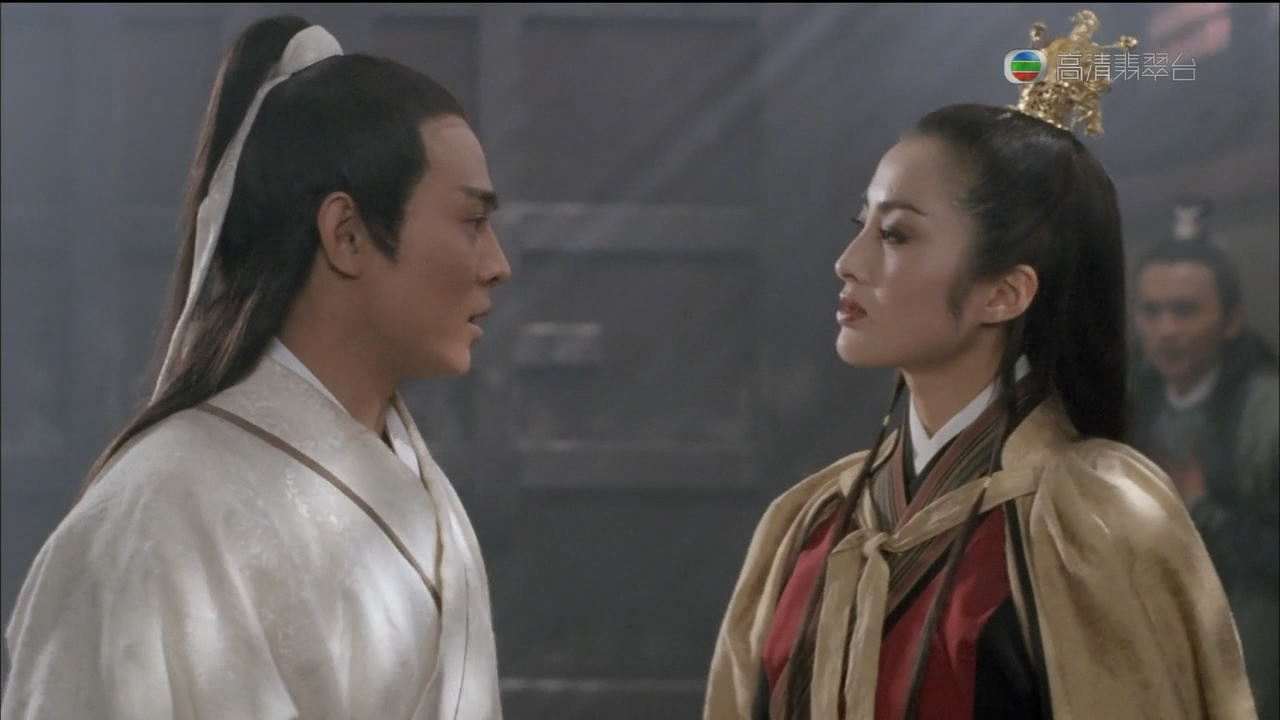
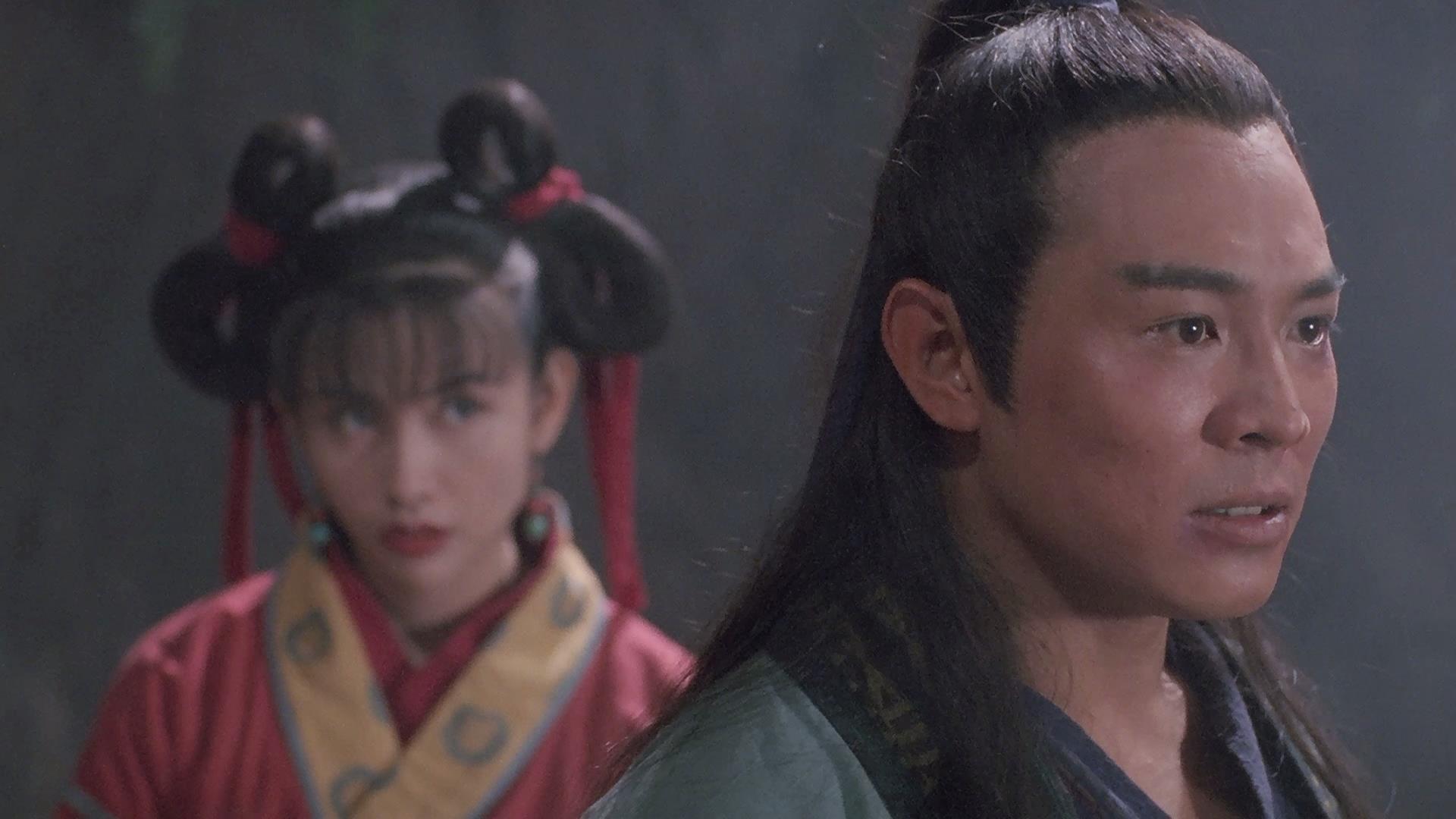
In 1993, directed by Jing Wong, starring Jet Li, Sharla Cheung, Chingmy Yau and others, The Demon Master of Eternal Dragon Slayer became a classic in the hearts of countless fans.


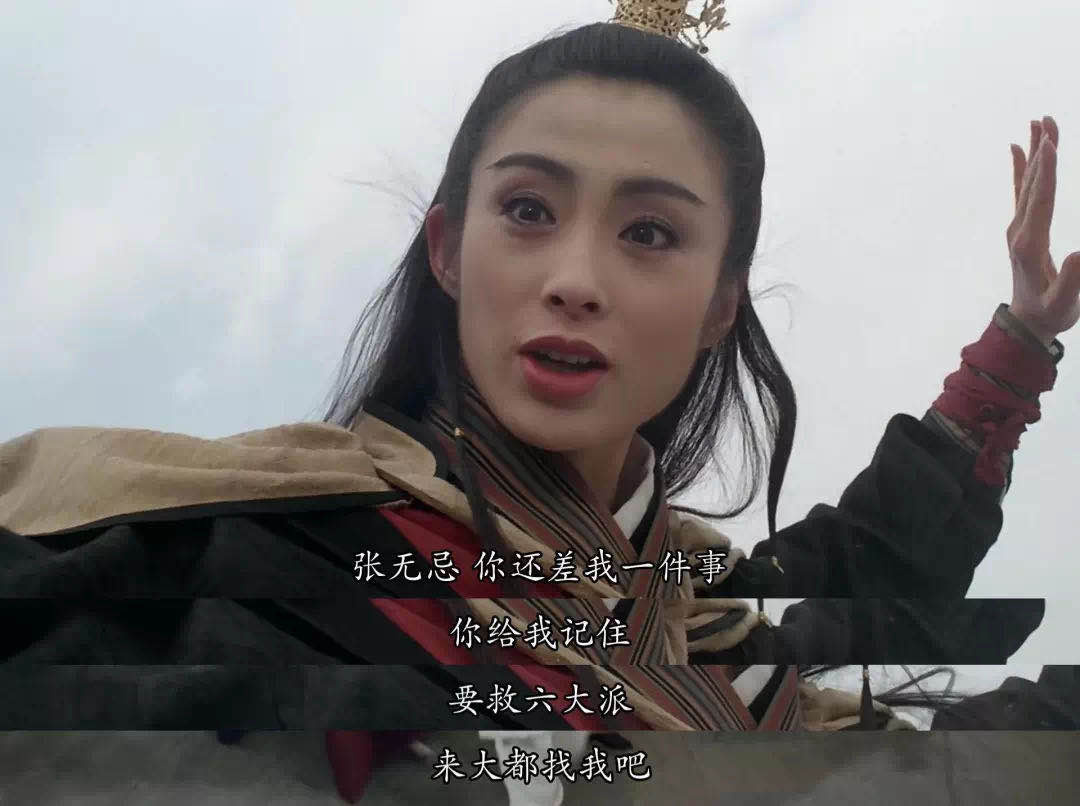
"Zhang Wuji, if you want to save the six sects, come to me."


Zhao Min’s words have kept countless people waiting for 27 years. Nowadays, Sharla Cheung and Chingmy Yau have already faded out of the entertainment circle, and Jet Li only plays a supporting role occasionally because of physical reasons.


At that time, the film company decided to invest in the film "The Dragon Slayer" and found Jing Wong, who had just finished filming the same novel The Duke Of Mount Deer by Jin Yong.


In fact, according to the original plan of that year, Jing Wong originally made "The Dragon Slayer" into two episodes, but after the film was released at that time, Hong Kong only sold HK$ 11.85 million, ranking 29th in the annual box office list, so the next episode was never followed, which became the obsession of fans.


Some people think that when Jing Wong adapted The Dragon Slayer with Eternal Feelings, most of the characters deviated from the original essence.


Especially the role of Zhang Wuji, which was supposed to be indecisive, has become forbearing and strong here, even with a trace of ambition.


The role of Zhou Zhiruo played by Gigi Lai has been completely subverted, and the original pure image has turned into a scheming femme fatale from the very beginning.


As a fan of Jin Yong, Jing Wong deconstructed this project after he got it, and made a subversive adaptation. It is more like a fan work in Jin Yong’s novel system. The characters have not changed, but the character has become more ironic.


In the original party’s mind, the sense of justice that Jin Yong’s works should have had disappeared in this "Demon Sect Leader of Eternal Dragon Slayer", and even some nonsense that was inappropriate at that time was added.


In the case of this cult magic change, Jet Li, the "box office panacea", can’t carry it at all.


You know, in 1993 alone, he successively released the Fang Shiyu series and two Huang Feihong. At that time, these films occupied three of the top ten annual box office lists in Hong Kong.


But for Wang Jing, who is "hard-mouthed", he doesn’t think adaptation is the reason for the box office fiasco.


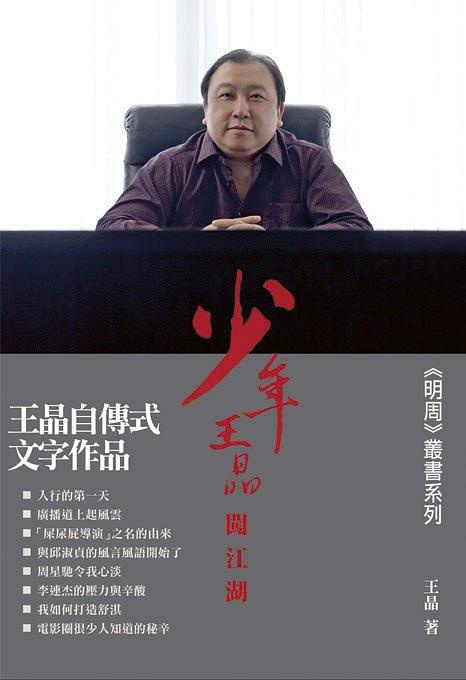
Later, he said in his autobiography "Young Jing Wong Wandering the Rivers and Lakes", "I understand that the audience will have aesthetic fatigue. In early 1993, Jet Li connected three films, The Lion King, Fang Shiyu and Iron Chicken Fighting the Centipede, and the box office dropped from 30 million and 24 million to 18 million … … Until the end of the year, The Dragon Slayer was defeated by the company’s UFO’s New he is my brother, which made me know that too many martial arts films have bored Hong Kong movies and the audience has asked for something new. "


When this film was made, it happened to be an active period of co-production between China Mainland and Hong Kong, China, and many supporting actors were old mainland actors. Although the film was not shown in the cinema in the mainland, it was popular in the DVD market in the mainland and was broadcast on the film channel for several rounds.


Most mainland audiences saw the film through these two channels and soon regarded it as a classic. There was even a legend of "the sequel to" Eternal Dragon Slayer ".


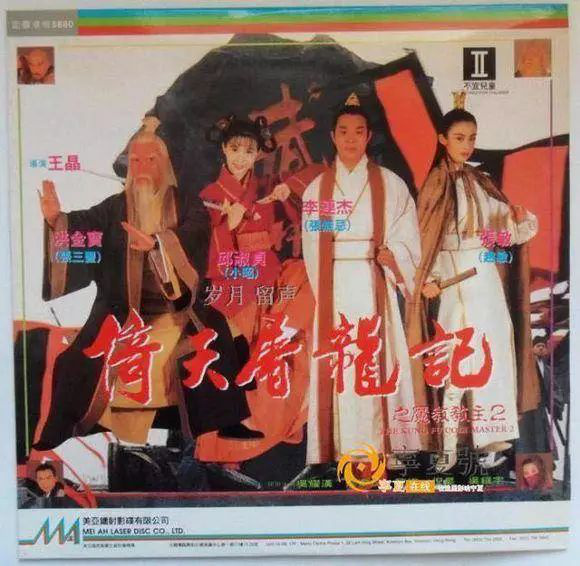
In this legend, many people claimed on the Internet that they had seen "Eternal Dragon Slayer 2", and some people even spared no expense to ask for a film. There are also people who have been on the cover of cam-with good reason, and the words "Demon Sect Leader 2" are clearly visible. This sequel, which was made out of nothing, has become a "disordered memory" for many people.


"Demon Sect Leader 2" of "Out of Nothing"


It can be seen that "The Demon Master of the Dragon Slayer" has an unshakable position in the hearts of this group of fans and is an emotion that cannot be let go.


Is it reliable to kill feelings in the end?


Surprise and sorrow.


Regarding the quality of Jing Wong’s works in recent years, people are somewhat worried about the new edition of "Eternal Dragon Slayer". After seeing the official news, many people expressed the hope that the director would play a normal role this time and not "ruin his childhood".


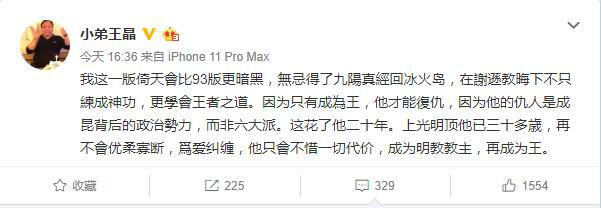
On the afternoon of May 7th, the director also exposed the synopsis of his new work through social platforms. He stressed, "It will be darker than the 93rd edition. Mowgli won the Jiuyang Classic and returned to Binghuo Island. Under the instruction of Xie Xun, he not only practiced magic, but also learned how to be a king. Because only when he becomes king can he get revenge, because his enemies are the political forces behind Cheng Kun, not the six factions. It took him twenty years. By the time he reached the top of the light, he was in his thirties. He would no longer be indecisive and entangled in love. He would only become the leader of Zoroastrianism at all costs and then become a king. "


It can be seen that this film will be a very subversive adaptation. So for this story, will the audience really buy it?


All along, Jing Wong has always been able to identify the current market trends and sell "feelings". Not only can we find themes that can meet the needs of the public, but we can also accurately grasp the star big coffee that the audience has a memory.


This inevitably reminds people of harmony.


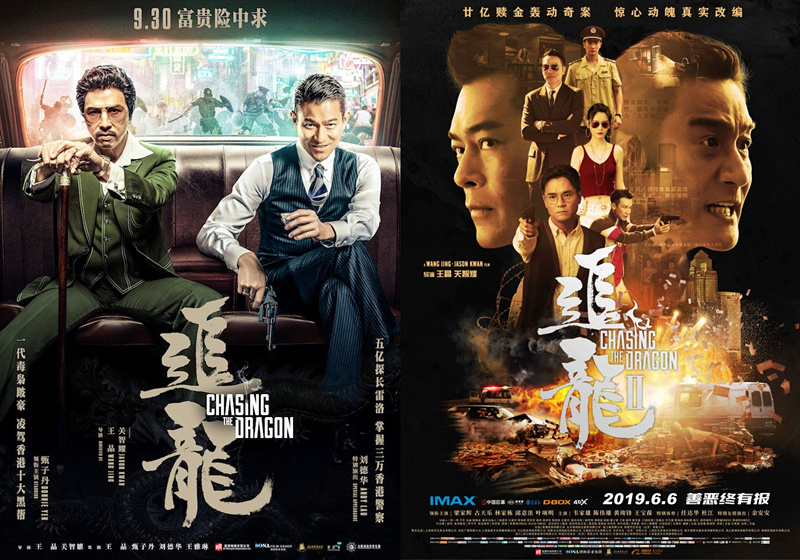
The former gained great popularity, and even won the nomination of the first Hong Kong Film Awards for Jing Wong. Subsequently, he immediately took this IP to launch a sequel. Although there was no problem in the selection of actors, Tony Leung Ka Fai, Yam Tat-wah, Louis Koo and other strengths joined in, but compared with the former, it was just empty feelings and the pattern was completely lost.


Coincidentally, what he directed in 2012 was a continuation of Shanghai Beach. At the same time, there is also a series of self-consumption of the series. But in fact, most of these films only earned box office in the end, but lost word of mouth.


Now, the movie "Eternal Dragon Slayer", which fans have been waiting for for for 27 years, has finally arrived. Will the official cast and Jing Wong’s more extreme dark adaptation make up for so many years of childhood dreams? Or just another self-consumption?

Chongqing Museum of Natural History will open the first treasure warehouse.

The newly restored giant panda specimen. (Photo courtesy of Chongqing Natural Museum)

The newly restored giant panda specimen. (Photo courtesy of Chongqing Natural Museum)

May 18th is "World Museum Day". In order to celebrate the festival of this global museum, Chongqing Natural Museum will open its treasures warehouse to the public for the first time free of charge. On that day, visitors can walk into the 340-square-meter warehouse and watch more than 1,200 precious specimens from all over the world at close range. Members of the public can pay attention to the reservation activities of WeChat WeChat official account in Chongqing Natural Museum.

On May 14th, with the approval of the Natural History Museum, the reporter went into the warehouse in advance to inquire about this special "animal world" for readers.

"Unlike fossil specimens, there are no ancient creatures in the treasure warehouse, but all living animals. Among them are not only giant pandas, golden monkeys, South China tigers, but also rare albino black bears in nature." Zhao Liwei, the collection manager of the collection management department of the Natural Museum, said that some of these specimens came from the old collections in the museum, some from the collection of specimens, and some from the donation of the Bellin Foundation.

Two panda specimens made their debut.

In the vast warehouse, more than 1,200 animal specimens are placed on a three-storey specimen rack in different categories. Some of them have been "living" in the warehouse for decades, and some have just "moved" into the warehouse.

Among them, the latest "check in" are two giant panda specimens. These two giant panda specimens have just been restored by a professional restoration team. Before they were made into specimens, they were the old panda skin specimens in the museum.

Is it difficult to "stand up" the panda skin specimen?

Zhao Liwei said that there is a very difficult link in specimen restoration, that is, to present the specimen with the most natural posture of the animal before its death.

"In order to restore these two giant panda specimens, the restoration experts not only watched various videos of giant pandas repeatedly, but also made a special trip to the zoo to record the movements and expressions of giant pandas at close range." Zhao Liwei said that unlike the giant panda cultural and creative products, the specimen restoration will never adopt the posture that people like but the giant panda itself can’t make. "That is to say, their restored posture is a common state of giant pandas in nature."

So, what is the giant panda that was finally restored? A prone on the rocks, side face spit out the pink small tongue; The other one sat on the ground and gave a grin with his head tilted.

As the oldest natural museum in southwest China, there are several giant panda specimens in the treasures warehouse of Chongqing Natural Museum, which are prone or standing, showing different postures.

Rare albino black bear specimens are hiding in it.

In addition to all kinds of giant panda specimens, there is also an albino black bear specimen in the treasure room, which is also the old collection of Chongqing Natural Museum.

In order to let the audience appreciate this specimen better in the coming open day of the warehouse, the collection manager gave it a "black and white match"-a black bear specimen was placed next to the albino black bear.

Zhao Liwei said that in nature, the phenomenon of albinism of black bears is relatively rare, and albino black bears that can be made into specimens are even rarer.

What exactly is the albino black bear specimen like?

From a distance, it looks like a miniature polar bear. Its front left palm is slightly raised, and its whole body leans forward slightly, as if it is slowly moving forward.

At present, the recorded cases of albino bears are very rare. In 1950s, local residents in Shennongjia, Hubei Province hunted an albino bear. This albino bear in Shennongjia was identified as an albino species of Asian black bear, which was also the earliest case of albino bear found in modern China. In 2000, there were also traces of albino black bears in Shennongjia.

It is understood that albinism exists widely in all kinds of vertebrates, but it is rare. Usually, melanin cannot be synthesized normally in animals due to gene mutation, which makes it appear white, yellow-white or light yellow in external form.

See more head and shoulder specimens donated by the Behring Foundation.

In addition to all kinds of animal specimens placed on the specimen rack, there is a special wall with dozens of head and shoulder specimens hanging on it in the treasure warehouse.

Most of these head and shoulder specimens belong to Cervidae, and they were donated to the Natural Museum by the Bellin Foundation in batches.

Visitors who have been to the Natural History Museum know that there is a Belling Hall on the first floor of the museum.

Since April 2011, kenneth e behring, a world-famous philanthropist, the founder and chairman of the Global Health and Education Foundation and an honorary citizen of Chongqing, has visited Chongqing seven times in succession.

During this period, the old man donated 325 wild animal specimens worth more than $30 million to Chongqing Natural Museum, which together formed the Bellin Hall-Animal Planet Exhibition in the museum. The audience can see nearly 300 rare wild animal specimens here. They are various and lifelike, which can be called a trip to the global animal carnival.

But this is not all the specimens donated by Bellin, because the exhibition hall area is limited, and some duplicate specimens are collected in the treasure warehouse, which also means that the audience can see more wild animal specimens donated by Bellin in the warehouse.

New Chongqing-Chongqing Daily reporter Li Sheng

Shandong Province launched the "Ten Promotion Actions of Entrepreneurial Qilu"

Recently, 11 departments, including the Provincial Department of Human Resources and Social Security, jointly issued the "Notice on Implementing the Top Ten Actions to Start a Business in Qilu" (hereinafter referred to as the "Notice") to promote the upgrading of the "Start a Business in Qilu Leye Shandong" action, focus on entrepreneurship to drive employment, promote the innovative and in-depth development of mass entrepreneurship, and maximize the innovative and creative potential of the whole society.

Strengthen policies and improve the institutional system to promote entrepreneurship and promote employment. The Notice proposes to formulate and improve a series of policies and measures. Revise the policy of business guarantee loan in our province, and include new citizens in the scope of policy support. If the borrower of business guarantee loan encounters temporary difficulties due to the epidemic situation, he may apply for an extension of repayment, and the period shall not exceed one year in principle. Formulate measures for the management of entrepreneurial tutors, and pilot the establishment of provincial entrepreneurial tutor studios.

Do subtraction to reduce the cost of doing things and reduce the pressure of starting a business for entrepreneurs. The "Notice" proposes to continuously optimize the entrepreneurial environment. Establish and improve the life cycle service system of market participants, and realize integrated and scene-based services for enterprise-related matters. Continue to implement preferential tax policies for employment and entrepreneurship of key groups until December 31, 2025. The entrepreneurial carrier invested and developed by the government arranges about 30% of the venues to be provided free of charge to college students and college graduates. Select outstanding provincial venture capital teams and leading venture capital brand enterprises, and issue "Shandong Huicai Card" to qualified talents in enterprises.

Do addition to provide entrepreneurs with upgraded entrepreneurial services. Focusing on the entrepreneurial needs of key groups such as college graduates, migrant workers and people with employment difficulties, our province encourages targeted and personalized training, supports key enterprises such as Inspur and Haier to set up incubators and accelerator platforms such as innovation and entrepreneurship centers, encourages entrepreneurial carriers to publish lists of high-quality entrepreneurial projects, and encourages the establishment of "entrepreneurial enclaves" in key cities or well-known universities across the country.

In terms of strengthening financial guarantee, the Notice proposes to increase support for angel investment, support Shandong Branch and Qingdao Branch of Bank of China to launch special loans to stabilize and expand posts, support local government financing platform companies to expand venture capital business after market transformation, and initiate the establishment of venture capital enterprises. (Reporter Zhang Chunxiao)

Comprehensive Analysis of Audiovisual Big Data Prime-time Hit Drama in China (May 16th-May 22nd)

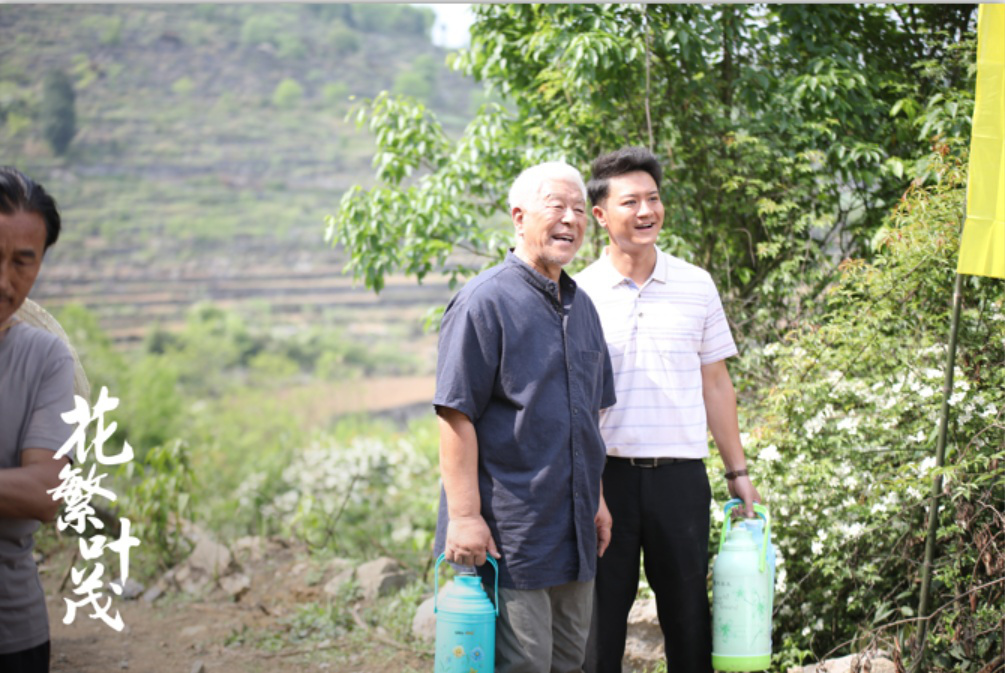
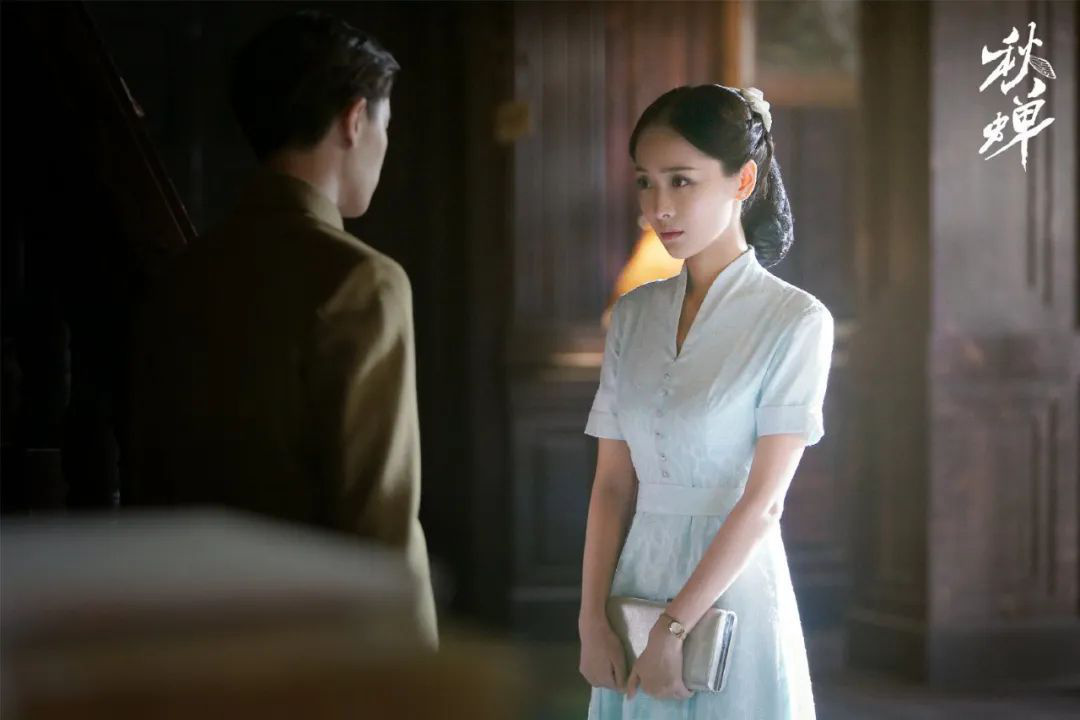
  According to "China Audio-Visual Big Data" (CVB), from May 16 to May 22, 2020, the key drama "Flowers Flourishing with Leaves" of the State Administration of Radio, Film and Television gained both ratings and word of mouth; The ratings of Qiu Chan improved, and the comprehensive ratings broke 1%; "Qingpingle" ended successfully, and all the data performed well; Contemporary urban drama "Happiness is within reach! "tells the story of contemporary youth’s dream-seeking, and the audience is large in the opening week, and the ratings are red; The viewing completion of the key drama "Everywhere Scholar" of SARFT for tackling poverty has been continuously improved.

  SARFT’s key play "Flowers Flourish"

  Double harvest of ratings and word of mouth

  With humorous language and sincere and delicate emotions, the drama tells the story of poverty alleviation in a fresh comedy style. After the CCTV-1 comprehensive channel was launched, it attracted the attention and praise of the audience. "It’s true, it’s so true!" Comments such as "Very good, coming from life but higher than life, very grounded" are not uncommon on the Internet, and won a high reputation of 9.4 points in bilibili, which is dominated by young audiences. This week, the average arrival rate of each episode of the drama was 2.367% and the audience rating was 1.353%, both of which ranked first in the single channel viewing index of prime-time TV series.

  The comprehensive ratings of Qiu Chan broke 1%.

  This week, the drama was broadcast on Jiangsu Satellite TV and Zhejiang Satellite TV. The audience size continued to increase, the viewing completion continued to rise, and the viewing momentum was strong. The average comprehensive rating of each episode was 1.065%, an increase of 26.3% over last week.

  "Qingpingle" ended successfully.??The data performed well.

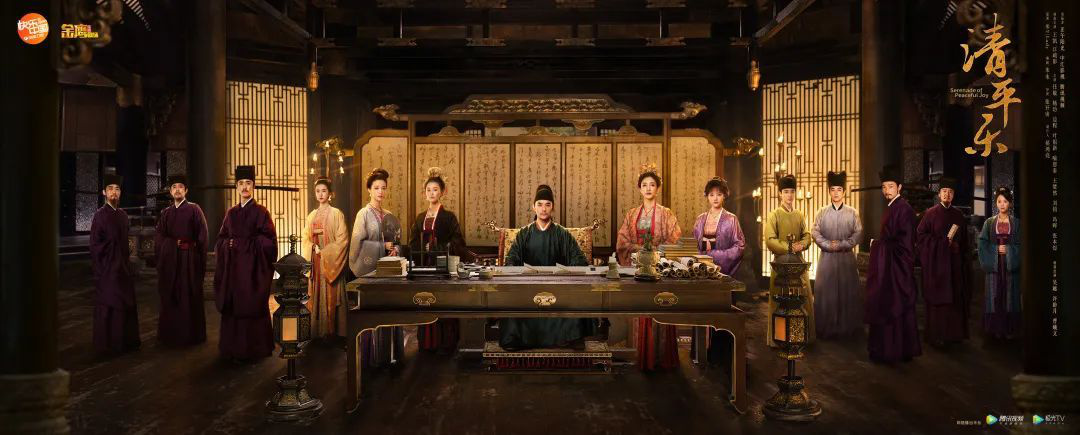
  "Qingpingle" shows the theme of ancient costumes with realistic creative techniques and restores the scenes, etiquette and customs of the Song Dynasty, which has been praised by many audiences. Yu Yunguo, a historian of the Song Dynasty, commented that the play "not only aroused the appreciation interest of the general audience, but also had a higher credit rating than historical records". In addition, the drama set off a wave of audience’s exploration of the famous scholar Gao Shi in the Northern Song Dynasty, and the Baidu search index of famous literati such as Ouyang Xiu and Fan Zhongyan was more than twice as high as that before the drama started.

  The drama was broadcast on Hunan Satellite TV, with an average arrival rate of 0.997%, loyalty of 55.979%, and audience rating of 0.558%. The topic # TV series Qingpingle # Weibo’s reading volume exceeded 10 billion.

  Contemporary urban drama "Happiness is within reach! 》

  The audience was large in the opening week, and the ratings were red.

  This week’s Happiness is within reach! "Qingpingle" was broadcast on Hunan Satellite TV, focusing on the positive attitude of contemporary outstanding young people towards love and workplace, showing the young generation’s persistent pursuit of ideals and their self-confidence and openness to their careers and lives. Since its launch on May 19th, it has aroused heated discussion. Baidu search index has more than doubled on May 20th, and has remained high ever since. The average arrival rate of each episode in the opening week of the drama was 1.083%, and the audience rating was 0.640%, both of which ranked third in the single channel viewing index of prime-time TV series.

  SARFT’s key play "Everywhere Scholarly"

  The viewing completion is constantly improving.

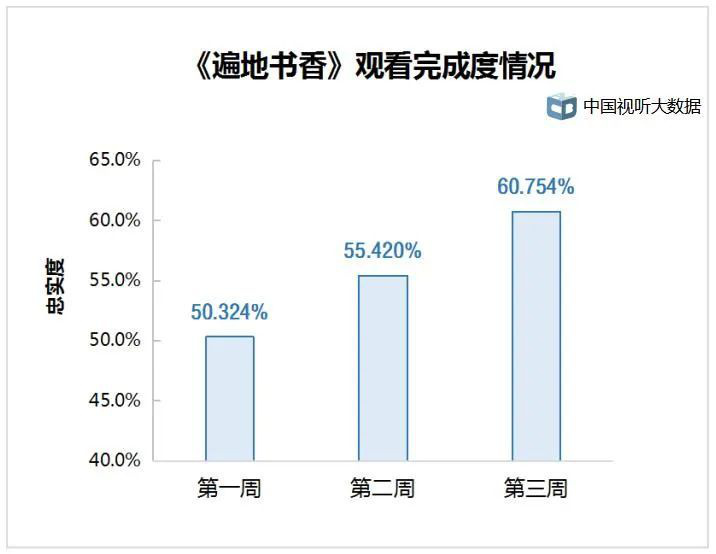
  The play has been broadcast on Beijing Satellite TV for three weeks, and its loyalty has increased by 10% every week.

  —END—

  Selected articles

  Broadcasting and TV "group" live broadcast with goods, exploring new development paths

  Zhang Huali: Open up a new model of helping agriculture and create a new sample of "precision poverty alleviation"

  Viewpoint | Can a hot drama not suffer from "face"

  Optimizing cost ratio and removing impetuous mentality You Xiaogang and Wang Pengju talk about "six initiatives of China Manufacturing Association"

  Here we are, click "Watching" before you go ~ ~ ~

Alfa T5 special edition of polar fox with dynamic pull will be unveiled at Guangzhou Auto Show.

Recently, it was reported that the Extreme Fox Alfa T5 special edition will be unveiled at the 2024 Guangzhou Auto Show, with a dynamic blue-green design and a 5C fast charging system, which can be fully charged in 12 minutes in theory. At present, the price range of Extreme Fox Alpha T5 is 15.58-19.98 million yuan. It is positioned as a pure electric medium-sized SUV, integrated with 800V fast charging function, and launched two endurance versions of 520 km /660 km.

In terms of appearance, the front face of Alfa T5 adopts closed design, and the grille part adopts narrow strip type and is connected with headlight groups on both sides, which stretches the visual width of the car. At the same time, there are raised ribs on the engine room cover, and the design of diversion grooves is added to the two sides surrounded below the front line to increase the sense of movement.

On the side of the car body, it can be seen that the new car adopts a slightly raised waistline and slightly raised wheel eyebrow lines at the front and rear, which greatly enhances the design sense with the hidden door handle. In addition, the car is equipped with dense-spoke bright black wheels and red brake calipers. In terms of body size, its length, width and height are 4690/1936/1650mm and its wheelbase is 2845 mm. The rear part of the car adopts a penetrating taillight group with blackening treatment inside, which is very dynamic with the large diffuser on the tailgate.

For the interior, the Alfa T5 adopts a minimalist design, and the central control part is not equipped with a separate LCD instrument except the multimedia large screen. In addition, the new car is also equipped with a two-spoke steering wheel and a two-color interior color scheme. In the configuration part, the new car provides 6 airbags, millimeter-wave radar inside the roof (to detect the vital signs in the back row of the car), Qualcomm 8155 chip, four-zone intelligent voice interaction, 256-color atmosphere lights, panoramic canopy and so on.

The power is driven by pure electricity, and the maximum power is divided into two versions: 185kW and 200kW. The batteries are also available in Ferrous lithium phosphate and ternary lithium. In addition, the new car is also equipped with 800V high-voltage overcharge, which can achieve 260 kilometers in 10 minutes. The battery capacity is 65kWh, 79.2kWh and 85.8kWh, and it is available in 520km and 660km battery life versions.

[The picture in this article comes from the network]

The best martial arts movie since Crouching Tiger, Hidden Dragon

 [New work hot review · "Sword Rain"]

  In the martial arts film "Sword Rain", the combination of character, plot tension and action scenes can be said to be the most balanced among Chinese martial arts films in recent years.

  As a film that is both "John Woo’s work" and "Su Zhaobin’s film", if we ignore the entanglements behind the film, "Sword Rain" can be said to be the best Chinese martial arts film after "Crouching Tiger, Hidden Dragon".

  In terms of story level, "Sword Rain" can be said to be an ancient martial arts version of "Face Changing", so the "John Woo Works" that won the bidding for the final subtitles of the film is still famous. But from the overall style of the film, as the director of "Tricky Silk" and the screenwriter of "Double Eyes", director Su Zhaobin still left his own style imprint in "Sword Rain", "Sword Rain" is still a justifiable "Su Zhaobin movie".

  As a martial arts film, "Sword Rain" not only maintains a high standard in traditional action scenes, but also creates a new path for the narrative transformation of Chinese martial arts films in terms of drama structure and character creation. Chinese martial arts films began with the earliest Sword Immortal films. After decades of development, through the interaction of martial arts novels and martial arts films, a set of basic narrative rules has been established very early, the main elements of which are rivers and lakes, treasure hunting, hegemony, revenge, and strange feelings. By the 1960s and 1970s, as one of the important types of Hong Kong films, martial arts films had reached their peak in narrative. The story mode created by martial arts classics such as "Golden Swallow", "Chivalrous Girl", and "One-armed Blade" has continued until the beginning of this century without any fundamental changes.

  Chinese martial arts films have always had an inborn flaw in the narrative structure, that is, the plot clues and action scenes are disconnected from each other in the narrative process of the film, and cannot help each other. The plot of most martial arts films will come to a standstill when they develop into action scenes. There was a time when domestic film critics were popular to divide the scenes in martial arts films and action films into "literary opera" and "martial arts", which is actually a reflection of the audience’s interest caused by this disconnect between the plot and the action. In this sense, "Crouching Tiger, Hidden Dragon" directed by Ang Lee in 2001 is indeed a revolutionary improvement on Chinese martial arts films. As a film that fuses the classic Hollywood narrative mode and traditional elements of Chinese martial arts films, all the action scenes in "Crouching Tiger, Hidden Dragon" are directly involved in the characterization and plot advancement. Although due to the limitations of the era, the film still retains the inherent traces brought by traditional martial arts films, but in terms of overall style, "Crouching Tiger, Hidden Dragon" is indeed a generational innovation of Chinese martial arts films.

  The last wave of innovation in Chinese martial arts films was the new martial arts films led by the 1992 director Tsui Hark’s "New Dragon Gate Inn". However, the contribution of new martial arts films to traditional martial arts films lies more in the innovation of action than the innovation of narrative mode. The problem of disconnection between film plot and action scenes in the film narrative process has not been fundamentally solved in this wave of innovation in martial arts films. If the essence of Li An’s "Crouching Tiger, Hidden Dragon" is actually far from the traditional concept of martial arts films in terms of story type. But it is this distance that has created a breakthrough in the narrative type of martial arts films.

  With the box office success of "Crouching Tiger, Hidden Dragon" and the recognition of the Academy Awards, Chinese films have also set off a trend of martial arts films. But starting with "Hero" in 2001 and ending with "Banquet" in 2006, among many works, no martial arts film can really make substantive innovations in the narrative structure and technique of martial arts films.

  In the martial arts film "Sword Rain", the combination of characters, plot tension and action scenes can be said to be the most balanced among Chinese martial arts films in recent years. Even without the sword fighting scenes of the ancient knight in the film, the film can still attract the audience to pay attention to the fate of the characters in the film with its tight plot tension, and be moved by the emotional atmosphere created by the characters in the film. As a story that can be called "the ancient martial arts version of" Face Changing "to some extent," Sword Rain "completes the inheritance and innovation of Chinese martial arts films through a complex but clear-cut story, combining the narrative rules of traditional Chinese martial arts films, and fusing the classic Hollywood narrative genre.

  As a martial arts genre film, the story of "Sword Rain" involves all the typical elements of martial arts films such as rivers and lakes, treasure hunting, hegemony, revenge, and strange affairs. And this is actually an innovation for Chinese martial arts films. The three story lines advance simultaneously, with distinct priorities, creating a tight story rhythm. The emotional motives and story dynamics of all characters are clear and clear. While the audience follows the story on the screen, they can also penetrate into the inner emotional world of the movie characters. It can be said that it has exceeded the audience’s expectations for a martial arts genre film and satisfied another part of the audience’s desire for a good movie: in a romantic and bizarre screen story, they touch their inner world.

  □ Zhang Xiaobei (Beijing, film critic)